
Practice Songs Helpful for Learning Mixed Voice (Middle Voice) [For Women]


The term “mixed voice.” If you’re interested in singing, you’ve probably heard or seen it at least once.
Many of my vocal training students say, “I want to be able to use mixed voice!” However, I feel that surprisingly few people actually understand what it is.
So what exactly is mixed voice? Simply put, it’s “the voice between chest voice and head voice.” That’s why it’s also called middle voice.
In actual songs, it’s mainly used to cover the high-tone range that’s hard to hit with chest voice, but by changing the balance of how much chest and head voice you mix, you can create a wide range of vocal expressions.
In this feature, I’ve gathered female singers who skillfully use mixed (middle) voice to express their songs.
I’m sure you’ll find plenty to reference when you practice with the goal of mastering mixed voice yourself.
I hope you find it helpful.
- Songs to Help Women Sing Better: Practice Tracks for Improving at Karaoke
- [For Men] Mix Voice Practice Songs: Reference Tracks to Help You Hit High Notes More Easily
- Cool If You Can Sing! Popular Karaoke Songs Recommended for Women
- A must-see for low-voiced women! Popular songs that are easy to sing at karaoke
- Female vocal songs where women with low voices can shine
- I want to sing songs that use a lot of falsetto—tracks that are also good for practicing falsetto at karaoke.
- Recommended for women: Start your karaoke session with these! A roundup of popular Japanese songs
- Karaoke songs that are easy to sing even with a low voice (for women in their 30s)
- [Karaoke] A roundup of songs that are easy for women to sing!
- Easy-to-sing songs recommended for women in their 20s with low voices | Also great for getting a good reaction at karaoke!
- A collection of cool songs that sound great when sung by women, originally male songs
- Recommended for millennial women who aren't confident singers: easy-to-sing karaoke songs
- [For Beginners] Recommended Enka Classics for Karaoke — Women Singers Edition
[For Women] Practice Songs Helpful for Learning Mixed Voice (Middle Voice) (21–30)
Crimson Lotus FlowerLiSA
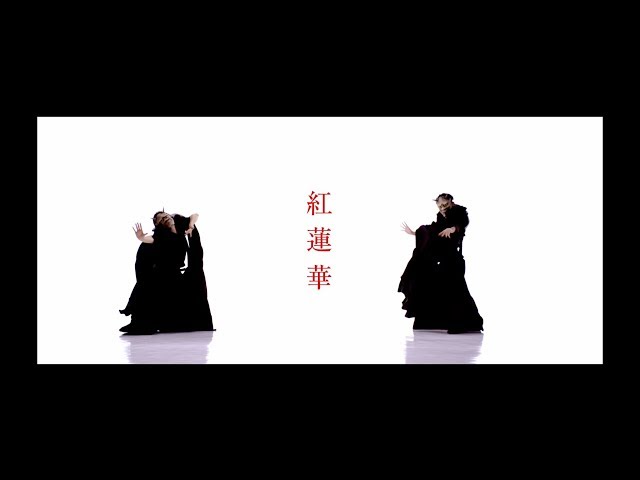
This is LiSA’s 15th single overall, released in March 2019.
It also serves as the opening theme for the TV anime Demon Slayer: Kimetsu no Yaiba.
Even though we often just say “mixed voice,” there’s a wide range of ways to use it—from a stronger, chest-voice-leaning mix to a softer, falsetto-leaning mix.
The chorus of this song is most likely sung with a stronger mixed voice.
When you practice, try to aim your voice quickly and firmly toward the center of your upper palate and the nose.
It’s also important to create a clear contrast with the sections sung in falsetto, so listen carefully to the original track and study that aspect as well.

Biting the second handzutto mayonaka de ii no ni.

I think this is a song that’s fun to listen to and fun to sing! Zutomayo’s ACA-san has a cute, easy-to-listen-to voice, but when you actually try to sing it, the range is really high whether you use head voice or chest voice.
By the way, in this song the highest note is E5 in the chorus, and it’s amazing that she belts it in chest voice rather than falsetto.
Keeping the pitch steady in the chorus is especially tough! Also, the rhythm is unique, with lots of spots where notes are subtly lengthened or cut short.
When you sing it yourself, you might find parts that don’t quite line up with the rhythm.
Instead of jumping straight into karaoke, it’s a good idea to sing along while listening to the original track!

[For Women] Practice Songs Helpful for Learning Mixed Voice (Middle Voice) (31–40)
I long to see you now.MISIA

This was MISIA’s 23rd single, released in November 2009.
It was also the theme song for TBS’s Sunday drama JIN.
MISIA is said to have a five-octave vocal range, and her perfectly steady, smooth delivery—even in the high notes of the chorus—is nothing short of remarkable.
She likely sings the entire song in a mixed voice, adjusting the balance between chest and head voice.
As a practice piece for mixed voice, it’s quite advanced, but I encourage you to give it a try.
From the soft delivery in the A and B sections to the powerful chorus with brief, airy releases, there’s an enormous amount you can learn from it!
Sailor Suit and Machine GunYakushimaru Hiroko

It was Hiroko Yakushimaru’s debut single, released on November 21, 1981.
It served as the theme song for the film of the same name, in which Yakushimaru starred.
Back in 1981, when this song was released, the term “mixed voice,” which is the theme of this article, wasn’t commonly heard—one could say the concept itself wasn’t widely recognized.
However, the gentle quality of Yakushimaru’s singing in this track is precisely the kind of effect that mixed voice can achieve.
For that reason, I think it’s an ideal song to practice for mastering mixed voice.
Try singing by resonating as broadly as possible against the upper palate, aiming for a tone rich in higher overtones while taking care not to lose softness.
The melody isn’t as complex as in many contemporary songs, so it should be easier to practice!
JupiterHirahara Ayaka
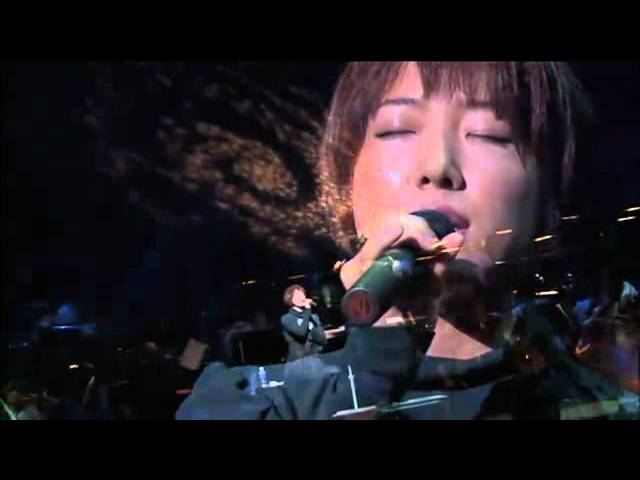
Ayaka Hirahara’s debut single, released in December 2003.
The song sets lyrics by Yumi Yoshimoto to the melody of the Andante maestoso section (the fourth theme of “Jupiter”) from the fourth movement of The Planets (a seven-movement orchestral suite) by the British composer Holst.
Although Hirahara’s chest voice and speaking voice are relatively low, she masterfully delivers the wide-ranging classical melody by skillfully employing mixed voice and falsetto.
In her use of mixed voice, she often opts for a more chest-leaning, powerful tone with restrained breathiness, which effectively compensates for her lower chest range and also highlights the brilliance of her higher falsetto.
Her singing, seamlessly shifting among chest voice, mixed voice, and falsetto to shape the piece, is nothing short of breathtaking.
sympathetic tearsHitoto Yo

Hitoto Yo’s debut single, released in October 2002.
Hitoto is highly acclaimed for her vocal ability, and that prowess is evident right from this debut track.
From the very beginning of the song, she masterfully delivers phrases using exceptional transitions in vocal production.
To sing this opening in particular, it’s essential to switch smoothly between chest voice, mixed voice, and falsetto (head voice).
In that sense, this song is an ideal practice piece for mastering mixed voice.
The song’s overall range isn’t very wide, which also makes it a great choice for practice.
If you can learn to use nasal resonance across your entire range like Hitoto Yo, you’ll be golden!
crescent moonayaka

Ayaka’s fourth single overall, released in September 2006.
Simply listening to it evokes a moonlit night with a beautiful crescent moon—this is a classic Japanese ballad.
What enriches that gentle moonlit atmosphere, I feel, is Ayaka’s singing, which makes effective use of her very soft yet deep mixed voice.
Study closely how she lightly lets the high notes in the first verse float away and how she uses her voice in the chorus, then try singing it yourself.
A key to singing like her is to aim the sound as if you’re placing it behind your upper molars and skillfully use the resonance of the upper palate (the maxillary resonator).