
![[Flute] Masterpieces for the flute. Recommended pieces where the flute shines](https://i.ytimg.com/vi_webp/eChLCFAGyx0/maxresdefault.webp)

The flute, a woodwind instrument that has become indispensable in classical music and wind ensembles.
This instrument has a long history and seems to have existed since ancient times.
It is said that the flute took its current form in mid-18th-century Germany.
This time, we’ve picked out pieces that will make you marvel at the flute’s range—“Can it really play notes this low as well as such high ones?”—along with virtuosic works featuring runs and rapid passages.
From classical masterpieces to wind ensemble works and even video game music, these selections showcase the flute at its finest.
Shall we discover the charm of the flute, with its gentle and beautiful tone?
- Practice pieces for beginner flutists. Recommended practice pieces.
- Timelessly beautiful classical masterpieces. Recommended classical music.
- [Piano Solo] Famous Flute Pieces Performed on Piano! A Selection of Recommended Works
- Famous Flutists of the World: Introducing Captivating, Breathtaking Masterpieces That Enthrall Audiences
- [History] A roundup of popular set pieces from the All-Japan Band Competition
- Classical masterpieces. Recommended classical music.
- Gabriel Fauré | Introduction to His Famous and Representative Works
- [Tango] Famous Tango Songs: Recommended Popular Tracks
- Today's Piano: Masterpieces and Popular Pieces Woven with Delicate Tones
- Harmonica masterpieces: world-class performances you should hear at least once
- Songs with cool trumpet. Introducing famous pieces from wind ensemble and jazz.
- Masterpieces you’ll want to play on the harmonica. Popular songs that look cool if you can play them.
- [Wind Ensemble] Wind band pieces that men like. Masterpieces of wind band music recommended for men.
[Flute] Masterpieces for the flute. Recommended pieces where the flute shines (1–10)
Intermezzo from Suite No. 1 of the opera CarmenNEW!Georges Bizet

When it comes to masterpieces that let you fully savor the flute’s transparent, gentle tone, there’s this piece drawn from an opera by the French composer Georges Bizet.
Rather than flashy virtuosity, it calls for purity of timbre and a flowing, beautiful melody, expressing an air of refined tranquility.
Composed as intermission music for a stage work that premiered in March 1875, it was later arranged by a friend as part of an orchestral suite.
In the midst of a tale swirling with passion, this work depicts a sudden moment of repose.
It’s a gem I highly recommend for those wishing to spend an elegant moment or seeking to soothe the heart with a beautiful sound.
Polonaise, No. 2 from Orchestral Suite No. 2 in B minor, BWV 1067NEW!J.S.Bach
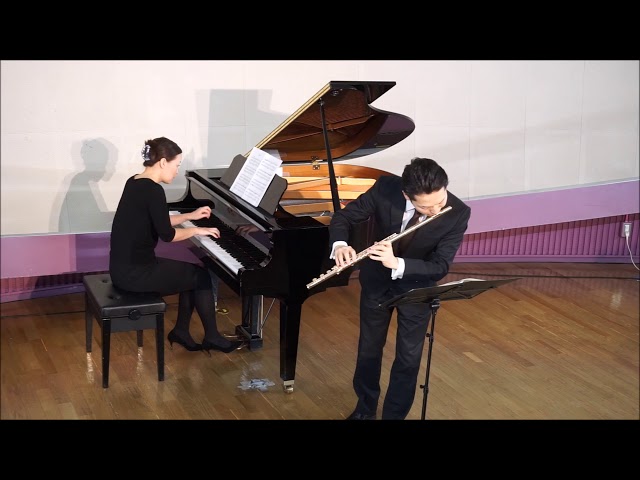
A work by Johann Sebastian Bach, a towering and indispensable figure in the history of classical music, in which the flute plays a gracefully prominent role.
The contrast between the stately triple-meter stride and the later variations, where the flute’s delicate, agile virtuosity comes to the fore, is particularly captivating.
Its taut yet refined elegance in B minor and its inward brilliance are fully showcased, revealing a balanced beauty the more you listen.
This noble, beautiful melody is perfect for those who want to leisurely enjoy a cup of tea on a quiet holiday afternoon!
Allegro and Minuet, Movement I: Allegro con brioNEW!Ludwig van Beethoven

The first movement of Ludwig van Beethoven’s duets, a beloved and rare chamber-music scoring complete with just two flutes.
While drawing on the instrument’s lightness and agility, this masterpiece conveys forward drive by passing around short motifs.
It was composed in August 1792, just before Beethoven moved from Bonn to Vienna.
It was not published during his lifetime; instead, it was passed down through an autograph manuscript bearing a dedication to a friend.
Rather than dazzling virtuosity, the work emphasizes a well-synchronized dialogue between the two players and a pure, refined tone, making it ideal for those who want to savor the poised ensemble style of the Classical era.
Dance of the She-GoatNEW!Arthur Honegger

A famous miniature for unaccompanied flute by Arthur Honegger, known as a member of Les Six.
Within just a few minutes, it vividly shifts between stillness and motion, portraying the figure and wildness of an animal leaping nimbly over rocky terrain.
Composed as incidental music for Sacha Derek’s play, which premiered in December 1921, it is included on albums such as Vincent Lucas’s The Art of the Solo Flute.
Precisely because there is no accompaniment, it’s wonderful how the performer can paint scenes using only breath and tone color.
Highly recommended for situations where you want to savor a dramatic world with a single flute, or for those who wish to explore profound expressive depth!
Allegro and Minuet, Movement 2: Minuet assai, AllegrettoNEW!Ludwig van Beethoven

The second movement, “Allegro and Minuet in G major, WoO 26,” is a duet said to have been composed by Ludwig van Beethoven in August 1792.
Written for two flutes, this warm piece is believed to have been a gift from the young composer to a close friend.
Within the light, graceful triple-time dance, the way the two flutes exchange melodies as if side by side is truly captivating.
Rather than dazzling virtuosity, it calls for tightly synchronized, pure harmonies, allowing one to fully savor the beauty of the ensemble.
It’s a piece I especially recommend to those who wish to be soothed by the flute’s characteristically clear and bright timbre.
Flute Concerto, First MovementNEW!Odaka Naotada

Nobutaka Odaka, who left a significant mark on the history of Japanese classical music, composed the Flute Concerto.
Premiered in March 1951, the work’s first movement captivates with Japanese-style scales woven into a bright, propulsive melody.
The flute’s brilliance and its three-dimensional dialogue with the orchestra are beautifully balanced.
Because it demands nimble attacks and delicate nuance, it is a piece that allows performers to fully showcase their expressive abilities.
Frequently featured in competitions and concerts, it continues to shine with undiminished luster as a landmark Japanese work for the flute.
Flute Concerto, 3rd MovementNEW!Odaka Naotada

The third movement of the Flute Concerto composed by Naotada Otaka, a leading figure in Japan’s classical music scene.
Premiered posthumously in March 1951, it is still frequently performed today as a quintessential work by a Japanese composer.
Beginning with a perpetuum mobile–style theme, it hurtles forward with an exhilarating development that weaves in changing meters.
The structural beauty of bringing back the first movement’s melody near the end is also superb.
It demands not only finger agility but also delicate breath control and nuanced tone colors, offering the performer many chances to shine.
A masterpiece where Japanese sensibility and Western architectural rigor are seamlessly fused.