

[All-Time] A Collection of Masterpieces in Video Game Music [Up to the Latest Tracks]

If you’re really into a game, chances are you love it together with its music, right?
In this article, I’d like to introduce some classic gems of video game music.
When you spend a long time playing, the BGM naturally sticks in your ears.
Even if you only played it once as a kid, you might still find yourself humming it as an adult.
Follow the tracks collected here and you might rekindle memories you’d forgotten.
It also makes a great playlist for getting work done!
- [2026] Many classic tracks! A compilation of nostalgic Japanese video game music
- [Epic] A Collection of Game Music to Enjoy with an Orchestral Sound
- [Game Battle Music Compilation] Burning Fighting Spirit! Recommended Battle BGMs
- [Dragon Quest BGM] Iconic and popular tracks from the Dragon Quest series
- [Game Music] UNDERTALE’s masterpiece. A BGM that leaves a mark on the heart.
- [Kirby BGM] Iconic and Popular Tracks from the Kirby Series
- Recommended video game music: compelling masterpieces and popular tracks you’ll want to listen to.
- Masterpieces from the Persona series. Recommended video game music.
- A collection of video game music I want to perform in a wind ensemble
- BGM from the Pokémon series through the ages: A compilation of legendary tracks
- [Game Music] Splatoon BGM and Popular Songs Compilation
- Cheer songs from Power Pro and popular BGM: a collection of divine tracks
- [Animal Crossing BGM] Iconic and Popular Tracks from Animal Crossing
[Historical] Compilation of Great Video Game Music Tracks [Up to the Latest Songs] (31–40)
MAGICAL SOUND SHOWERKawaguchi Hiroshi

This is one of the three tracks you can select from the radio-style menu before starting Sega’s immersive driving game OutRun, which began operating in arcades in September 1986.
The composer is Hiroshi Kawaguchi.
Its tropical sound, infused with elements of Latin jazz and salsa, brilliantly evokes the exhilaration of speeding through seaside resorts.
It’s impressive how the steel-pan-like bell tones, synth brass, and conga-like percussion—rendered via FM synthesis—layer together to achieve a full-band richness despite the limited polyphony.
In 2007, numerous arrangement versions were included in the OutRun 20th Anniversary Box, and the track has also been featured in rhythm games such as Hatsune Miku: Project DIVA Arcade, maimai, and Taiko no Tatsujin.
It’s a perfect pick when you want to feel the vibe of a summer drive or experience a slice of 1980s arcade culture.
Theme of LauraYamaoka Akira

That melody that grabs the player’s heart the moment they step into the fog-shrouded town.
The main theme of the PlayStation 2 horror game composed by Akira Yamaoka is a classic that was released on the soundtrack in October 2001.
Its mournful guitar riff repeats as percussion layers in, unfolding a unique sonic world where quiet despair and faint hope coexist.
It’s unmistakably Yamaoka’s sound—straddling industrial and trip-hop—yet what stands out in this work is the more rock-leaning, emotional edge brought to the fore.
In 2024, a new arrangement was included on the remake’s soundtrack, showing that the piece continues to evolve even after more than 20 years.
The official YouTube video has surpassed 10 million views, and the abundance of international comments speaks to its popularity.
If you want to experience artistry that transcends the boundaries of game music, or immerse yourself in sonically rich psychological depth, this is a must-listen track.
Chop Chop Master Onion RapMatsuura Masaya

This is the track that colored Stage 1 of the 1996 PlayStation music game PaRappa the Rapper.
Created by Masaya Matsuura, it’s memorable for its uniquely quirky setup in which the karate dojo master, Chop Chop Master Onion, teaches training through rap.
While rooted in hip-hop, the song exudes a playful, poppy vibe with a distinctly J-pop sensibility.
Players follow the master’s rap as a model, entering button inputs in a call-and-response format—an approach that delivered an experience that could be called the origin of rhythm games.
The soundtrack was included on the album PaRappa The Rapper Original Soundtrack, released by Sony Records in December 1996, and it has been carried forward through the PSP version and the PS4 remaster.
It’s a perfect track for anyone who wants to explore the history of game music or relive the excitement of that era.
Bloody TearsMatsubara Kenichi
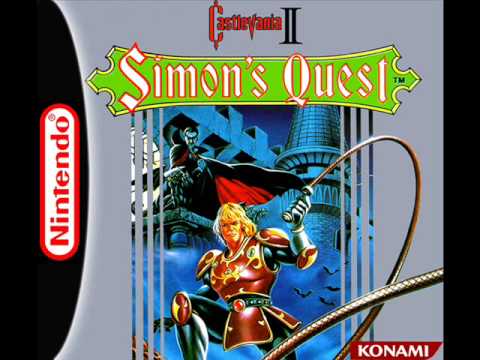
This is a piece that carved its name into video game music history as the BGM that plays on the daytime field in Castlevania II: Simon’s Quest, released for the Famicom Disk System in August 1987.
Composed by Kenichi Matsubara, the track is stunning in its structure: from a majestic, pipe-organ-like intro, it plunges into a driving, exhilarating rhythm.
Its melancholic melody in a minor key and a powerful, forward-thrusting beat brilliantly portray the protagonist’s fate and resolve as he fights on to lift the curse.
It’s impossible not to admire how such a dramatic narrative was woven within the constraints of 8-bit sound hardware.
As one of the defining themes of the series, it also received a new arrangement in Super Smash Bros.
Ultimate.
A must-listen for anyone who wants to immerse themselves in a world of gothic horror or has an interest in retro game music.
Eyes on me(Piano collections ver.)Uematsu Nobuo

The piano-arranged love song from Final Fantasy VIII beautifully portrays the poignant feelings between the protagonist, Squall, and the heroine, Rinoa.
Woven solely by piano, its clear, transparent tones express sincere emotions with a tender sense of frustration, while the gentle melody soothes the listener’s heart.
Though it depicts unrequited love, it conveys an unwavering devotion to a beloved person with a quietly passionate timbre.
Since its 1999 release, it has continued to captivate the hearts of many music fans.
With a beauty that moves you through piano alone, it’s a perfect piece for fans of classical or new age music, and for anyone seeking a song with a deeply moving sense of storytelling.
[Historical] Compilation of Great Video Game Music Tracks [Up to the Latest Songs] (41–50)
Final Fantasy X “To Zanarkand” (Piano Collections ver.)Uematsu Nobuo

The bittersweet melody, marked by its beautiful theme, is pleasing to the ear yet leaves a deep afterglow.
Symbolizing the fictional city that serves as the story’s setting, this piece delicately conveys the protagonist’s feelings for their hometown and the struggles of characters swept along by fate.
Included on the album “Piano Collections FINAL FANTASY X,” released in July 2004, it uses the expressive power of the piano to further enhance its narrative quality.
Transcending the bounds of video game music, it has become a popular piece performed in many contexts, continuing to captivate listeners with its timeless appeal.
Even those just beginning the piano can express profound emotion with this piece by carefully practicing its beautiful melodic line.
The Hero’s Challengesugiyama kouichi

A masterpiece whose powerful orchestral sound seizes the heart.
Composed by Koichi Sugiyama, it was created in 1988 for Dragon Quest III: And into the Legend….
Known as the piece that plays during the final battle where the fate of the world is at stake, its tense development superbly embodies the hero’s fighting spirit.
A landmark track that opened up new possibilities for video game music.
It’s the kind of music that gives you a push when you’re facing a major turning point in life.