

[For Beginners] A Collection of Gamelan Masterpieces [Introductory Guide]

Gamelan music, a grand ensemble of traditional Indonesian instruments.
Its mysterious resonance has captivated countless composers and musicians.
Centered on bronze percussion, its unique timbres and intricate rhythms weave a sonic world that invites listeners into another dimension.
In this article, we’ll introduce a wide range of music—from time-honored traditional masterpieces to innovative works by contemporary composers, and even pieces in genres such as jazz and pop that have been influenced by gamelan.
If you’ve never encountered gamelan music before, take this opportunity to enjoy a journey into its enchanting sonic world!
- [2026] India’s Greatest Songs: Latest Hit Tracks & Timeless Classics [New and Old]
- Polka masterpieces. Recommended popular songs.
- [2026] The Beautiful World of Ambient: A Curated Collection of Must-Listen Masterpieces
- [2026] Recommended Indonesian Artists Collection
- Cool! Introducing classic masterpieces of Argentine tango
- [Famous Songs of the World] A curated introduction to soul-stirring popular Latin mambo tracks
- [Tango] Famous Tango Songs: Recommended Popular Tracks
- 【2026】The State of World Music Now: Introducing Masterpieces to Enjoy Diverse Musical Cultures
- Carefully selected Japanese songs with a Latin flavor! Recommended J-POP brimming with exotic vibes
- [2026] Enjoyable Exercise! A Compilation of Songs Used in Zumba
- Ali Gatie Popular Songs Ranking [2026]
- Masterpieces of Minimal Music | Including Lesser-Known Works
- Classic and popular recommendations in ethnic music
[For Beginners] A Collection of Gamelan Masterpieces [Introduction] (1–10)
GeneticDewa Alit & Gamelan Salukat

A signature piece by Gamelan Salukat, led by Indonesian composer Dewa Alit, who continues an innovative quest rooted in tradition.
First introduced abroad in May 2020, this work is remarkable for the way its bronze percussion resonates with a timbre that feels almost electronic.
From the exchange of complex rhythms that breaks the silence to the overwhelming section where the entire ensemble rings as if it were one giant zither, the development is stunning.
The theme of “genetics” embedded in this piece speaks to the will to inherit tradition while creating new music.
Premiered in Europe at a Dutch music festival in April 2022, it’s a number drawing worldwide attention.
If you’re seeking a thrilling musical experience beyond the bounds of tradition, this is a must-listen.
Prahu LayarKi Nartosabdho

An irresistibly cheerful and breezy melody that feels like an invitation to the seaside on a day off.
This piece is by Ki Nartosabdho, renowned as a master of the Indonesian shadow puppet theater Wayang Kulit, who left behind more than 600 compositions over his lifetime.
The song’s lyrics are lovely too, depicting the joy and restraint of friends sailing out to sea in a sailboat and then returning to prepare for work the next day.
Included on the compilation album “Gebyar Campursari 1,” it’s also well-loved as teaching material in local schools.
The shimmering tones of bronze percussion unique to gamelan and the dance-like drum rhythms are sure to captivate even first-time listeners.
A perfect track for a drive or as background music on your day off.
Prahu LayarKi Nartosabdho

This is a single released in 2006, composed by Ki Nartosabdo, a musician who brought innovation to Indonesian tradition.
Also known as a narrator for shadow-puppet theater, Ki Nartosabdo created many signature pieces, and an alternate version of this song was released in July 2000.
Written as a “play song,” it evokes a peaceful scene of heading out to sea by boat on a holiday and laughing together with friends.
Its friendly melody has a pop-like quality and seems to free the heart from the bustle of everyday life.
With no complex development, it’s an easy introduction to the sound of gamelan for first-time listeners.
A perfect number for when you want to take it easy.
[For Beginners] A Collection of Gamelan Masterpieces [Introductory Edition] (11–20)
Margapati

“Margapati” is one of the most renowned pieces in Balinese gamelan music, said to have been created in 1942 by I Nyoman Kaler.
The theme of the work is the “King of the Forest,” famed for its valor in Balinese dance.
The swirling layers of resonant bronze percussion evoke the king’s majesty and vitality, drawing listeners into the heart of a mystical ritual.
The sight of women performing in male roles is strikingly sensual, powerful, and beautiful, and even the music alone is perfect for moments when you want to step away from the everyday for an otherworldly trip, or when you wish to immerse yourself in creative work.
Udan Mas
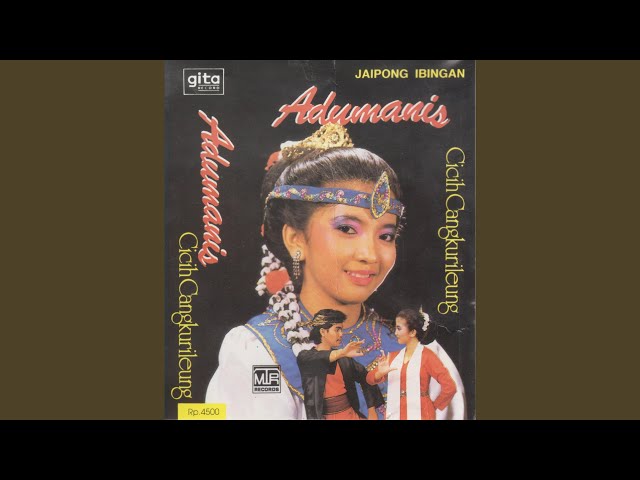
This is a traditional Javanese piece with the beautiful name “Golden Rain.” In contrast to its dazzling title, its somewhat wistful, heart-piercing melody is striking.
It is often performed as a finale to mark the end of rituals or dances, evoking the quiet after lively festivities and a nostalgia for time gone by.
The mysterious resonance of bronze percussion instruments seems to transport listeners to another world.
The performance included on the landmark 1971 recording Javanese Court Gamelan, compiled by scholar Robert E.
Brown, is known as a representative recording of this work.
It’s a perfect piece for opening the door to the ethereal world of gamelan music.
I recommend immersing yourself in its sound in a quiet space.
Kosalia AriniI Wayan Beratha

This is a 1969 piece in the Gong Kebyar style by Indonesian master I Wayan Beratha, a figure who bridged tradition and innovation.
Its greatest appeal lies in its dramatic development: from a quiet introduction to the sudden roar of the percussion ensemble, then a striking contrast as it shifts into a gentle bamboo flute solo.
The distinctive “beating” produced by slightly detuned instruments envelops the whole with a shimmering resonance.
In addition to being included on the album “Explorer Series: Bali – Gamelan & Kecak,” a 1998 recording of the work has also become a globally used music teaching resource.
It’s the perfect number for immersing yourself in an otherworldly acoustic space.
Wilujeng

This piece, long cherished and performed in Central Java, Indonesia, carries a ceremonial character.
From the smooth introduction led by the bowed string instrument rebab, the gradual addition of chorus and various percussion creates a compelling layering of sound.
Imbued with wishes for “safety” and “happiness,” it has a gentle warmth that seems to embrace the listener.
Passed down as traditional music, its performances have been preserved not as commercial recordings but through sources like radio broadcast tapes.
It follows a form based on a 32-beat cycle, whose complex rhythms produce a pleasing, multi-layered resonance.
Try listening when you want to calm your mind or when you’re welcoming a new beginning.