


How much do you know about the gasoline tax? It’s a tax we now take for granted, but you might be surprised how little most of us know about its structure, Okinawa-specific exemptions, and historical background.
Here, we’ll introduce some unexpected trivia about gasoline tax cuts in a quiz format.
We’ve gathered everything from fun facts that’ll make you say “I didn’t know that!” to practical tax knowledge that’s useful in daily life.
Adults and kids alike—enjoy learning together!
- Lesser-known facts about customs duties! Learn how international trade works through a quiz.
- Introduce car-related trivia in a quiz format!
- Deep dive into the charms of Okinawa! A roundup of trivia and fun facts about Okinawa Prefecture
- Trivia quiz with useful tips to know: fun facts that come in handy at school or at home [for kids]
- Learn while having fun! Ocean Trivia Quiz & Fun Facts for Kids
- Trivia and general knowledge quiz on money-saving tips useful in everyday life
- Make your summer festival even more fun! Trivia quizzes and fun facts for kids
- [True or False?] Diet Trivia Quiz
- Recommended for elementary school students! Trivia quiz you'll want to share once you know it
- A surprisingly little-known collection of trivia quizzes and fun facts about the sea
- Exciting! Trivia quizzes that you’ll want to tell others about. A collection of surprisingly little-known facts.
- [For Kids] Fun Summer Trivia Quiz & Facts
- [Killing Time] A Collection of Fun Trivia Quizzes You'll Want to Share with Someone
Surprisingly Unknown! Gasoline Tax Cut Trivia & Quiz (1–10)
What concern does the “GX paradox” refer to?
- That lowering energy prices weakens the long-term incentives for decarbonization.
- The decline of the gasoline car industry due to preferential treatment given only to electric vehicles
- Inflation risk due to a rapid rise in gasoline prices
See the answer
That lowering energy prices weakens the long-term incentives for decarbonization.
The GX paradox refers to the concern that when energy prices fall—such as through gasoline tax cuts—people and businesses lose the incentive to invest in energy efficiency and decarbonization, making it harder to advance decarbonization policies. It describes the dilemma where short-term relief measures make it more difficult to achieve long-term decarbonization goals.

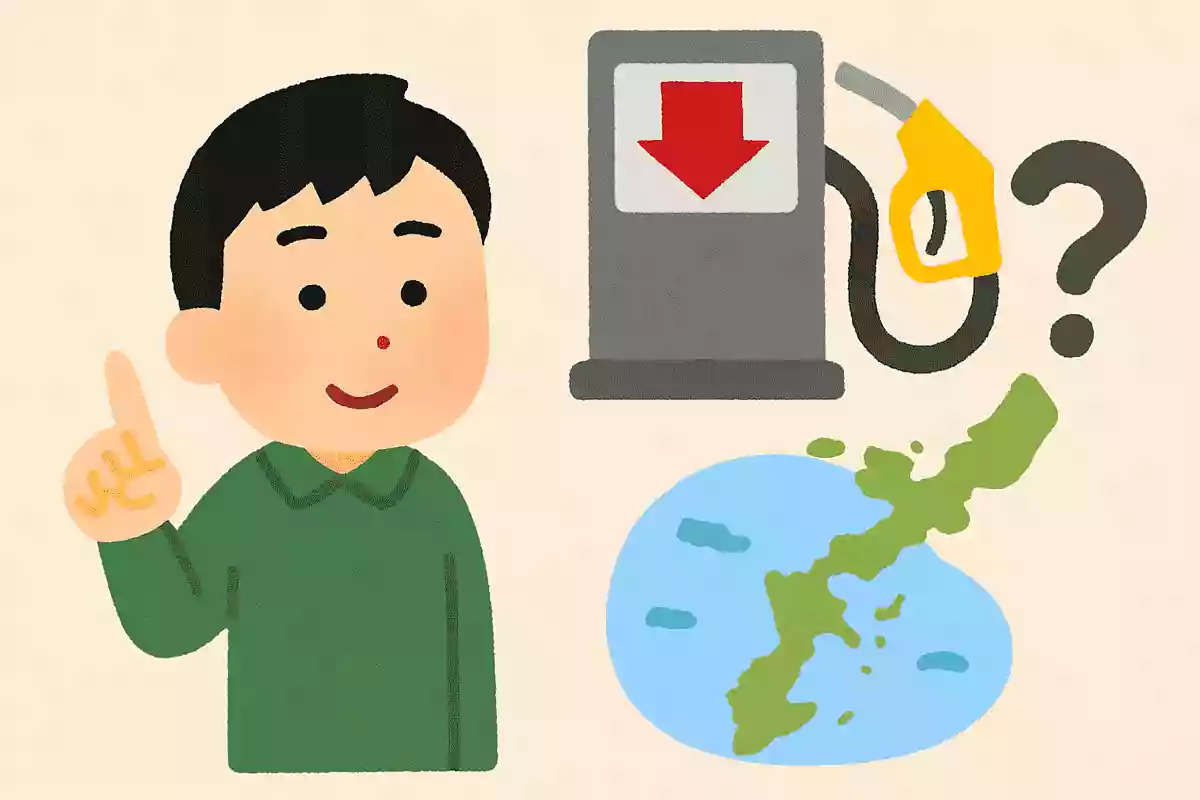
Why does Okinawa have partial tax reductions?
- To increase the number of tourists
- Because it is far from the mainland and has many remote islands, logistics costs are high.
- Because Okinawa Prefecture is the hottest in Japan.
See the answer
Because it is far from the mainland and has many remote islands, logistics costs are high.
Okinawa Prefecture is far from the mainland and has many remote islands, so logistics costs are higher than in other regions. To ease that burden, tax reductions are applied to fuels such as gasoline. Transportation seems to be well developed, doesn’t it?
In Japan in 2025, what is the fixed subsidy amount in yen per liter for gasoline?
- 10 yen per liter
- ¥20 per liter
- 30 yen/L
See the answer
10 yen per liter
As of 2025, as a gasoline price control measure implemented by the Japanese government, a fixed subsidy of approximately 10 yen per liter for gasoline, diesel, kerosene, and heavy oil is being maintained from December 2024 through the end of April 2025 (planned). This measure is intended to reduce the burden on the public caused by soaring fuel prices.
What kinds of taxes are imposed on gasoline?
- Consumption Tax and Gasoline Tax and Local Gasoline Tax
- Consumption tax and fixed asset tax
- Income tax and consumption tax
See the answer
Consumption Tax and Gasoline Tax and Local Gasoline Tax
Gasoline is subject mainly to two types of taxes: the consumption tax and the gasoline tax (national) plus the local gasoline tax. In addition, a petroleum and coal tax is also imposed, but the representative taxes are those two. The consumption tax is often misunderstood, but it is included as a taxable item.
Why is gasoline subject to double taxation?
- To distinguish it from other fuels
- For specific purposes such as road development, and for securing general revenue.
- For environmental protection only
See the answer
For specific purposes such as road development, and for securing general revenue.
Gasoline is subject to two taxes: the gasoline tax, which is used for specific purposes such as road maintenance, and the consumption tax, which applies to general consumption. This results in double taxation. However, since the consumption tax is levied on the total final price of the product, it is not legally problematic.
There are countries and organizations that support reducing the gasoline tax, but how many countries worldwide are there records of it having been implemented in?
- about 10 countries
- about 20 countries
- about 50 countries
See the answer
about 50 countries
In 2022, records show that around 50 countries worldwide implemented measures such as gasoline tax cuts and subsidies. As a response to soaring gasoline prices, many countries introduced tax reductions and subsidies. In reaction to rising gasoline prices, gasoline tax cuts have been implemented across countries around the world.
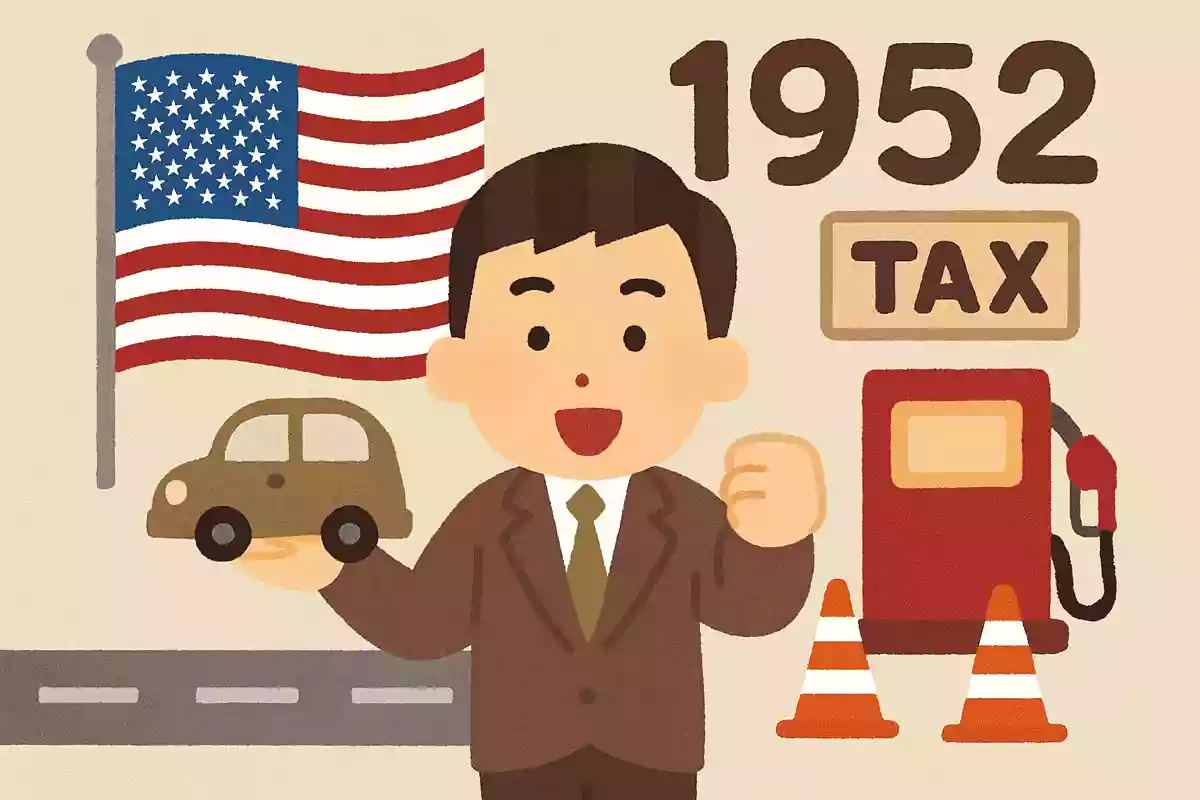
What was the background behind the introduction of the gasoline tax in 1952?
- Financing the costs of hosting the Olympics
- Financing for Highway Construction
- Securing postwar reconstruction funds
See the answer
Securing postwar reconstruction funds
In 1952, Japan was in the midst of post–World War II reconstruction and needed funding to develop infrastructure such as the nation’s roads. To secure those funds, a gasoline tax was introduced. It’s worth knowing this historical background.