

[Ghibli] Popular BGM. Enjoy the world of Ghibli through music!

Studio Ghibli has many popular works, such as My Neighbor Totoro, Castle in the Sky, and Spirited Away.
And just as popular as the films themselves is the background music that plays throughout them! Ghibli’s music is famously composed by Joe Hisaishi, and every piece is truly wonderful.
Many of the tracks are so memorable that some people can tell exactly which scene from which film it is just by hearing the BGM.
In this article, we’ll introduce a selection of Ghibli’s most beloved BGMs all at once! Please enjoy the world of Ghibli.
- Immersive Ghibli Classics! Recommended BGM for Work and Study
- [Ghibli’s Famous Songs Medley] The soothing world of Studio Ghibli that resonates with the heart
- Ranking of Popular Ghibli Songs [2026]
- Songs of Studio Ghibli: List of Theme Songs, Insert Songs, and BGM from Ghibli Music
- [Ghibli × Wedding] Carefully Selected Ghibli Masterpieces to Brighten Your Wedding Ceremony and Reception
- [Ghibli] Timeless Ghibli Classics in Classical Arrangements: The charm of Ghibli music performed with live instruments
- [Disney] Popular BGM: Enjoy Disney through music!
- Singable Ghibli Classics: A selection of beloved hits cherished by people of all ages
- [Animal Crossing BGM] Iconic and Popular Tracks from Animal Crossing
- [Disney BGM] Just listening will boost your mood! A collection of Disney classics
- [Karaoke] Sing! A Collection of Ghibli Classics
- Songs from Kiki's Delivery Service. Anime theme and insert songs. Ghibli classics.
- [Japanese-style BGM] Beautiful tones woven from Japanese tradition
[Ghibli] Popular BGM: Enjoy the World of Ghibli Through Music! (11–20)
Ghibli Piano Medley

Why is the sound of insects quietly resonating on a summer night so soothing to the heart? This “Summer Night Piano Medley: Good Night, Ghibli” pairs gently warming Ghibli melodies to create a blissful time for relaxation.
Alongside songs from Spirited Away and Whisper of the Heart, carefully selected numbers spanning Ponyo, Castle in the Sky, Porco Rosso, and The Cat Returns are all deeply satisfying to listen to, slowly sinking into your heart.

Ghibli rain to listen to when you’re tired

Why not soothe your heart with “Ghibli Rain to Listen to When You’re Tired,” performed by pianist Kou Miura, who turns feelings into sound? The set features six pieces, including “One Summer’s Day,” “Merry-Go-Round of Life,” “Carrying You,” and “The Path of the Wind.” Each track has a gentle timbre, offering a relaxation effect like listening to the sound of rain.
It’s a perfect Ghibli medley for quiet moments at home or when you want to drift into a comfortable sleep.
It also works well as unobtrusive background music, making it an ideal companion for reading.

2-hour Ghibli healing relaxation

This is a soothing playlist that begins with “Carrying You,” the theme song from the film Castle in the Sky (Laputa).
It runs for about two hours, so it’s perfect for anyone who wants to listen to lots of Ghibli classics.
While “healing BGM” often brings to mind instrumental music, this one is entirely vocal versions.
The singing features a calm, very gentle female voice.
It seems like a Ghibli medley that can satisfy both those who want to learn the songs and those who want to use it as sleep music.
Ghibli Orchestra Medley

Here is a medley that delivers songs from Studio Ghibli films in a classical arrangement.
The arrangement is grand and cool, making you feel as if you’ve been invited to a concert in your own home.
It might also be lovely as background music in an upscale venue.
For those feeling stressed, listening to this while doing housework or tasks may help relieve everyday stress.
The sound of the piano, strings, and wind instruments resonates with luxurious richness.

Namioto Ghibli Piano Medley

A soothing medley that gently unravels mind and body, where softly resonant Ghibli melodies on piano are overlaid with the sounds of waves and birds throughout.
Gentle numbers follow—like the insert song Mother’s Broom and A Town with an Ocean View from Kiki’s Delivery Service—that bring back memories of happy times spent with loved ones.
Other selections include Take Me Home, Country Roads from Whisper of the Heart and Hikoukigumo (Vapor Trail) from The Wind Rises, a line-up irresistible for listeners of any generation, from adults to children, stirring both nostalgia and a flutter of the heart.
Beautiful 2-hour Studio Ghibli music

Here is an audio collection that lets you fully enjoy two hours of Ghibli music, primarily arranged for solo piano.
The piano tones slip into your ears effortlessly without any stress, making it perfect as background music for work.
And since there are no lyrics, it’s ideal for listening passively to refresh your mind.
For those familiar with the original soundtracks, it also offers the chance to enjoy and take interest in these kinds of arrangements.
If you love Ghibli works, please give it a listen.
[Ghibli] Popular BGM. Enjoy the world of Ghibli through music! (21–30)
Ghibli Song Medley for Parents and Children to Enjoy
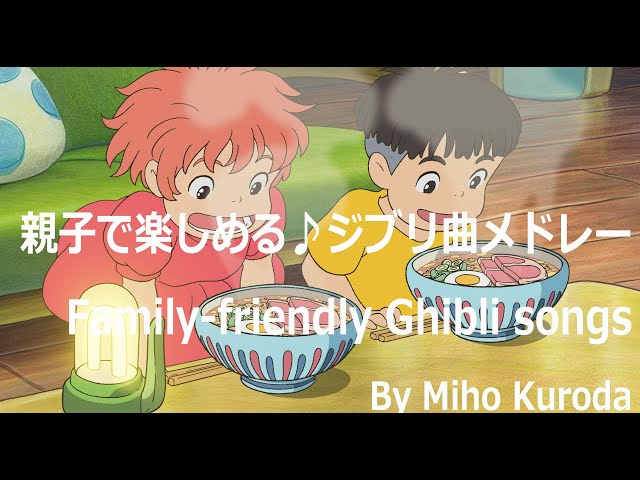
This is a Ghibli medley that picks out famous songs from works that even young children can enjoy, such as My Neighbor Totoro and Ponyo on the Cliff by the Sea.
It includes lively tunes and gentle melodies that kids know well, like “Sanpo (Stroll)” and “Ponyo on the Cliff by the Sea.” It’s perfect for parents and children to listen to together or to enjoy playing instruments, and it would be great as background music for children’s gatherings or birthday parties.
Since it includes vocals, you can naturally hum along and learn the lyrics.