
Reiwa era mustn't be missed: an enka singer with excellent vocals.

When you hear the term “enka singer,” what kind of performer comes to mind?
You might instantly picture a long-standing veteran who’s been singing for decades, but in recent years, thanks to karaoke TV shows and the like, more young singers have emerged, bringing a fresh sense of fun!
As for musical style, there’s been an increase in easy-to-listen-to songs that lean more toward pop these days.
Of course, there are the accomplished veterans, but with the influence of those programs as well, we’ll introduce talented enka singers who are approachable for all generations.
Give them a listen—you’ll likely feel enka become more familiar and appealing!
- Popular Enka Singers Ranking [2026]
- A Japanese female singer with excellent singing ability; an outstanding vocalist.
- Diva of Enka: A roundup of female singers leading the enka world
- A male singer with exceptional vocal skills: a powerhouse performer who captivates with volume, technique, and expressiveness.
- [2026] Recent hit enka songs: must-watch popular kayō tracks
- Enka Singer Popularity Ranking in Karaoke [2026]
- [Overwhelming Vocal Ability] A Compilation of Popular Female Singers
- Popular Enka. Latest Rankings [2026]
- Male singers with great voices: a collection of cool, seductive vocals
- Songs We Want to Listen to and Sing! Masterpieces and Popular Hits of Reiwa-era Enka
- [2026] Representative Famous Enka Songs: A Compilation of Classic Favorites [Beginner-Friendly]
- A lineup of classic hits! Karaoke songs recommended for the yutori generation
- Also great for karaoke with friends! Youthful songs that hype up the Reiwa era
Reiwa Era Must-See: Skilled Enka Singers (71–80)
Will you marry me?Niinuma Kenji
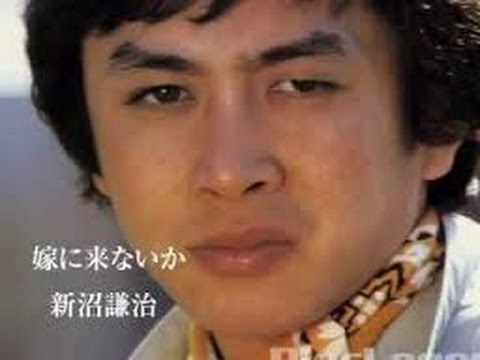
Kenji Niinuma, a singer devoted to enka, hails from Ofunato City in Iwate Prefecture and debuted in 1976 with “Omoide Misaki.” His second single, “Yome ni Konaika,” was a major hit, earning him a newcomer award and his first appearance on NHK’s Red and White Year-End Song Festival.
Known by the catchphrase “a man who is pleasantly sad,” he produced numerous hits such as “Seishun Sōfu” and “Headlight.” He also found success as a film actor and drew attention for his marriage to Hiroe Yuki, who won the All England Open Badminton Championships four times in a row.
In 2012, he took part in a charity song for the Great East Japan Earthquake.
With his warm, resonant voice, he is a recommended artist not only for enka fans but for listeners of all ages.
curiousHama Hiroya

Hiroya Hama is a singer-songwriter from Yamagata Prefecture.
He debuted in 1982 as the third lead vocalist of Tsuruoka Masayoshi & Tokyo Romanesque, captivating kayōkyoku fans with his clear, high notes and sophisticated, urban flair.
He began his solo career in 1994 and scored a hit in 2000 with “Omae ga Subete sa” (“You Are My Everything”).
In 2009, he also drew attention by performing incognito as the masked singer “The Mike Hanasanz.” Since 2019, he has released a trilogy themed around the stories of married couples, topping the cable request charts consecutively.
His vocals—delivered from a tall 180 cm frame—overflow with an appeal that transcends the boundaries between enka and pop.
Highly recommended for those who want to feel at home with enka!
Happy CoupleHiroyuki Nishikata

Hiroyuki Nishikata, a native of Karatsu City in Saga Prefecture, is an enka singer who debuted in 1987 with “Hokkai Suikoden.” With a career spanning over 35 years, he has produced hits such as “Omae Hitorisa.” His music is characterized by a unique style influenced by enka and folk songs, and he also has an interest in jazz and instrumental music.
In fact, he reportedly enjoys recording folk songs at home, which has influenced his vocal technique.
It might come as a surprise, but he has a habit of always drinking cola before he sings.
By adding new elements to traditional enka, Nishikata’s voice is recommended not only for enka fans but also for music lovers seeking something fresh.
I love you, Kobe.Gojō Tetsuya

Born in 1970, Tetsuya Gojō is an enka singer from Kyoto City, Kyoto Prefecture.
He began singing enka at the age of two and made his major debut in 2007 with “Sasurai Ohara-bushi.” His appeal lies in his wild, husky voice, with nostalgic melodies reminiscent of Showa-era kayōkyoku and lyrics imbued with masculine melancholy.
In 2015, he released his first album, “The Best: The World of Tetsuya Gojō.” He also values communication with fans, appearing on radio programs such as “Tetsuya Gojō’s Hot Time” and “Dōmo Dōmo—Tetsuya Gojō Desu.” Among young enka singers, he has a particularly strong presence and plays an important role in bringing the charm of good old-fashioned enka to today’s audience.
Oh, sake!Yoshi Ikuzo

Singer-songwriter Ikuzo Yoshi from Aomori Prefecture.
He debuted as an idol singer, but after changing his stage name in 1977, he made a major breakthrough.
He has worked across a wide range of genres, including folk, enka, and comic songs.
His signature track “Ora Tokyo sa Iguda” is an innovative song that incorporates rap in the Tsugaru dialect.
Around 2008, it became a hot topic on the internet, sparking the “IKZO boom.” The song, released in 1986, reached No.
1 on the Oricon charts, cementing his status as a full-fledged enka singer.
He has also created numerous commercial jingles and TV drama theme songs, earning affection from listeners of all ages.
Be sure to give Ikuzo Yoshi’s music a listen, where the charm of classic enka meets fresh musical sensibilities.