

A math quiz for adults. Can you solve it?


In this article, we’re showcasing plenty of math quizzes that we want adults to try!
We’ve gathered everything from puzzles you can solve with a flash of insight—but can be tricky if you’re too rigid—to serious problems that have appeared in the Math Olympiad.
They’re perfect for killing time and training your brain.
You can enjoy them with other math-loving adults, or challenge your child to see who can solve them faster—it sounds fun either way.
Give them a try with a game-like mindset!
- [Interesting] Collection of Math Quiz Problems
- Math quiz for elementary school students
- [Brain Training] Difficult Riddles That Even Adults Struggle With
- Fun Quiz Questions That Will Liven Up the Office [2026]
- How many can you solve? Brain-flexing math riddle quiz
- A collection of challenging quizzes for adults [Difficult]
- [Interesting] Collection of Matchstick Quiz Problems
- [Daily Challenge] A Collection of Cipher Quiz Problems to Stimulate the Adult Brain
- [Challenging and Fun!] Quizzes & Riddles for Adults
- [Battle of Wits] Stimulate your intellectual curiosity! Quiz questions that get adults excited
- [Trick Quiz] Quiz Questions That Excite Everyone from Kids to Adults
- [Interesting] A collection of brain teaser quiz questions. Let's train your brain!
- [Satisfying When Solved] Challenging Quizzes Recommended for Elementary School Students!
Math quiz for adults. Can you solve it? (1–10)
A pattern-recognition challenge you want to notice within 10 seconds!

Even the calculus I was good at in my student days becomes something I hardly use… but putting the difficult talk aside, how about trying a brain teaser: a “pattern recognition problem”? For example, what number do you think comes after 1, 1, 2, 3, 5, 8? The answer is 13.
This is the famous Fibonacci sequence, where each number is the sum of the two preceding ones.
It’s sometimes taught in high school math.
Another one: what comes after 1, 4, 9, 16? The answer is 25.
They’re all perfect squares.
Enjoy it while reminiscing about the old days.
10% correct answer rate! A puzzle you can’t solve if you’re too rigid-headed!

As a math quiz that tests your creativity, I recommend these tricky riddles that you can’t solve with a rigid mindset.
This one is a tough problem with a correct-answer rate of just 10%.
You’re asked to create equations with flexible thinking.
At the same time, it also tests your computational skills, so it makes sense that only 10% get it right.
The difficulty is quite high, making it perfect for stumping your friends.
If they really can’t solve it, give them a hint.
And don’t forget to prepare some scratch paper.

Fourth-grade math that becomes harder to solve the more you grow up

Here’s something I’d love parents with elementary school children to try.
At first glance, multiplying fractions looks simple, but if you don’t remember the method and rules, it can be surprisingly tricky.
Your child, who’s currently learning it, might breeze through it more easily than you do.
This could be a great chance to borrow their math textbook and try a few problems that catch your eye—it can actually be fun.
It should also spark conversations with your child.
Give it a try as a new family activity!

Math quiz for adults. Can you solve it? (11–20)
Math problems that elementary schoolers can solve but adults surprisingly can’t
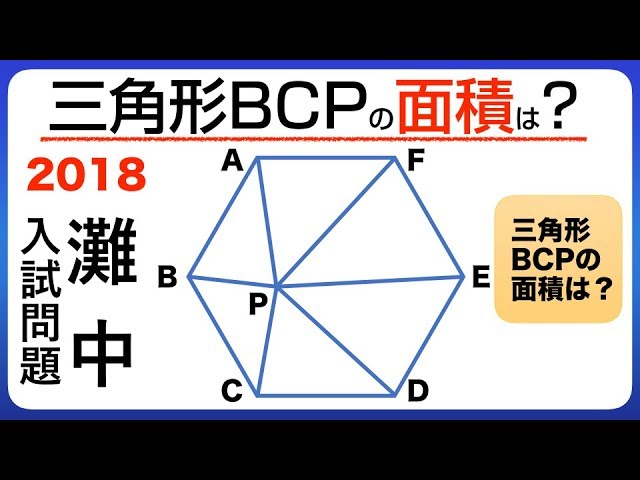
This is a 2018 entrance exam problem from Nada Junior High School.
Although it’s aimed at elementary school students, it’s quite challenging as you’d expect from a prestigious school.
That said, if your goal is simply to enjoy the problems, I think they’re the kind that even adults who weren’t particularly good at arithmetic can still appreciate.
Arithmetic puzzle from the Edo period

If you find ordinary arithmetic quizzes boring, I recommend trying some problems created in the Edo period.
Back then, people would write problems and their solutions on wooden votive tablets (ema) and dedicate them to shrines and temples, which gives a sense of long history.
Don’t underestimate problems devised by people of the past—they’re surprisingly difficult!
Find the pattern · IQ Test Kanji Calculation

This might not be a traditional arithmetic quiz.
It’s a calculation puzzle where you find patterns in kanji.
Once you see the answer, you may think, “Oh, so that’s all it was,” but because there are so many possible approaches before you get there, it’s easy to get confused—something common with this type of quiz.
Be sure to fully engage the parts of your brain you don’t usually use.

The logic puzzle “1,000 Lockers” from Microsoft interviews

As expected of a problem posed by the genius Bill Gates, it seems like the kind of question that only someone who can build a physics engine in their head and run it over and over like a game could solve.
It’s very puzzling to think it could be handled with formulas—something ordinary people wouldn’t readily come up with.