

Songs to Listen to and Play on Halloween! A Selection of Recommended Piano Pieces


The Halloween season is just around the corner! How about making your costume parties and cozy time at home even more enjoyable with music full of mysterious vibes? We’ll introduce piano pieces that elevate the Halloween mood—from classic piano masterpieces to arrangements of soundtrack theme songs.
Why not savor the uniquely Halloween world—slightly eerie yet somehow charming—through the sound of the piano? It’s great for background music, and if you play the piano, be sure to show off your skills at a Halloween party.
Now, let’s take a look at what pieces are out there together!
- [Classical] Recommended classical music perfect for Halloween
- It’s so cool if you can play these on the piano! A selection of irresistibly charming masterpieces.
- Songs that amp up Halloween: a roundup of perfect tracks for party BGM!
- Cute Halloween Song Collection! A carefully selected lineup of adorable tracks that both kids and adults can enjoy
- [Piano Recital] Recommended for Boys! A Curated Selection of Cool, Impressive, and Popular Pieces
- [Easy Halloween Vibes] Perfect BGM and Theme Songs for a Halloween Party
- Autumn for the Arts: Treasured Piano Pieces | Enjoy Classical Music by Listening and Playing
- Music you’ll want to play at a Halloween party: perfect for BGM or dancing!
- A compilation of film music played on the piano / that I want to play on the piano
- Disney Classics to Enjoy on the Piano | A Selection of Recommended Pieces
- [Classical] Famous Piano Works | Gem-like Masterpieces You’ll Want to Play at Least Once in Your Lifetime
- A must-see for piano beginners! Carefully selected classic pieces you should play at least once
- Carefully selected classical piano pieces to play at weddings that are sure to move you to tears
Songs to Listen to and Play on Piano for Halloween! Recommended Picks (21–30)
This Is Halloween (from the film The Nightmare Before Christmas)Danny Elfman
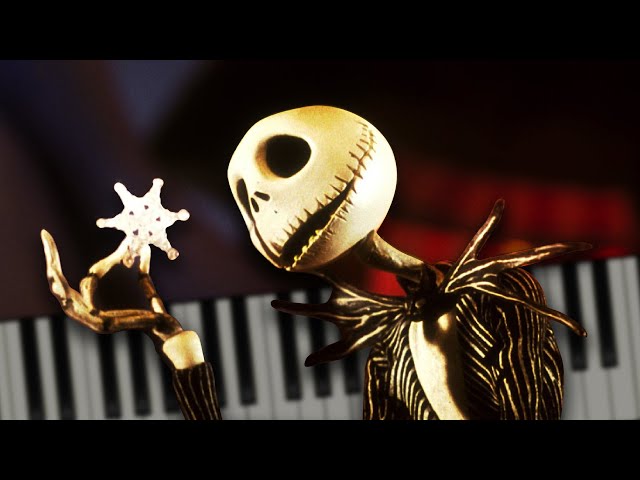
A song from the Disney film The Nightmare Before Christmas, which depicts a frantic comedy about trying to bring the splendor of Christmas into the monotonous Halloween that repeats the same way every year.
It proudly introduces the eerie town, making it a perfect track to amp up your Halloween.
With this song, your party and costume preparations are sure to go smoothly! It’s also catchy and easy to play, so be sure to try performing it yourself!

Peer Gynt Suite No. 1, Op. 46: In the Hall of the Mountain KingEdvard Grieg

The suite Peer Gynt by the Norwegian composer Edvard Grieg is part of the incidental music written for a play by the Norwegian playwright Ibsen.
In it, In the Hall of the Mountain King depicts a scene where the protagonist, Peer Gynt, is being cornered by trolls.
To heighten tension and eeriness, the piece is characterized by a structure in which the tempo and volume gradually increase.
Starting quietly and accelerating toward the climax, it brilliantly conveys a sense of impending danger.
You can also sense the influence of Norwegian folk music, revealing Grieg’s aspect as a “nationalist” composer.
It’s a perfect piece for creating a Halloween atmosphere—highly recommended for those who want to enjoy a spooky, fantastical world.
Halloween Listening and Playing! A Pick of Recommended Piano Pieces (31–40)
Happy HalloweenJunky ft. Kagamine Rin

“Happy Halloween,” produced by Junky, captures both the spooky and pop sides of the season.
It was created for the FamilyMart campaign “Miku LOVES Famima♪ Campaign 4th Happy Halloween ★ TRICK or MIKU?” The lyrics depict becoming a ghost and having fun playing around a Halloween town, making it perfect for boosting the holiday spirit! Since it’s a Vocaloid song, some parts can be tricky to play on piano, but it’s incredibly satisfying.
Try performing or listening with a delightfully eerie, poppy vibe—and have fun!

Tubular Bells (Main Theme from the film “The Exorcist”)Mike Oldfield

Transcending the bounds of a mere horror movie theme, Tubular Bells is celebrated as one of the great pieces in film history.
It first appeared on the eponymous solo album released in 1973 by British musician Mike Oldfield, and part one was used that same year as the theme for the classic horror film The Exorcist.
The recurring main motif feels somehow mystical and chillingly eerie—truly wonderful—but when played on the piano it takes on a different charm and atmosphere that’s fascinating to explore.
The right hand is basically repetitive, and the left hand only needs to play simple bass notes, so even beginner-level pianists can give it a try!

Carnival of Flames and ForestsSEKAI NO OWARI

SEKAI NO OWARI’s music is characterized by a fantastical sound and a grand, cinematic worldview.
This piece vividly conveys an otherworldly atmosphere, like a carnival set in an enchanted forest.
Its dreamlike tone paints images through sound, drawing listeners into a mysterious realm.
Released in April 2014, it was also used in a commercial for NTT Plala’s Hikari TV.
It’s recommended for those who want to enjoy a Halloween-like sense of the extraordinary, or take a brief step away from everyday life and let their imaginations soar.
Even on piano, the world-building remains intact, while revealing a distinct charm unique to the instrument that sets it apart from the original.
Give it a listen—or try playing it yourself.
The Carnival of the Animals, No. 12: FossilsCamille Saint-Saëns

Composed of 14 movements, The Carnival of the Animals is a suite by the French composer Camille Saint-Saëns and is also a hugely popular orchestral work for children.
Its witty playfulness and parodies of other composers make it an enjoyable piece for both adults and children.
This time, as a recommendation for Halloween, let’s highlight Movement No.
12, Fossils, from The Carnival of the Animals.
Strongly parodic in character, it quotes melodies from Saint-Saëns’s own Danse macabre as well as numerous French folk songs, and its light, nimble mood feels perfect for Halloween.
Even in a piano arrangement, the difficulty isn’t particularly high, so aim for a lively, humorous touch when you play!
Demon KingSchubert=Liszt

Even if you don’t know the composer or the title, you’ve probably heard this extraordinarily famous melody at least once.
It’s a song composed by Franz Schubert when he was just 18 years old, and the solo piano arrangement by Franz Liszt is also extremely well known.
Filled throughout with a sense of foreboding and terror, it’s a perfect piece for savoring a spooky Halloween.
As a piano performance, it’s highly challenging; the key is to master the distinctive triplets, adding ebb and flow while maintaining precise rhythm.
Depending on the scene, the music can at times turn plaintive and even gentle—so practice repeatedly with an ear for expressing those dramatic shifts.