

Four-character idioms wishing happiness: a collection of heartwarming expressions for everyday use

We all want to live each day in good health and happiness…
In these precious words, filled with that earnest wish, we find healing and peace of mind.
Four-character idioms that express our hopes for the happiness of family and friends, as we walk together through life’s joys and challenges, carry deep meaning and warm compassion.
This time, we introduce common four-character idioms that wish for the well-being of the mind and body and a richer life for those dear to us.
We hope you enjoy encountering these heartwarming words that bring energy to everyday life and to new beginnings.
- Four-character idioms that wish for happiness! Words that will warm the hearts of elementary school children
- Become positive with four-character idioms that resonate with the heart! Common yet deeply meaningful words.
- Enrich your heart with beautiful four-character idioms! A collection of expressions you'll want to use in everyday life.
- General: Four-character idioms that encourage determination—powerful, heart-stirring words
- Four-character idioms that help you achieve goals! Phrases you can use in everyday situations
- [Kakizome] Four-character idioms fit for the New Year: Introducing words that resonate with the heart and their meanings
- Four-character idioms for New Year’s resolutions! A collection of motivational phrase ideas
- Easy-to-remember, positive four-character idioms for elementary school kids! Words that brighten the heart
- Four-character idioms of love that touch the heart: expressing deep affection in everyday words
- [For Elementary Students] A Collection of Beautiful Four-Character Idioms to Know
- Amusing four-character idioms you’ll want to use right away! A collection of expressions to remember as general knowledge.
- [Elementary School Students] Perfect for Kakizome! A Collection of Four-Character Idiom Ideas
- Recommended for elementary school class goals! A collection of impactful ideas using four-character idioms
Four-Character Idioms Wishing Happiness: A Heartwarming Collection for Everyday Use (1–10)
sound health and safety (free from illness and calamity)

These are words that express a wish to stay healthy, free from illness, and spend each day peacefully.
They are perfect for conveying the desire to remain well in both mind and body throughout the year, and their sound carries gentleness and calm, offering a sense of reassurance and warmth.
They are also fitting as a prompt to review one’s health care and daily habits, and are used to express wishes for the happiness of family and friends.
The characters themselves convey freshness and a spirit of prayer, leaving a strong impression of the intention to spend the new year in good health.
It’s a familiar and important wish for everyone, isn’t it?

Longevity and well-being

It’s pronounced “enmei-sokusai,” and it means avoiding misfortune and prolonging one’s lifespan.
It’s also a phrase used when praying to Buddhas or gods for peaceful, uneventful days, so it’s good to use when you wish for the peaceful lives of those important to you.
Being able to live long without encountering disasters or calamities would be a blessing, wouldn’t it? To wish for a safe and long life, try sharing this four-character idiom with those around you at important milestones.
Please consider incorporating it.
Long-lasting longevity and auspicious blessings
This is a four-character idiom that expresses a wish for long-lasting happiness and good health.
It’s a perfect phrase to use when praying for the well-being of family, friends, and companions in everyday life, conveying a calm and warm feeling.
Used on birthdays or at new beginnings, it can carry the hope for longevity, health, and days filled with joy.
Reflecting on it in one’s own life can also inspire an awareness to cherish each day.
It’s a heartwarming expression that lets you show kindness and consideration to the people around you who are always there for you.

Four-character idioms for wishing happiness: A heartwarming collection of everyday expressions (11–20)
Eternal peace and prosperity
This four-character idiom expresses the wish that days full of enjoyment and joy will continue forever.
It’s a perfect phrase for spreading a cheerful, happy feeling while cherishing time with family, friends, classmates, and colleagues in everyday life.
Used in celebrations, letters, or greetings, it conveys the hope for lasting happiness and a peaceful life.
It also reminds us of the importance of finding joy in daily life and feeling grateful.
It’s a warm, positive expression that carries hope and brightness into the future.
peace and quiet
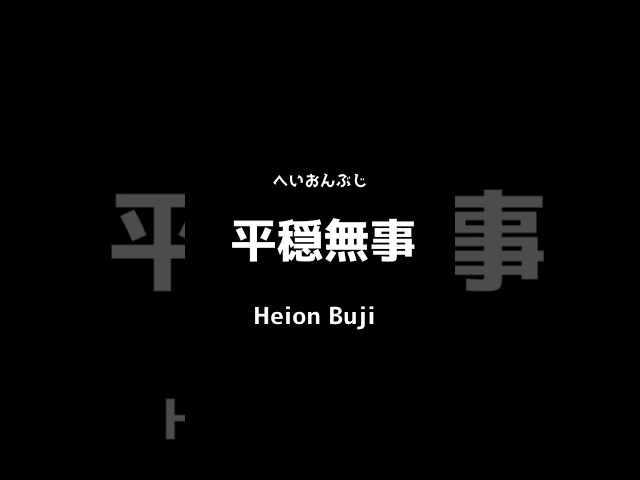
It’s a four-character idiom that means a calm, peaceful state with no particular problems or misfortune in everyday life.
For example, you can use it when looking back on the year if you and your family stayed healthy and got through without any major troubles.
“Heion” conveys calm and stability, while “buji” means that nothing out of the ordinary has happened; combining them emphasizes a reassuring, steady condition.
It’s also used in daily life and in New Year’s greetings, making it a warm expression that conveys appreciation for peaceful, unchanging days.
coexistence and mutual prosperity
@tommy71196 Coexistence and mutual prosperity are wonderful. One person's power has its limits. But to truly coexist and thrive together, we must avoid shifting responsibility onto others and refrain from criticizing people lightly.#Self-esteem
♪ Original song – Tommy – Tommy
It is a four-character idiom that means living and thriving together by helping one another.
It expresses the spirit of valuing relationships with others in various settings such as work, the community, and the home.
Even in difficult situations, by cooperating with each other, not only individuals but also those around them can grow together and build a stable life and society.
In everyday life, it can be used to show an attitude of cooperation with neighbors while respecting each other’s interests.
It is a heartwarming phrase that conveys the importance of not only individual effort but also joining hands and supporting one another.
Bringing good fortune and wealth

This four-character idiom expresses the wish to invite financial good fortune and happiness.
In daily life, it’s often used for thriving business, boosting the luck in one’s wallet, and stabilizing household finances—an ideal expression when praying for prosperity in monetary matters.
Its meaning goes beyond simply increasing money; it also includes the peace of mind, emotional ease, and richness of life that come with it.
It’s used in New Year’s and milestone greetings, as well as on shrine amulets and decorations.
As an auspicious idiom, it conveys prayers for the prosperity and happiness of oneself and others, and expresses the wish for good fortune.