

[Choral Piece] Difficult but cool! A work that overwhelms its listeners


You may have found your way here because you’re looking for a free-choice piece to sing at a choir competition or because you want to improve your choral technique! In this article, I’ll be introducing choral pieces that are quite challenging to sing.
Fast tempos, sudden tempo changes, wide melodic leaps, and complex staggered entries between parts—these pieces have it all.
If you can make it through the works listed here, you’ll surely feel a great sense of accomplishment.
Be sure to read to the end!
- [For Junior High School Chorus] A Curated Selection of Challenging Popular Works and Classic Songs
- [Choral Music] Recommended for Middle Schoolers! A Collection of Moving Choral Works & Choral Arrangements
- Ranking of Popular Choral Songs [2026]
- A Must-See for Middle and High Schoolers! Recommended Free-Choice Songs for Choir Competitions Catalog
- [For Women’s Choir] A Curated Selection of Moving Recommended Works & Female-Voice Choir Arrangements [2026]
- [Choral Songs] Recommended for High School Students! A Comprehensive Showcase from Classics to the Newest J‑Pop
- [Elementary School Chorus Songs] A comprehensive showcase from moving masterpieces to the latest hit tunes!
- [Choral Songs] Recommended for cultural and school festivals! Classic choir pieces & the latest popular songs
- [2026] Let's Sing at the Chorus Competition! A Roundup of Recommended Western Songs
- Upbeat Choral Pieces: A Curated Selection of Energetic Works Perfect for Choir Competitions and School Events!
- [Choral Songs You Can Sing in English] Recommended English Songs for Choirs [2026]
- A Collection of Vocaloid Choral Songs [Multiple Vocaloids / Choral Pieces / Tried Singing]
- Challenging tongue twisters: Introducing high-difficulty phrases and sentences!
[Choral Piece] Difficult but cool! Works that overwhelm the listeners (11–20)
I can hear (it)Sakushi: Iwama Yoshiki / Sakkyoku: Niimi Tokuhide

This is a choral piece that portrays the feelings of young people facing various issues heard from around the world.
It was composed as the set piece for the high school division of the 1991 NHK All-Japan School Music Competition and has continued to be sung by many choirs since then.
It is filled with checkpoints throughout, such as whether the high G in the soprano can be sung cleanly and whether musical elements like melody, harmony, and rhythmic sense can be mastered.
As a work that expresses the emotions of young people who, while being concerned about what is happening in society and the world, struggle with the dilemma of feeling powerless, it is a perfect choice for a free-selection piece in a choral competition.
rainbowLyrics and composition: Naotaro Moriyama・Kai Okachimachi / Arrangement: Taketomi Nobunaga

A choral piece with the theme of “rainbow,” beloved at graduation ceremonies and choral competitions.
Lyrics and music by Naotaro Moriyama and Omodaka Kai, arranged by Takafumi Nobunaga.
Released in September 2006 as the set piece for the junior high school division of the NHK All-Japan School Music Competition, this work shows how new meaning arises when we view things from different perspectives.
Musically, the independence and harmony of each part are crucial, and the male voices in particular require delicate vocal production.
It is a moving piece often sung at life’s milestones and moments of departure.
Pegasus Galloping Through the SkySakushi: Tate Hōrai, Sakkyoku: Kurosawa Yoshinori

Yoshinori Kurosawa, a leading 20th-century composer who left numerous choral works for elementary through high school students.
His “Sky-Galloping Pegasus” is a three-part mixed chorus piece composed in 1978, with the biggest challenge being the section where the parts divide into five in the middle of the piece.
It’s not structured as five parts overall; rather, it branches from the original three into five partway through, which makes it tricky.
There are also sections where the tempo suddenly drops and others where the pitches rise, and this complex musical design further increases the piece’s difficulty.

A Billion Light-Years of SolitudeKinoshita Makiko

A choral piece by Makiko Kinoshita themed on the vastness of the universe and human solitude.
Its frequent modulations and syncopated rhythms are distinctive, expressing the smallness of humanity within the vast cosmos.
Since its release in 1992, it has continued to be loved by a wide range of people, from middle and high school choirs to general music enthusiasts.
It comes in various voicings—mixed three-part, treble choir, and male choir—each with its own unique appeal.
The lyrics, based on a poem by Shuntaro Tanikawa, carry profound philosophical themes that resonate with listeners.
It is a perfect piece for moments when everyone wants to unite their hearts in song, such as at choral competitions or graduation ceremonies.
river mouthSakushi: Maruyama Yutaka / Sakkyoku: Dan Ikuma

Estuary depicts the flow of a river from its upstream course down to the sea.
Because the movement of the river mirrors the journey of students from enrollment to graduation, it is also cherished as a graduation song.
The female vocal range is high, so careful attention to vocal technique is necessary.
Adding expressive nuance is also challenging, so be sure to interpret the lyrics thoroughly as you sing.
Moreover, the accompaniment is extremely difficult, making the pianist’s role especially critical.

Song of First Intentsakushi: Kijima Hajime, sakkyoku: Nobunaga Taketomi

Hajime Kijima’s “Song of First Intent,” which sharply confronts society’s contradictions and supports the younger generation, is captivating.
This collection, composed from five poems, features only exquisitely beautiful pieces themed around familiar, everyday matters.
Among them, the title track “Song of First Intent” is infused with Kijima’s characteristic dynamism, making its subtle nuances quite challenging to sing.
In particular, there’s a section in the middle where the music swells all at once; how skillfully one can deliver that climax will likely be the key to the performance.
[Choral Piece] Difficult but Cool! Works That Overwhelm Listeners (21–30)
MoldauNEW!Sakushi: Iwakawa Saburō / Sakkyoku: Bedřich Smetana
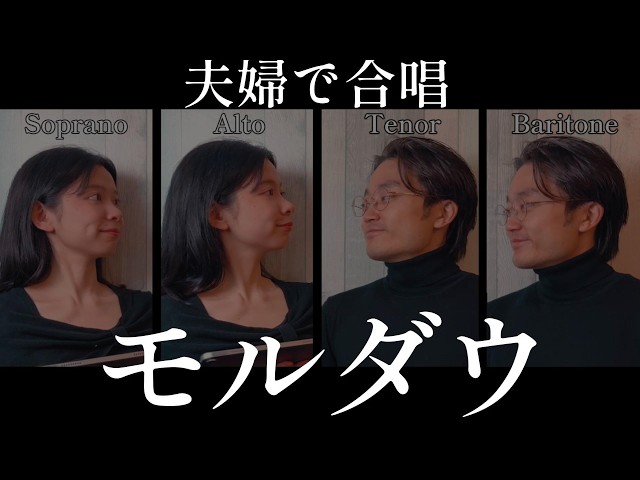
A choral piece depicting the majestic Bohemian river as it grows from its source into a great waterway.
The original melody is part of a symphonic poem that Bedřich Smetana began composing in November 1874.
In Japan, Saburo Iwakawa provided the lyrics and arrangement, and it has become established as a beautiful Japanese choral teaching piece, passed down and sung by many people.
Because the melody builds gradually from a gentle beginning, aligning the overlaps between parts and the subtle fluctuations in rhythm is a challenging point.
As you vividly imagine the shifting scenes and the expanse of nature, aim to let it resound with a grand sense of scale.