

Masterpieces for Harp: A curated selection of distinguished works featuring noble and delicate tones

The harp captivates with its transparent, breeze-evoking tone.
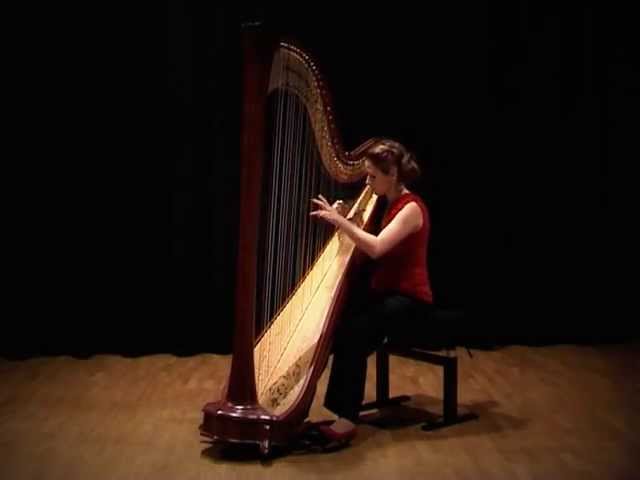
Beyond its soothing sound, the graceful figure of a harpist gently caressing the strings is also unforgettable.
Here, we present beautiful masterpieces—mainly classical works composed for the harp—that let you fully savor its timbre.
Whether it’s a calm evening when you want to settle your mind, or a morning when you’d like to start the day feeling refreshed, why not enjoy some harp masterpieces and spend your time in serenity?
- [Masterpiece Classics] A special showcase of gem-like masterpieces so beautiful they’ll move you to tears
- Cool classical masterpieces. Recommended classical music.
- Timelessly beautiful classical masterpieces. Recommended classical music.
- [Quartet] Masterpieces and Popular Pieces for String Quartet
- Mendelssohn’s Masterpieces | Popular Classical Music
- [Orchestra] Introducing famous and popular pieces
- [Ultra-Advanced] Even challenging for advanced players! A curated selection of highly difficult piano pieces
- A poignant classic masterpiece. Recommended classical music.
- [Christmas] Classical music to listen to at Christmas: recommended sacred Christmas songs
- Popular classical piano pieces. A collection of masterful performances by Japanese pianists.
- Sweet, gentle tones and resonance: A selection of enchanting classical guitar masterpieces
- Brahms's masterpieces. Popular classical music.
- Classical Music for Summer: A Selection of Cool and Refreshing Masterpieces
Masterpieces for Harp: A Curated Selection of Works Showcasing Noble and Delicate Tones (1–10)
Fantasia, Op. 95Camille Saint-Saëns
Charles-Camille Saint-Saëns is a leading French composer spanning the Romantic to the early modern era.
His Fantaisie, Op.
95, composed in 1893, is known as a work for harp.
This piece makes full use of the harp’s delicate and rich sonorities to evoke fantastical scenes.
It lasts about 9 minutes and 27 seconds and consists of two movements.
Through this work, Saint-Saëns explored the harp’s technical possibilities and created music that is richly expressive.
Listening to this beautiful harp piece on a quiet night to calm the mind, or on a morning as you welcome a new day, can bring a peaceful time.
It is especially recommended for those who wish to savor harp music deeply.
The Queen in the Tower, Op. 110Gabriel Fauré

Gabriel Fauré, a leading figure in French music, composed The Queen in the Tower, Op.
110 in 1918.
Originally written for harp, it was later arranged for piano.
This piece highlights Fauré’s delicate, lyrical musicality, offering a full taste of his romantic style.
The harp version in particular is highly regarded for its refined sonorities, which expand the instrument’s expressive possibilities, and it has become an important part of the harp repertoire.
Although Fauré did not come from a musical family, he displayed remarkable talent from an early age and produced numerous influential works throughout his life.
This work can be seen as a culmination of his romantic idiom and is an ideal choice for those who appreciate gentle, beautiful music.
Sinfonia Concertante for Harp and StringsJohann Christian Bach

Symphony Concertante for Harp and Strings by Johann Christian Bach—the youngest son of the Baroque master Johann Sebastian Bach, often called the “Great Bach”—is a work that highlights the refined beauty of Classical-era music.
The delicate timbre of the harp blends with the rich resonance of the strings, drawing listeners into an elegant sonic world.
Its melodies reveal a splendid harmony between the musical legacy he inherited from his family and his own distinctive innovations.
Striking a superb balance between technical refinement and expressive emotion, this piece is recommended both for those seeking a tranquil moment and for listeners who wish to savor classical music more deeply.
Masterpieces for Harp: A Curated Selection Highlighting Noble and Delicate Tones (11–20)
Concerto in C major for Flute and Harp, K. 299, First MovementWolfgang Amadeus Mozart

The Concerto for Flute and Harp in C major, K.
299, which Wolfgang Amadeus Mozart composed in Paris in 1778.
Although Mozart did not write many works for flute or harp, this piece brings out the full charm of each instrument and is praised as a work that showcases the breadth of his talent.
The pairing of flute and harp is distinctive, and the melody woven by these two instruments together is almost like a painting.
It’s a piece that even classical music beginners can enjoy, offering the feeling of listening to a story.
Little Concerto for Harp and Orchestra, Op. 39Gabriel Pierné

A work by the French composer Gabriel Pierné, who was active from the late 19th to the early 20th century.
It is a concerto combining harp and orchestra, and is also known by a German-style title.
Premiered in Paris in January 1903, the piece conjures a fantastical world through the harp’s delicate sonorities and the orchestra’s rich timbres.
Strongly Romantic in color, it is distinguished by refined orchestration.
Structured as a single continuous movement, it features an impressive dialogue between the harp and the orchestra.
It can be considered a masterpiece recommended for those who wish to enjoy the harmony of delicate yet abundant tone colors.
Sonata for HarpPaul Hindemith

Sonata for Harp by Paul Hindemith, a composer, conductor, and violist from Hanau, Germany.
Hindemith was also a versatile performer who mastered various instruments, including the violin, clarinet, and piano.
Concert Piece in G major, Op. 154Camille Saint-Saëns

The work for harp and orchestra by the French composer Camille Saint-Saëns was composed in 1918 and published the following year.
Dedicated to Nicole Anckier, this piece lasts about eight minutes and fully showcases the harp’s charm.
Characteristic of Saint-Saëns’s late style, it strongly reflects the Romantic era, with delicate yet rich sonorities that leave a strong impression.
While exploring the harp’s technical possibilities, it also achieves splendid harmony with the orchestra.
It is a recommended piece for those seeking soothing timbres or wishing to bask in an elegant atmosphere.
It might be especially nice to listen to on a fresh morning or a calm evening.