


Japan’s great culture: anime.
Over the years, many masterpieces have emerged, but the Heisei era was a golden age for anime, with numerous works still talked about today.
This time, we’ve picked out anime from that very Heisei era.
What’s more, we’ve focused on titles that people born in the Heisei era will find nostalgic.
As a result, you’ll see a steady stream of classics from the early to mid-Heisei period!
From mainstream Jump series to Kyoto Animation works, and even bishoujo-style titles, we’ve selected from all kinds of genres—sure to bring back memories of those days.
- [Nostalgic] Classic and Popular Anime Songs Recommended for People in Their 30s
- Calling all 20-somethings! A roundup of nostalgic anime from the 2000s to the 2010s
- [Nostalgic & Latest] A Special Feature on Anime Songs Recommended for People in Their 20s
- Anisongs that were hits in the 2000s: a nostalgic collection of legendary tracks
- Recommended popular anime from the 2000s
- Great anime songs that colored the Heisei era
- [Top 20] Anime Song Sales Ranking of the Heisei 30 Years!
- [From 2010 onward] A roundup of anime that teenagers feel nostalgic about
- [Latest & Greatest] A Special Feature on Anime Songs Recommended for Teens
- Recommended anime songs for people in their 50s. Classic and popular anime theme songs.
- Songs from the Heisei retro era that will get any generation excited! Timeless tracks you’ll want to listen to now.
- Including global smash hits! Anime songs recommended for Gen Z
- [Heisei Songs] Classic hits from the Heisei era that are popular on Instagram Reels
Classic anime that evoke nostalgia for those born in the Heisei era (1–10)
HUNTER×HUNTER

It wouldn’t be an exaggeration to call HUNTER×HUNTER the most intricately crafted story in Jump’s history.
It’s a series most men are probably familiar with.
There are two versions of the anime: the older one goes up to the Greed Island arc, and the newer one continues through the Chairman Election arc.
The voice casts differ between the old and new anime; Gon is voiced by Junko Takeuchi, known for Naruto, in the older version.
Takeuchi’s portrayal of Gon is incredibly compelling, so be sure to check out the older anime too!

The Melancholy of Haruhi Suzumiya
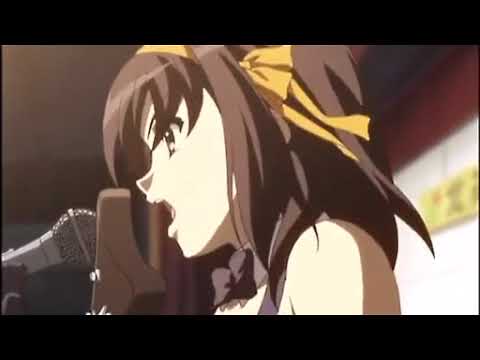
The Melancholy of Haruhi Suzumiya is an anime based on Nagaru Tanigawa’s light novel series, produced by Kyoto Animation.
It drew attention in many ways, including its delicately fluid animation and the decision to air the episodes out of chronological order.
The ending theme, Hare Hare Yukai, was a major talking point at the time, especially the sight of the characters dancing to the song.
Many fans recreated the choreography, and it is sometimes cited as the origin of the “odottemita” dance cover trend.
It is an important work in the history of Japanese anime and helped spark Kyoto Animation’s subsequent golden era.

NARUTO

A work that depicts the battles and growth of the protagonist, Naruto Uzumaki, it incorporates the image of traditional Japanese ninjas while showcasing flashy fights using supernatural powers.
Its distinctive characters and the increasingly intense combat scenes as the story progresses stirred a fiery excitement in viewers’ hearts.
Connections between people—such as friendship and love—are essential elements of the work, and its appeal lies not only in spectacle but also in a weighty, well-crafted story.
The worldbuilding, steeped in Japanese culture, is also distinctive, making it a series that enjoys immense popularity not only in Japan but overseas as well.
Cardcaptor Sakura
The manga Cardcaptor Sakura was serialized in the shoujo magazine Nakayoshi from 1996 to 2000.
It’s a very rare case where the anime reached its final episode before the original manga, and it became a worldwide hit.
Despite the anime ending first, it stays faithful to the source material; while there are some differences, it’s structured so that fans of the original can still enjoy it.
Many women born in the Heisei era likely got their heart-fluttering thrills and sense of excitement from Cardcaptor Sakura.
Yu Yu Hakusho

This work depicts the exploits of the protagonist, Yusuke Urameshi.
The distinctive characters and their unique abilities leave a striking impression.
The story begins with Yusuke dying in a traffic accident, then unfolds as he undergoes trials to be brought back to life.
Early on, it combines elements of the occult and detective fiction as he solves spiritual phenomena.
Starting around the Dark Tournament arc, the battle scenes become more prominent, revealing a new layer of appeal.
It’s a thrilling story that heats the heart, as ever-stronger foes appear one after another and the characters gain power to face them.
Pretty Guardian Sailor Moon

The quintessential shoujo manga, Pretty Guardian Sailor Moon.
If you were a girl born in the early Heisei era, chances are you admired it at least once, right? It laid the groundwork for modern series like Pretty Cure and became a massive hit not only as a manga but also as an anime.
Its merchandise sales were astounding, and it’s famous for establishing the new norm that even girls’ anime can generate substantial revenue from goods.
By the way, the author, Naoko Takeuchi, is married to Yoshihiro Togashi, the creator of HUNTER × HUNTER and Yu Yu Hakusho.
Ojamajo Doremi

This work portrays a girl who admires witches, Doremi Harukaze, as she trains as a witch apprentice and grows over time.
From 1999 to 2003, four seasons of the anime were broadcast.
While the protagonists are magical girls and the world of magic and witches is depicted, the story primarily unfolds as a human drama centered on the characters.
Magic is emphasized as a means to move forward, not a tool that solves everything.
Across the series, it strongly conveys the protagonists’ emotional growth, making it a moving and heartfelt work.