

Recommended for upper elementary grades! Exciting indoor recreation and games

Ever find yourself unsure what to do for upper-elementary recreation time? Wouldn’t it be perfect to have activities that not only get kids moving but also build teamwork and social awareness? Here, we’ve gathered ideas that make full use of collaboration and brainpower—from a game where you stack cups by working together, to psychological battles that test your timing and when to jump in.
Everything can be done with familiar, easy-to-find materials and will get the whole class excited.
Have fun with your friends!
- [Play Right Away!] Exciting Recreation Games Recommended for Elementary School Students
- Get the Fun Going! Easy Classroom Games You Can Play at School: Recreational Activities for the Whole Class
- Play ideas kids can enjoy from 1st to 6th grade [indoors & outdoors]
- Elementary School Fun Day a Big Hit! Indoor Game Idea Collection
- [Elementary School Rec] Recommended Games and Performances for a Fun Party
- [Children’s Club] Easy and fun indoor games. Exciting party games
- Fun activities for junior high school students. Recreation games.
- Recreation Ideas That Truly Excite High School Students! A Fun Collection of Activities
- [Elementary School] Indoor Games and Recreational Activities Recommended for Upper Primary Grades
- Games and activities everyone can enjoy together. A collection of fun play ideas.
- No worries even in the rain! Fun recreational activities you can do in the gym
- [Elementary School] Quick and Easy! Indoor Recreational Activities Perfect for Lower Grades
- A collection of simple indoor recreational games
Learning-based recreational activities incorporating English and early childhood education/learning (1–10)
English-only word association game

It’s always a blast to play an association game where you convey the prompt with gestures and hints instead of direct words.
This game is about trying that in English! Even if you’re not confident in English, just go with the flow—fire off words and use gestures to get your message across.
In fact, slightly awkward English often makes people go “Wait, what?” and gets everyone even more hyped (lol).
Direct, literal phrasing is off-limits—use English that leads others to the answer by association.
The person who gets the most answers across wins.

Learning-based recreational activities incorporating English and early childhood education/learning (11–20)
Theme Bingo

All you need is paper and a pen to enjoy “Prompt Bingo” anytime! Regular bingo typically uses numbers, but in this game you don’t use numbers—you write words that fit a given prompt into a 3×3 grid.
For example, prompts with lots of variety like “vegetables” or “fruits” work well.
When a word you wrote is called, mark it with a circle, and if you line up three in a row vertically, horizontally, or diagonally, it’s bingo! Compared to regular bingo, this version helps develop your thinking skills, so why not give it a try and have fun with it?

callout
It’s a game where you toss beanbags into two large boxes—one labeled with numbers and the other with English words—and then pronounce the word where your beanbag lands as many times as the number indicates.
It tests your quick judgment and smooth pronunciation, linking the recognition of the word and the number to the act of speaking.
You can throw casually and the game will still move along, but if you want to get closer to winning, it’s smart to aim for easier-to-say words or lower numbers.
How you divide into teams and how you decide on the words and counts can change how exciting the game gets, depending on how you set up the rules.

Alphabet Bingo

Here’s an idea for Alphabet Bingo.
You’ll need bingo cards and a set of cards with one letter of the alphabet on each.
To play, draw one alphabet card and read the letter out loud.
If the called letter appears on your bingo card, place a chip on it.
When your chips line up vertically, horizontally, or diagonally, you get Bingo! Once you’re comfortable with the basic rules, try adapting the game by matching pictures to letters or playing it like a karuta-style game.
Iya-Iya-Yo Game

It’s the “Iyayo-yo Game,” where you get excited by saying things you don’t like.
Even if you don’t know the lyrics, you’ve probably heard the melody—it’s played to the American folk song “Old MacDonald Had a Farm.” Everyone takes turns sharing unpleasant or all-too-relatable things and sings together, “Iyayo-yo.” It sounds very simple, but it’s actually tricky: can you think of something unpleasant on the spot, and can you sing it in rhythm? If you miss the beat or repeat something that’s already been said, you’re out and have to do a penalty.
We Will Rock You Game

The “We Will Rock You Game” is played to the rhythm of Queen’s iconic song “We Will Rock You.” It took off on TikTok and, while it seems simple, it’s actually quite tricky.
To the famous beat, players keep time with stomps and claps while each person, in turn and on the rhythm, gives one hint about the topic.
Everyone then uses those hints to guess the answer.
Since hints can’t overlap with others, coming up with them is challenging for the clue-givers as well.
Gesture Game
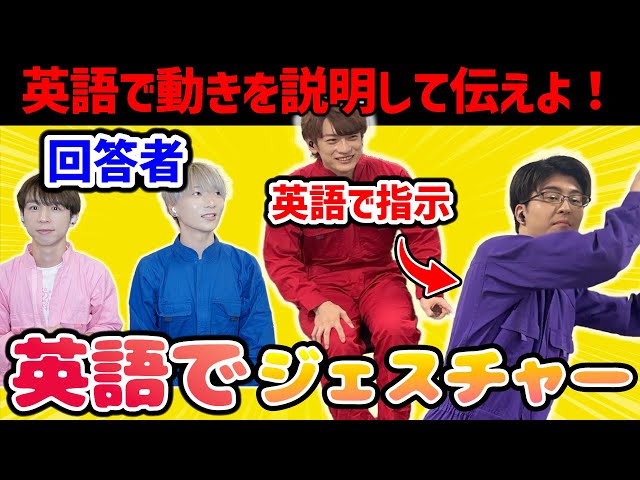
Let’s play a gesture game! It’s that game you often see on variety shows where you hold up a card with a prompt so the guesser can’t see it, then try to convey it through gestures and have them guess.
Of course, you mustn’t speak or make any sounds—gestures only.
Splitting into teams and setting a time limit, like seeing how many you can guess in 30 seconds, will make it even more exciting.