

![[Karaoke] Easy-to-sing songs by Dai Hirai, with explanations](https://i.ytimg.com/vi/8vSg3HLNEfc/sddefault.jpg)
[Karaoke] Easy-to-sing songs by Dai Hirai, with explanations


Hirai Dai is a singer-songwriter who has gained popularity with a sound rooted in surf music.
His songs carry strong messages, and many of them bring important people to mind as you listen.
His representative tracks include “Stand by me, Stand by you.”, “Mata Au Hi Made” (Until We Meet Again), and “Inoribana.”
This article introduces easy-to-sing songs recommended for those who want to sing Hirai Dai’s music at karaoke.
While Hirai Dai’s songs are generally quite challenging to sing, we’ve gathered relatively easier ones among them, so feel free to use this as a reference.
[Karaoke] Easy-to-sing songs by Dai Hirai with explanations (1–10)
tonightHirai Dai
Among Hirai Dai’s songs, the especially easy-to-sing and highly recommended one is “tonight.” It’s a love song with poignant lyrics and a sweet vocal tone, and it drew attention after being used on the reality show Terrace House: Aloha State! It’s a ballad with a relaxed tempo, and the overall range is C3–A4, which sits in a range that lets you sing as if speaking softly.
There are parts in the chorus sung gently in falsetto and some humming, so a sense of relaxation is crucial.
You’ll use more breath than you think, so instead of inhaling through your nose, breathe in through your mouth and release all of it in a thin stream together with your voice.
Imagining the sound resonating in your forehead or the top of your head should make it easier to produce!

Until we meet againHirai Dai

A perfect send-off song for graduation season, it features a simple arrangement centered on piano and strings, typical of graduation songs.
The lyrics, which give you the courage to take a new step amid a life filled with many meetings and farewells, are popular and have been sung at graduation ceremonies and beyond.
The melody has a wistful feel, with frequent use of falsetto.
When singing, focus on resonance in the glabella and head to keep your voice steady.
Don’t shout on the high notes—narrow the tone to produce a clean falsetto that suits the song perfectly.
If you’re experienced, adding a bit of vocal fry to the opening note will convey even more poignancy.
Beautiful DaysHirai Dai

This is a cheer song from Dai Hirai, released on March 14, 2025, for people setting off on journeys or embarking on new chapters in life! The overall vocal range is B2–G#4.
The chorus might be a bit high, but the rest sits in a comfortable range and seems easy to sing.
If you can hit high notes in chest voice, it might actually work well to belt a bit in the chorus! Each phrase feels like it steps up a level, so if you finish one phrase and sing the next one bigger, repeating that approach should help the song build more and more.
Sing with conviction and let your voice carry!
Stand by me, Stand by you.Hirai Dai

It became the ninth most-streamed song in Japan on Spotify in 2020 and has been loved on streaming platforms for a long time, surpassing 100 million total streams for the first time in the artist’s career.
I remember hearing it very often on social media and on cable radio.
The overall vocal range of the song is D#3–C5, but there are almost no high notes in chest voice; you can basically sing it within a calm range.
Since slightly higher placement often makes it easier to project properly, I think many people will find this range comfortable to sing.
It’s now a wedding staple, so if you learn it, you’ll have plenty of chances to sing it! Keep relaxation in mind and sing lightly.
Homeward Road in MarchHirai Dai

Released on February 20, 2022, this ballad was timed for graduation season, featuring memorable piano and strings! Announced as the 18th installment of the ongoing “Sunday Goods” series, its lyrics sing not of endings but of beginnings that connect us forward, carrying a bittersweet yet warm message.
It’s a song that makes you feel graduation isn’t an end but a start.
Highly recommended for those who want to sing one of Dai Hirai’s more gentle, mellow numbers! The overall vocal range is C3–B4, with the arrangement gradually building toward the chorus.
Accenting the downbeats will help the song come together beautifully so it doesn’t sound too monotonous.
Keep contrast and dynamics in mind as you sing!
What is hereHirai Dai
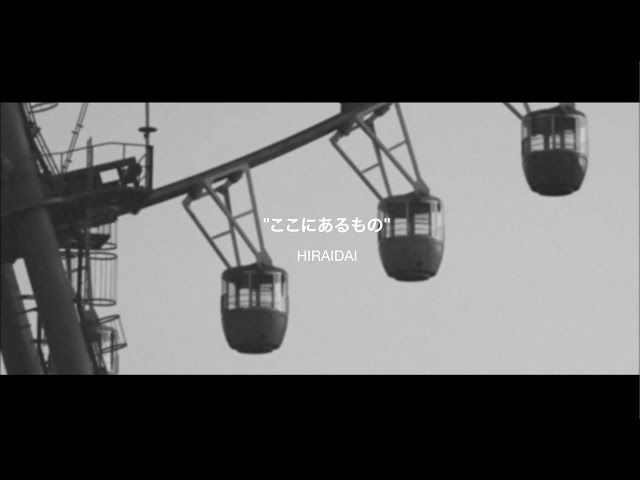
A heartbreaking ballad from the November 2020 “12th consecutive release project,” it marks a departure from his usual style by featuring only piano and strings, without ukulele or acoustic guitar.
The orchestral music video also became a hot topic! At 3:41, the song is surprisingly short, making it an easy entry point for first-time listeners of Dai Hirai.
“Koko ni Aru Mono” spans A#2 to B4 overall, with the low notes in the A melody being the key focus.
If you’re not used to low notes, your voice can get muffled and even hard for you to hear, making it tough to sing.
Lift your facial muscles firmly to resonate those lows! Raise your eyebrows and facial muscles as you inhale through your mouth, then, keeping that expression, slowly project your voice right in front of you.
The key is to release a compact “mass” of breath as if pushing it out!
Prayer FlowerHirai Dai

“Inoribana,” the famous song by Dai Hirai that became a nationwide hit.
It’s one of his signature works, so many of you have probably heard it.
One reason this song is easy to sing is that its basic vocal range is narrow.
Falsetto appears in the pre-chorus and chorus, but if those parts are too difficult, lower the key and sing them in chest voice.
Since the falsetto is in a low register, you should be able to manage it unless you’re particularly uncomfortable projecting your voice.
Alternatively, raising the key can also work.
Quite a few people have vocal cords that struggle with low falsetto but can produce a clean falsetto at a moderately higher pitch, so keep that in mind.
