

[History Quiz] General History Questions You Should Know

History has so many fascinating highlights, doesn’t it?
We often encounter it through stage productions and anime, and the more you learn, the deeper it gets—no matter how much you dig, you never reach the end.
From ancient times to the Heian and Sengoku periods, and into the modern era, history spans a wide range.
Here, we’ve put together a collection of general, history-related content in quiz format.
TV quiz shows have grown popular in recent years, and this article presents a multiple-choice quiz you can quickly browse through to review.
Much of it covers material like what you learned in school, so whether you’re a quiz fan or looking for a study companion, give it a try!
- Let’s take on the challenge! A multiple-choice history quiz for elementary school students. Review your history lessons.
- Quiz for junior high school students
- How many can you solve? Fascinating history trivia quizzes that spark intellectual curiosity
- Quiz for high school students
- [General] Surprisingly unknown? Test your geography skills with a three-choice quiz on Japan’s prefectures
- [Study] Fun to Know! A Collection of World History Trivia Quizzes
- Not taught in school! A roundup of historical trivia and fun facts
- [General Questions] Knowledge and Quiz Questions about Famous Anime
- [Killing Time] A Collection of Fun Trivia Quizzes You'll Want to Share with Someone
- Geography Quiz: General Geography Questions That Might Be a Little Useful to Know?
- [Easy] Quiz for Middle School Students
- Surprisingly unknown? Trivia Quiz [Multiple Choice: 3 Options]
- It never hurts to know! General knowledge quiz
[History Quiz] General History Questions You Should Know (21–30)
What is the war that took place mainly in Kyoto for as long as 11 years during the Muromachi period?
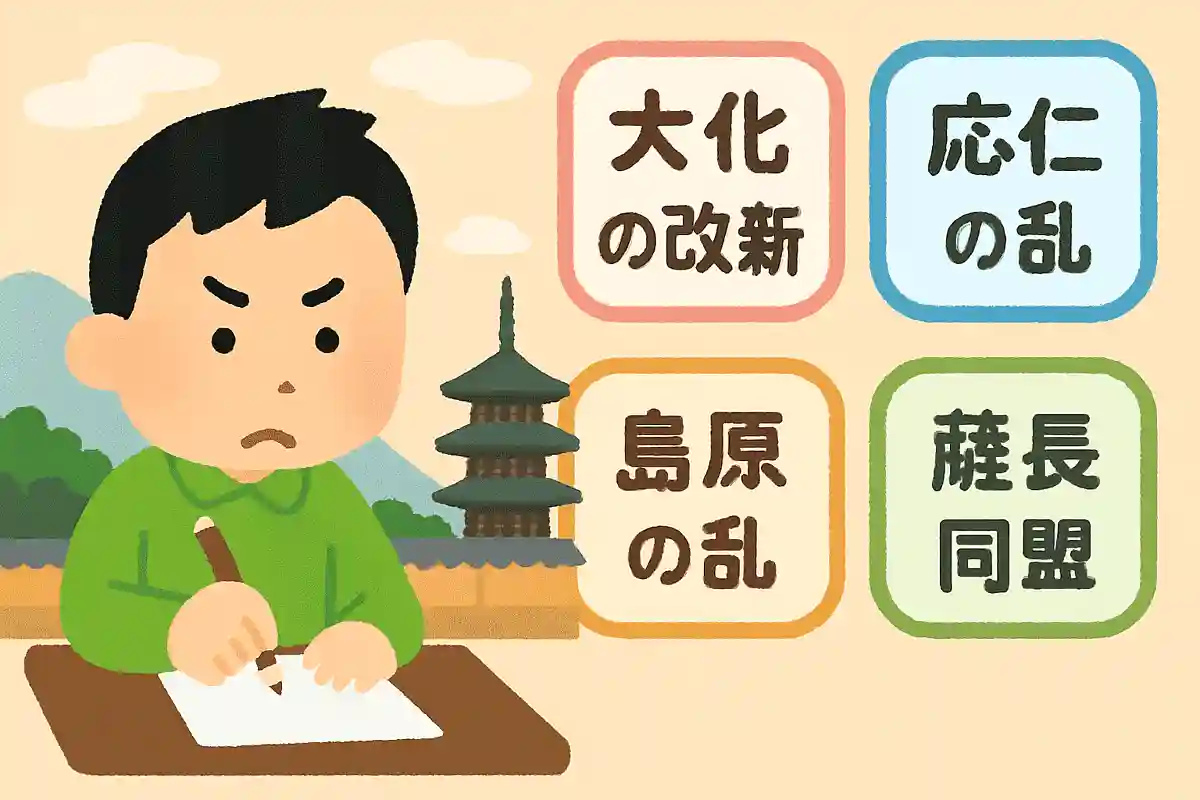
- Battle of Ichi-no-Tani
- Ōnin War
- Battle of Toba–Fushimi
- Battle of Yamazaki
See the answer
Ōnin War
The Ōnin War was a civil conflict that lasted for about eleven years from 1467 during the Muromachi period. It began due to a succession dispute over the shogunate and a rivalry between two powerful daimyō families, the Hosokawa and the Yamana. Kyoto, the main battlefield, was reduced to ashes by fierce fighting, the power of the Muromachi shogunate waned, and society shifted toward gekokujō—where the capable overthrew their social superiors—serving as a crucial turning point that led into the Sengoku period.

Which countries were exceptions that traded during the Edo period?
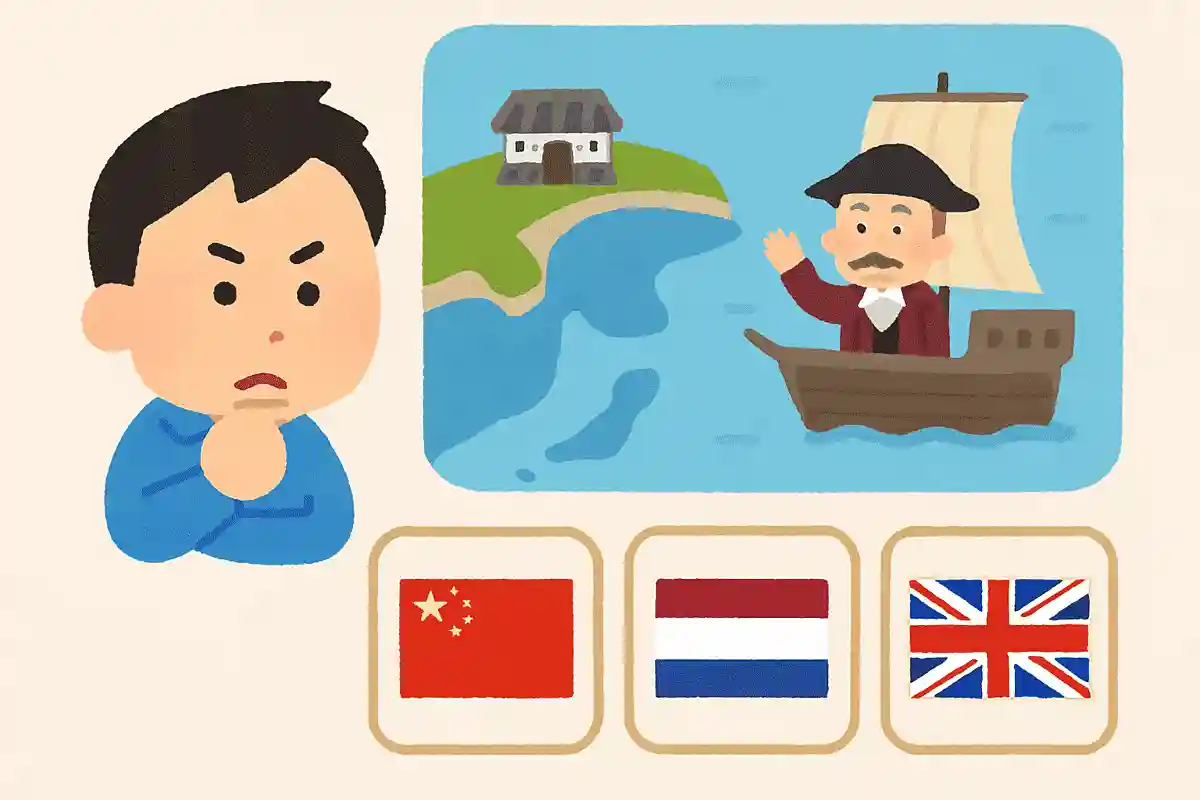
- Italy
- Netherlands
- Germany
- France
See the answer
Netherlands
During the Edo period, Japan practiced national isolation, but trade with the Netherlands was specially permitted at Dejima in Nagasaki Prefecture. From the Dutch came not only goods such as glassware and textiles, but also advanced Western knowledge in fields like medicine and astronomy. These studies were called Rangaku (Dutch learning) and played an important role in the development of Japanese scholarship, exemplified by Sugita Genpaku and others producing the “Kaitai Shinsho” (New Book of Anatomy).
Which declaration did Japan accept at the end of World War II and the Pacific War?
- Dortmund Declaration
- Munich Declaration
- Berlin Declaration
- Potsdam Declaration
See the answer
Potsdam Declaration
The Potsdam Declaration was a statement issued in July 1945 in the name of the United States, the United Kingdom, and China, setting forth the terms to end the war for Japan. Japan’s acceptance of it brought an end to the long-running Second World War and the Pacific War. It was a historically significant declaration that served as a catalyst for Japan’s rebirth as a peaceful nation.
Who wrote The Pillow Book?
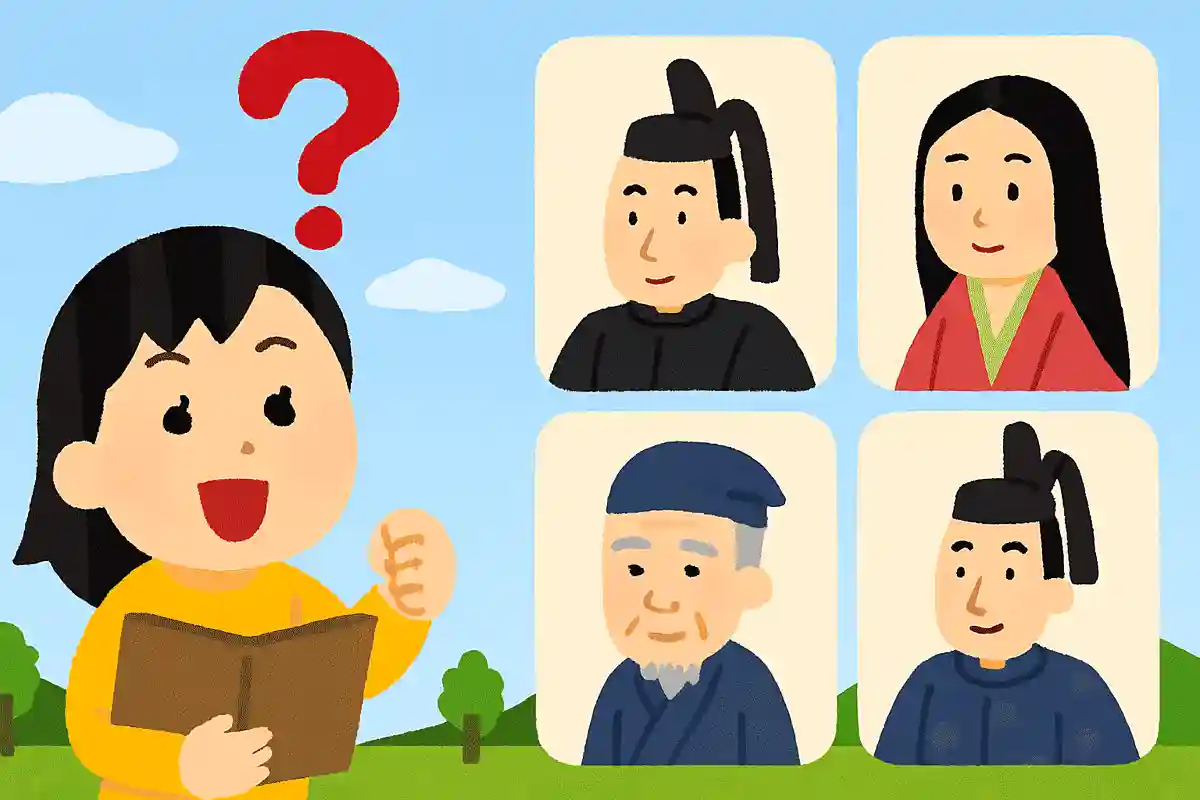
- Ki no Tsurayuki
- Yoshida Kenkō
- Sei Shōnagon
- Murasaki Shikibu
See the answer
Sei Shōnagon
Sei Shōnagon was a woman active in the mid-Heian period who served Teishi, the empress consort of Emperor Ichijō. The Pillow Book is said to be the oldest essay collection in Japan, and it records, with her keen sensibility, the beauty of the seasons in nature, scenes of life at court, and things that captivate the heart.
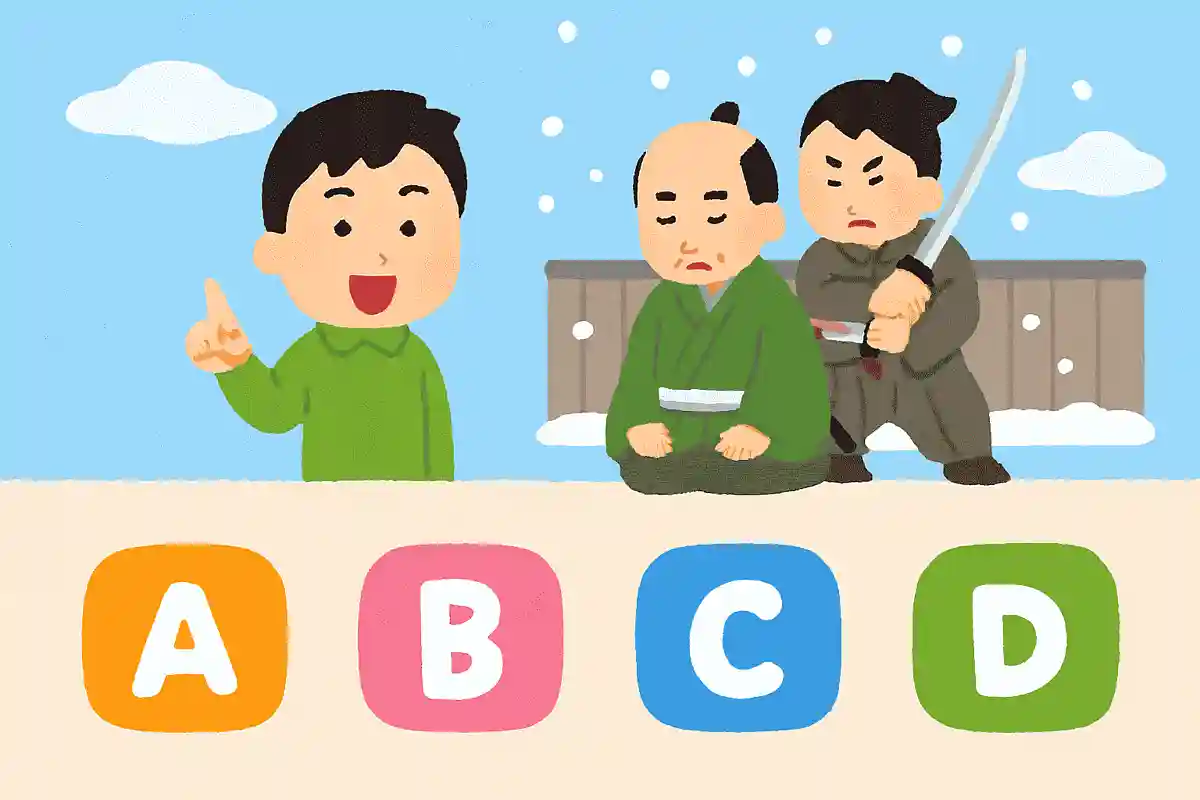
What “Incident” was the assassination of Tairō Ii Naosuke in the Edo period called?
- Incident Outside the Kikuya Gate
- The Incident Outside the Aoidamon Gate
- Sakuradamon Incident
- The Incident Outside the Umeda Gate
See the answer
Sakuradamon Incident
This is the incident in which rōnin from the Mito and Satsuma domains lay in wait and attacked Ii Naosuke, who was the shogunate’s Tairō, outside Sakuradamon at Edo Castle. It is said that the incident arose because Ii had aroused strong resentment by opening the country—concluding the Treaty of Amity and Commerce with the United States without the imperial court’s approval—and by carrying out the Ansei Purge, in which he severely punished those who opposed him. As a result of this incident, the shogunate’s authority was greatly shaken, and the flow of the times toward the Meiji Restoration became decisive.
Which organization in the Edo period maintained public order and cracked down on those who opposed the shogunate?
- government forces
- Satsuma Domain
- Byakkotai (White Tiger Corps)
- Shinsengumi
See the answer
Shinsengumi
The Shinsengumi was an organization that operated mainly in Kyoto at the end of the Edo period to maintain public order. It is known for its trademark flag bearing the character for “sincerity” (makoto) and its light blue haori coats with zigzag patterns. Under leaders such as Commander Kondō Isami and Vice-Commander Hijikata Toshizō, they established strict rules and rigorously cracked down on movements aiming to overthrow the shogunate. Their unwavering loyalty to the shogunate until the very end left a strong impression, and they continue to be depicted in many stories today.
In conclusion
We’ve presented a history quiz focusing on general topics. How many did you get right? There were probably things you knew and things you didn’t, but knowing this kind of information might come in handy someday. It’s just a simple summary, but I’d be happy if it could serve as a chance for readers to learn or have some fun.