

1991 Japanese Hit Songs | A collection of timeless classics loved across generations!

In 1991, when Japan was shaken as the bubble economy began to collapse, music continued to soothe people’s hearts amid anxieties about changing times, and a stream of hit songs was born.
In this article, we’re spotlighting Japanese songs that became hits in 1991! From timeless ballads cherished across generations, to positive anthems that encouraged the Japanese people, to poignant love songs that tug at the heart, we’ll cover a wide range.
Why not look back on “who you were back then” alongside these gem-like masterpieces?
- Japanese hit songs from 1990. Recommended masterpieces and popular tracks
- Hit Japanese songs from 1993: recommended classics and popular tracks
- Tear-jerking J-pop from the ’90s. Hit songs and real tearjerkers.
- [Heisei Retro] Hit Japanese songs that defined the 1990s. Recommended J-POP classics.
- Resonates across generations! Hit songs that colored the Heisei era, perfect as BGM
- Anime songs that were hits in the 1990s. Recommended masterpieces and popular tracks.
- A heartbreak song that was a hit in the 90s. Classic and popular tracks in Japanese music.
- A coming-of-age song that was a hit in the ’90s. A classic and popular track in Japanese music.
- A collection of iconic Heisei-era J-pop hits: Japanese songs that were massive hits in 1994
- A roundup of hit love songs from the ’90s
- Cool songs of the Heisei era. Hit tracks that energized the times.
- [J-Pop] A Collection of Soothing 90s J-POP Hits
- A heartbreak song that was a hit in the 1980s. A classic and popular track in Japanese music.
1991 Japanese Hit Songs | A Collection of Timeless Classics Loved Across Generations (21–30)
MetamorphosisKudō Shizuka

This is the 14th single by Shizuka Kudo, a singer who rose to fame as a member of Onyanko Club and went on to release numerous hits after going solo.
Chosen as the theme song for the Fuji TV drama “Nandara Mandara,” the track stands out for its funky groove.
The lyrics powerfully express the emotions of a woman swayed by love and her desire for change, capturing those moments when you just want to surrender to an irresistible romantic impulse—something many listeners can relate to.
Peaking at No.
2 on the Oricon Weekly Chart and selling over 440,000 copies, this song marked a turning point for Kudo as an artist, stepping beyond her earlier idol-style musical direction and becoming one of her signature works.
LOVE IS ALLTokunaga Hideaki

Released in September 1991, this was Hideaki Tokunaga’s 12th single, themed around a grand, universal love that transcends personal romance.
Inspired by images of soldiers heading to the battlefield during the Gulf War carrying photos of their families, the song was featured in a Gekkeikan commercial and became memorable alongside the ad starring Hiroyuki Sanada.
It reached No.
3 on the Oricon Weekly Chart and sold approximately 354,000 copies.
The track was also included on the album “Revolution,” released in October of the same year.
Its universal message—portraying the love and sorrow people share under the same sky—continues to resonate with hearts swayed by changing times.
Love will winKAN

I don’t think anything could be more perfect than this song title.
In terms of how widely the title has caught on, it’s probably the strongest in J-pop history.
It’s simple, yet it was a classic that played all over town back then as the ultimate positive love song.
Just time girlKATSUMI

I barely remembered this person, but after listening carefully this time, I realized again that while the song has an American AOR vibe, it’s a well-crafted piece.
The distinctive high-pitched vocals come through clearly, and it excels as a pop song.
BELIEVE IN LOVELINDBERG

It was a hugely popular rock band known for its female vocals.
At the time, delivering this slightly punk-tinged, high-energy sound with a female vocalist was rare, and that novelty resonated with listeners, propelling them to popularity.
They had a major influence on the female rock bands active today.
Pathetic.Tonneruzu

The comedy duo Tunnels also released a major hit song that year.
Rather than showcasing polished singing, I think the appeal was how they powered through it with the kind of momentum only youth can bring.
They’re still active on variety shows today, and that continuity is something that should be appreciated as well.
Neo Bravo!!Sazan Ōrusutāzu
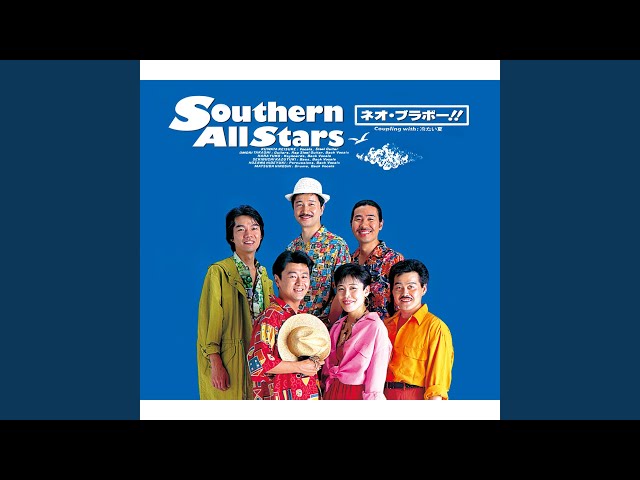
I always had the impression that Southern All Stars were selling more every year, so it was surprising that they didn’t make the top ten in the singles hits.
However, this song, which is treated like a hidden gem, has real depth, so I’m sure fans will like it.