

Surprising horse trivia you probably didn’t know: astounding behaviors and fun facts

Galloping powerfully at the racetrack, leisurely grazing in a pasture, dashing alongside the hero in a period drama…
Horses have long lived closely alongside humans, but how much do you know about their biology and abilities? In fact, the more you learn about horses, the more fascinating and profound their characteristics become! In this article, we’ll share plenty of horse-related trivia you’ll be eager to tell someone about.
It’s perfect not only for animal lovers, but also for horse racing fans and anyone looking for learning material for children!
- A surprisingly little-known horse quiz! A fun problem set where you can learn everything from general knowledge to astonishing biology
- Learn with Fun Horse Quizzes! Mysterious Facts about Horses Elementary School Kids Want to Know
- [Quotes and Sayings About Horses] Words that resonate with the heart. Deep, profound lines spoken by great figures and jockeys.
- [Dog Biology] Things You Might Not Know? Dog Trivia
- Exciting! Trivia quizzes that you’ll want to tell others about. A collection of surprisingly little-known facts.
- A one-line message to add to New Year’s cards! Horse-themed ideas that elementary school kids can write
- Useful right away in daily life! Surprising trivia and handy tips
- [Trivia] Do you know the answers? A roundup of animal quizzes
- [For Elementary School Students] Animal Quiz to Learn Knowledge and Fun Facts
- [Snake Trivia] Things you actually don’t know about snakes. Packed with astonishing facts!
- Not taught in school! A roundup of historical trivia and fun facts
- 2026 is the Year of the Horse! A detailed explanation of four-character idioms related to horses.
- A quiz of fun trivia: bite-sized knowledge that leads to new insights.
Horse trivia you might not know: surprising biology and fun facts (1–10)
When their ears are pointing backward, they are angry.

It’s said that a horse’s ears are a major clue to reading its feelings.
When the ears are laid back, it’s a clear sign of anger, indicating heightened irritation or alertness toward the surroundings.
Conversely, when the ears point forward, the horse is highly curious and focused on something.
Because ear direction reveals the direction of emotion, it’s also useful for gauging how to interact and what distance to keep.
Simply observing these small movements can help you build a relationship with a horse and enjoy interacting while noticing emotional changes—an interesting bit of trivia.

There are broadly eight blood types, but when subdivided, they exceed three trillion.
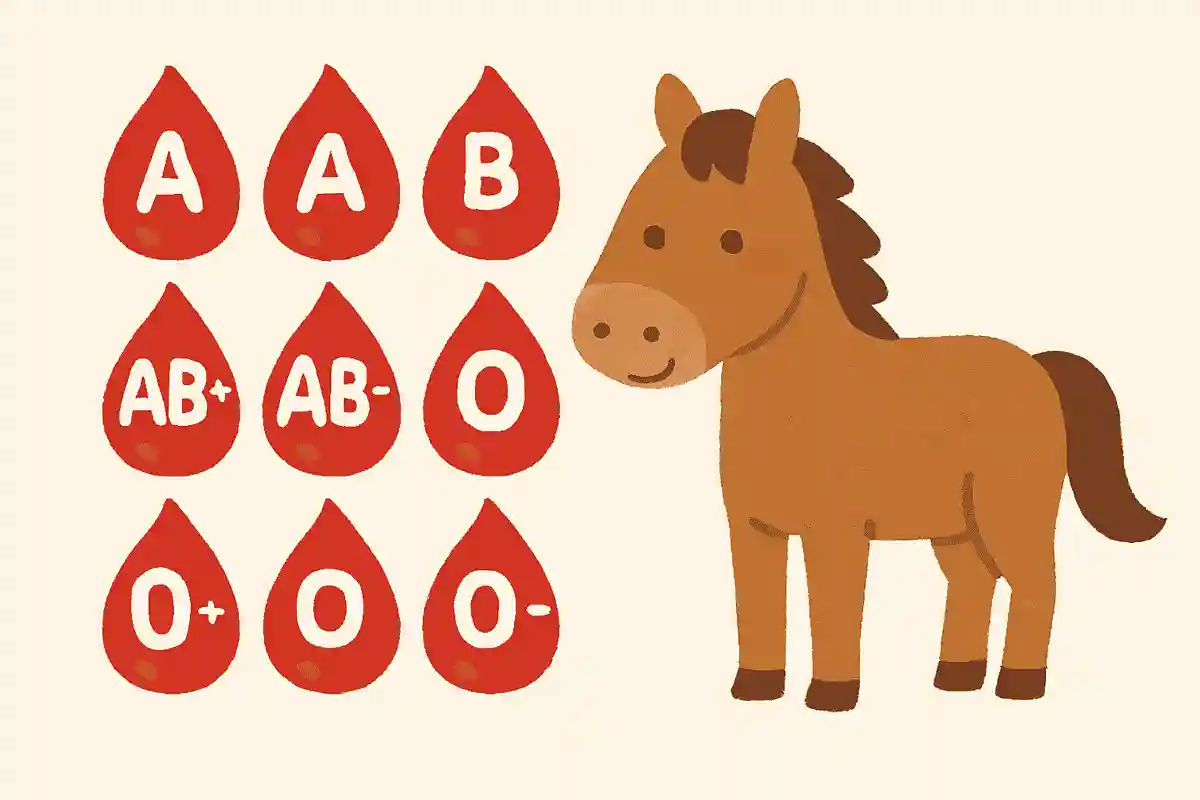
Equine blood types can be broadly divided into eight groups, and when classified in more detail, their combinations are said to exceed three trillion.
For example, even within the A group, there are subtypes such as Aa, Ab, and Ac, and each can be further designated as positive or negative, making them far more diverse than human blood types.
Horses can receive transfusions regardless of blood type, but the possibility of a rejection reaction is not zero.
Among them, there are horses known as “universal donors,” such as the Haflinger breed, which almost never cause transfusion reactions and play an important role in helping injured or sick horses.
Racehorses must be named using no more than 18 alphabet letters or 9 katakana characters.

There are rules regarding the number of characters and the way names are written for racehorses.
In both the Japan Racing Association (JRA) and regional racing, horse names are limited to 9 characters in Japanese, and up to 18 characters when written in the Roman alphabet.
These rules are intended to make names easier to read and handle in race programs, live commentary, and record management.
In addition, names are usually registered in katakana, and mixing in alphabetic letters or numbers is not allowed.
Names of English or other foreign origin must be converted into katakana for registration, making them easier for many people to pronounce and feel familiar with.
The creativity involved in expressing individuality and origins within the character limit is one of the appealing aspects of racehorse names.
Lesser-Known Horse Trivia: Surprising Biology and Fun Facts (11–20)
There is a breed called the Akhal-Teke, known as the golden horse.

It also appears on the national emblem of Turkmenistan and is considered one of the oldest existing horse breeds.
With its beautiful golden coat and flowing mane, it stands out even from a distance.
Originally bred in Turkmenistan in Central Asia, this breed possesses the strength to withstand harsh environments like deserts.
Beyond its elegant appearance, it is also highly valued for its speed and endurance and has long been prized as a partner for warriors and equestrians.
For this reason, it is known as the “Golden Horse” and continues to be cherished today as a rare and special presence.
The field of view is about 350 degrees.

In fact, a horse’s field of view is about 350 degrees, allowing it to see almost all around itself.
Thanks to their eyes positioned on the sides of their head, horses can easily notice dangers approaching from behind or from the sides—an adaptation reflecting their evolution for self-preservation since their wild days.
Beyond their wide lateral vision, horses’ eyes are also sensitive to changes in light and dark, giving them the ability to see well at night or in dim conditions.
The surprisingly little-known fact that their field of view is about 350 degrees is valuable for understanding their safety instincts and behavior patterns, and knowing it can make observing and interacting with horses much more interesting.

I can only breathe through my nose.

Horses cannot breathe through their mouths; they always inhale and exhale through their noses.
Because of this, breathing rhythm is crucial when they run.
During a full sprint, their nostrils flare wide to take in a large amount of oxygen at once.
If they were to breathe through their mouths, their lungs wouldn’t receive enough oxygen, and they wouldn’t be able to run for long.
It’s a lesser-known fact about horses, but knowing it will definitely make watching horse races or visiting the zoo more enjoyable.
Even this simple fact—that they can only breathe through their noses—lets you appreciate the intelligence and physical capability of horses as living creatures.
The Metropolitan Police Department and the Kyoto Prefectural Police have mounted police units.
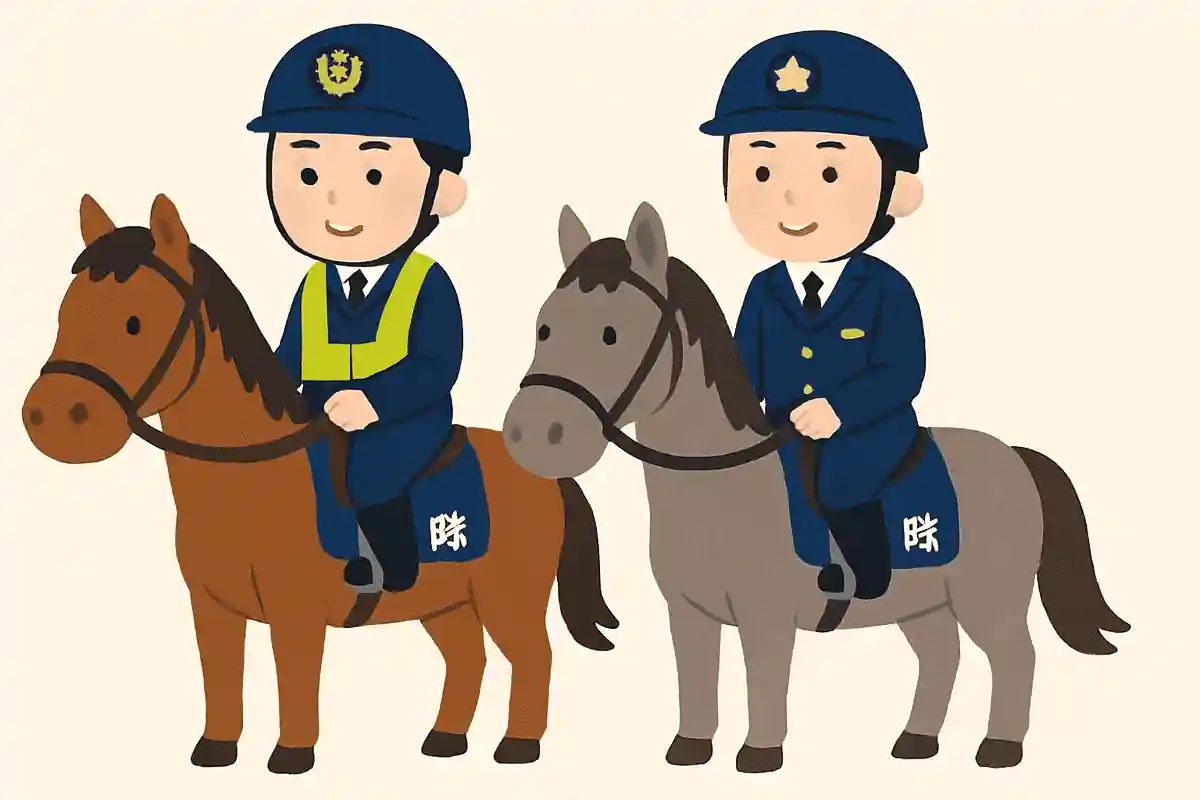
Both the Tokyo Metropolitan Police Department and the Kyoto Prefectural Police have mounted units.
Although you don’t often see them in the city or at events, they play an important role in crowd control and security operations.
The horses in these units are regularly trained to be accustomed to people and cars, and they have the ability to assess situations calmly.
By working in perfect harmony, mounted officers and their horses can guide people effectively even in crowded places.
The sight of mounted units marching in tourist areas or parades is very impressive and adds a special atmosphere to the cityscape.
Because opportunities to see them are rare, this is a bit of trivia that’s nice to know and makes you feel a little lucky.