

Classic and hit songs by nostalgic Japanese pop idols of the 80s

The 1980s were truly the “golden age of idols,” a decade that saw the rise of many legendary Japanese idols who left their mark on music history, such as Seiko Matsuda and Akina Nakamori.
Not only did they spark a social phenomenon, with many young people emulating their hairstyles and fashion, but we also can’t overlook the fact that countless hits and timeless songs were born in that era—songs that are still sung today in the 2020s.
This article brings together and introduces the classic and hit songs performed by the idols of the 1980s.
Whether you’re from that generation or a younger music fan curious about idol songs from this era, be sure to check it out!
- Top 1980s Female Singer-Songwriters: Popular Songs Ranking [2026]
- A collection of nostalgic Japanese hit songs from the 1980s that still linger in our ears
- [Showa/1980s] Old Johnny’s songs pierce the heart. Idol songs full of masterpieces.
- Nostalgic Yet Everlasting: Classic Hits by 1990s Idol Singers
- 80s commercial songs. A roundup of Japanese songs from the 80s that have been used in commercials.
- [Nostalgic] A roundup of anime songs and theme songs that were hits in the 1980s
- Akina Nakamori’s classic and popular songs
- Cool songs from the Showa era. Masterpieces from Showa that shine with sensuality, passion, and rugged charm.
- Masterpieces and hit songs of 80s Japanese pop (kayōkyoku)
- Popular Nostalgic Hits and Classics Ranking [1980s Japanese Music Ranking]
- Revival hits driven by social media! Classic Showa-era songs popular with Gen Z
- Recommended for women in their 50s! A curated selection of classic and popular karaoke hits that will get the crowd going
- Evokes the charm of the good old days. Showa-era inspirational songs that are still loved today.
Classic and hit songs by nostalgic Japanese pop idols of the ’80s (11–20)
Searching for EarthNEW!Hikaru GENJI

Released in March 1989, this was Hikaru Genji’s sixth single.
With its grand worldview themed around space and orbits and its dazzling synth sound, the track perfectly symbolizes the futuristic image they had at the time.
It’s also known as a core song on the album “Furikaette… Tomorrow.” Many people likely remember the fervor of that era along with the group’s glamorous performances on music shows.
A sweeping piece of idol pop, it’s one I recommend when you want to reminisce about the brilliance of those days.
LADYNEW!Shonentai

This is Shonentai’s ninth single, released in November 1987.
Beloved as the opening theme for the TBS anime “Lady Lady!!,” it’s also known for hitting store shelves just 19 days after the previous single—a remarkably short interval.
The anime’s worldview blends beautifully with Shonentai’s signature urban sensibility.
The fact that the jacket features an anime illustration rather than photos of the members has also become a popular talking point among fans.
With elegant strings layered over the trio’s soaring vocals, this piece makes you feel as if you’re watching a film—sweeping and dramatic.
As a refined slice of adult pop, why not give it a listen on a leisurely evening?
Boogie Boogie I Love YouNEW!Tahara Toshihiko
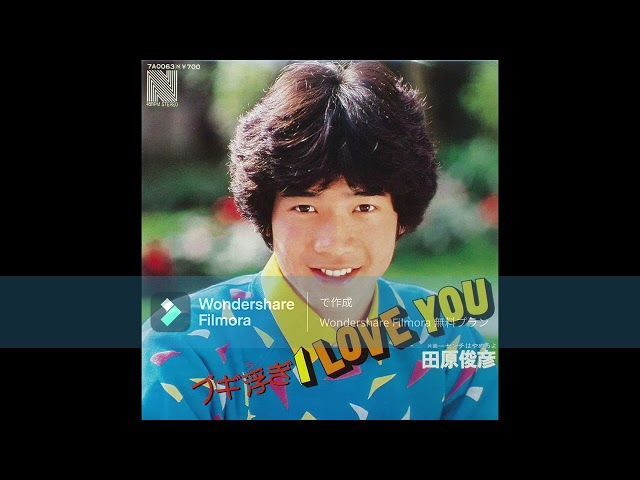
Toshihiko Tahara, who, together with Masahiko Kondo and Yoshio Nomura, led the 1980s idol boom as the “Tanokin Trio.” This work, his fourth single released in 1981, also became widely known at home as the CM song for “Sakura Color,” in which he himself appeared.
The pop, buoyant melody crafted by Satoshi Miyashita and the light, breezy sound riding on a boogie rhythm make you feel like your body starts moving on its own just by listening.
The flashy performance on music shows—where his pure white costume got wet and changed color—has become the stuff of legend, showcasing his talent as an entertainer.
This irresistibly cheerful dance number will lift your spirits when you’re feeling down, and anyone who remembers those days is sure to break into a smile!
CROSS TO YOUNEW!otoko

This is their fourth single overall, released in August 1989.
It’s a fast-paced rock number that makes full use of the style where every member of Otokogumi takes lead vocals.
The lyrics depict breaking free from the status quo and looking toward tomorrow with hope, carrying a powerful energy that really pushes listeners forward.
It was also used as a CM song for a watch brand, and its urbane sound coming from TV left a strong impression.
The album “San” includes an alternate version with different lyrics and arrangement, giving fans the fun of comparing the two.
Perfect for a night drive or whenever you’re ready to take on a challenge—it’s guaranteed to get your spirits up!
Blue Jeans MemoryNEW!Kondō Masahiko

This is the third single by Masahiko Kondo, created by the Showa-era hit-making duo of lyricist Takashi Matsumoto and composer Kyōhei Tsutsumi.
A classic that captures the headlong rush of youth and the bittersweet resolve of a young person setting off for the big city.
Released in June 1981, the song became a major hit as the theme for the film of the same name, in which Kondo himself starred.
The soul-shaking shouted line near the end was actually Kondo’s own idea! It took the top spot on the Oricon Weekly Chart and on “The Best Ten,” sending Japan into a frenzy at the time.
Why not listen to this song when you want to rekindle that fiery feeling from back then, or when you need to psych yourself up for a big moment?
Yokohama teakNEW!Kondō Masahiko

Set against the nightlife of Yokohama, this work portrays a slightly grown-up lovers’ escapade.
It’s Masahiko Kondo’s second single, released in March 1981.
At the time, it became a hit that found its way into living rooms through music shows, even reaching No.
1 on “The Top Ten.” It has long been cherished as a local Yokohama song, evoking a bittersweet page from youthful days.
The catchy chorus riding on a jive rhythm leaves an unforgettable impact after just one listen.
It’s perfect as background music for a nighttime drive or for anyone who wants to feel the heat of those days and get a boost of energy.
Sorry to keep you waiting.NEW!Nomura Yoshio

A solo track by Yoshio Nomura, who enjoyed immense popularity as a member of the Tanokin Trio.
The style—setting bittersweet words of apology to sprightly rock ’n’ roll—can truly be called a fusion of idol pop and band sound of the era.
Sprinkled with Beatles-esque touches that foreshadow the formation of THE GOOD-BYE, it lifts the listener’s spirits.
Opening the June 1983 album “Matasete Sorry,” the song also served as the theme for the film “Third-Class High Schooler,” in which Nomura starred.
It’s a recommended pick when you want to relive the flutter of youth or are searching for a hidden gem of Showa-era pop.
Love Won’t StopWink

Their song “Ai ga Tomaranai” (Can’t Stop Love) was the catalyst for their big breakthrough.
Their momentum continued into the 1990s, and their songs kept lighting up the charts through the mid-’90s.
It was even said that the new headquarters of their then-record label was built on the back of their many hits.
C−GirlAsaka Yui

It can be considered one of Yui Asaka’s signature songs, emblematic of the late-’80s idol scene.
Its poppy melody about a breezy summer romance and the catchy lyrics—typical of a commercial tie-in—leave a strong impression.
Released in June 1988, it was a major hit, topping the Oricon chart for two consecutive weeks.
Used as a Kanebo cosmetics commercial song, it captured the hearts of young women.
It’s recommended not only for those who feel nostalgic about their youth, but also for anyone who wants to discover the appeal of 1980s idol pop.
Sailor Suit and Machine GunYakushimaru Hiroko

This work, which marked Hiroko Yakushimaru’s debut single, was released in November 1981 as a movie theme song and became a major hit.
With its pure image and clear vocals, it offered a fresh impression amid the idol boom of the time.
The lyrics, themed around a girl’s growth and a new departure, were also embraced as an anthem that draws out the hidden strength of youth.
Thanks in part to the movie tie-in, it became a blockbuster on the Oricon charts, selling about 1.2 million copies.
It is a landmark 1980s idol song—one to be listened to alongside memories of one’s youth.