

Classic and hit songs by nostalgic Japanese pop idols of the 80s

The 1980s were truly the “golden age of idols,” a decade that saw the rise of many legendary Japanese idols who left their mark on music history, such as Seiko Matsuda and Akina Nakamori.
Not only did they spark a social phenomenon, with many young people emulating their hairstyles and fashion, but we also can’t overlook the fact that countless hits and timeless songs were born in that era—songs that are still sung today in the 2020s.
This article brings together and introduces the classic and hit songs performed by the idols of the 1980s.
Whether you’re from that generation or a younger music fan curious about idol songs from this era, be sure to check it out!
- Top 1980s Female Singer-Songwriters: Popular Songs Ranking [2026]
- A collection of nostalgic Japanese hit songs from the 1980s that still linger in our ears
- [Showa/1980s] Old Johnny’s songs pierce the heart. Idol songs full of masterpieces.
- Nostalgic Yet Everlasting: Classic Hits by 1990s Idol Singers
- 80s commercial songs. A roundup of Japanese songs from the 80s that have been used in commercials.
- [Nostalgic] A roundup of anime songs and theme songs that were hits in the 1980s
- Akina Nakamori’s classic and popular songs
- Cool songs from the Showa era. Masterpieces from Showa that shine with sensuality, passion, and rugged charm.
- Masterpieces and hit songs of 80s Japanese pop (kayōkyoku)
- Popular Nostalgic Hits and Classics Ranking [1980s Japanese Music Ranking]
- Revival hits driven by social media! Classic Showa-era songs popular with Gen Z
- Recommended for women in their 50s! A curated selection of classic and popular karaoke hits that will get the crowd going
- Evokes the charm of the good old days. Showa-era inspirational songs that are still loved today.
Classic and hit songs by nostalgic Japanese pop idols of the 1980s (71–80)
Valentine KissKunikyo Sayuri

Kokushō! At the height of Onyanko Club’s popularity, even back then a lot of guys cheered for her by shouting “Kokushō!” rather than “Sayuri-chan!” “Valentine Kiss” is one of her signature songs, of course, and as someone from the generation that copied that choreography and danced it, I’d pick it as one of my top songs—even if it’s not exactly a hidden gem.
Hello/GoodbyeKashiwabara Yoshie

Yoshie Kashiwabara, who debuted from Star Tanjō!, released “Hello, Goodbye” as her seventh single, and it became a big hit.
Its memorable lyrics resonated with listeners and boosted the popularity of tea-serving coffee shops.
The cute choreography featuring hip-swaying is also a highlight.
She has a lovely smile, and—as you’d expect from a Star Tanjō! alum—she’s got solid vocal skills too.
BOY’s ThemeKikuchi Momoko

Momoko Kikuchi is still active on the front lines today.
“Sotsugyō (Graduation)” and “Mō Aenai Kamoshirenai (We Might Never Meet Again)” are undoubtedly her two major hits, but “Boy no Theme” also drew a great deal of attention at the time as the theme song for a film in which she herself starred.
The lyrics for this song were written by Yasushi Akimoto.
The Door to SummerMatsuda Seiko

It’s a classic that carries the sparkle of summer’s arrival and the thrill of a budding romance.
Just listening to it makes your heart skip and gives you the urge to dash off somewhere, doesn’t it? Released in April 1981 as Seiko Matsuda’s fifth single, this track is also included on the acclaimed album “Silhouette.” Its hope-filled lyrics and Seiko’s endlessly soaring high notes blend perfectly, as if gently giving listeners a push forward.
It was also featured at the time in a Shiseido “Ekubo” commercial, enchanting many with her voice.
Isn’t it just perfect for opening the door to a new season or when you want to refresh your mood?
Heavenly KissMatsuda Seiko

This song is filled with the sparkling thrills that make your heart flutter at the moment love begins.
Composed by Haruomi Hosono, its boldly shifting key changes are innovative, guiding listeners into a dreamy world.
Takashi Matsumoto’s lyrics depict the genuine feelings of a young woman, her heart racing as she imagines a future with the one she loves.
Released in April 1983, the track was featured as the theme song for the film “Legend of Plumeria,” among others, and became the artist’s 11th consecutive No.
1 hit.
It is also included on the album “Utopia.” It might be the perfect song to accompany that blissful moment when you feel your relationship with someone special is about to take a step forward.
Lapis-Lazuli EarthMatsuda Seiko

A warm message that finds hope in the darkness makes this one of Seiko Matsuda’s signature songs, capturing countless hearts and never letting go.
The piece unfolds from an image of two people, who have supported each other through hardship, being wrapped in the morning sun, into a grand theme in which they become travelers aboard the ship called Earth, wishing to protect this irreplaceable planet.
Released on the album “SUPREME” in June 1986, it was famously used in 2010 as wake-up music on the International Space Station.
Featured in high school music textbooks as well, the song has been passed down across generations.
It’s perfect when you need hope for tomorrow or want to feel a gentle warmth.
Blue PhotographMatsuda Seiko

Although it was originally a B-side single, this celebrated ballad won overwhelming support as a TV drama theme song.
The poignant melody blends beautifully with the world of the TBS drama “Ao ga Chiru,” and it likely remains deeply etched in many hearts.
When it was first released in October 1983, it was a B-side, but due to its strong reception it was reissued as a double A-side, and it held the No.
1 spot on TBS’s “The Best Ten” for eight consecutive weeks.
Seiko’s crystal-clear vocals express pure feelings for friends who part ways upon graduation.
It’s a gem of a song to revisit at life’s crossroads, as you look back on a radiant youth.
Blue Coral ReefMatsuda Seiko

It’s a classic with a striking intro that seems to carry the sparkle of the sun and the scent of the sea breeze.
You can picture a summer day by the ocean with someone you love—the racing heartbeat and the little burst of boldness that comes with it.
It evokes scenes of a sweet and dazzling romance.
This song, which propelled Seiko Matsuda to the status of “eternal idol,” was released in July 1980 as her second single and is also included on her debut album, SQUALL.
As the theme for Glico’s ice cream commercial, it brightened living rooms across the nation and topped The Best Ten for three consecutive weeks.
It’s a refreshing track that instantly paints listeners’ hearts in summer hues.
SosotteHonda Minako

Speaking of Minako Honda, “Marilyn in 1986” is considered her most famous and representative work, but the song that drew the most attention for its costume was “Sosotte.” Nowadays, showing the midriff like that might seem unremarkable, but at the time it was impactful enough to be banned on NHK’s music programs.
CamouflageKashiwabara Yoshie
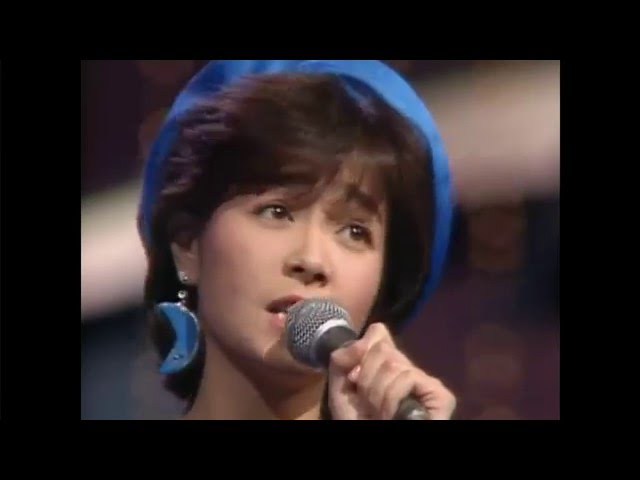
Speaking of Yoshie Kashiwabara, “Haru nanoni” and “Hello Goodbye” are famous.
At a time when many idols were singing upbeat pop songs, her hidden gem is “Camouflage,” written and composed by Miyuki Nakajima—a mellow, sentimental tune she delivered with a vocal prowess uncommon for idols.