

Classic and hit songs by nostalgic Japanese pop idols of the 80s

The 1980s were truly the “golden age of idols,” a decade that saw the rise of many legendary Japanese idols who left their mark on music history, such as Seiko Matsuda and Akina Nakamori.
Not only did they spark a social phenomenon, with many young people emulating their hairstyles and fashion, but we also can’t overlook the fact that countless hits and timeless songs were born in that era—songs that are still sung today in the 2020s.
This article brings together and introduces the classic and hit songs performed by the idols of the 1980s.
Whether you’re from that generation or a younger music fan curious about idol songs from this era, be sure to check it out!
- Top 1980s Female Singer-Songwriters: Popular Songs Ranking [2026]
- A collection of nostalgic Japanese hit songs from the 1980s that still linger in our ears
- [Showa/1980s] Old Johnny’s songs pierce the heart. Idol songs full of masterpieces.
- Nostalgic Yet Everlasting: Classic Hits by 1990s Idol Singers
- 80s commercial songs. A roundup of Japanese songs from the 80s that have been used in commercials.
- [Nostalgic] A roundup of anime songs and theme songs that were hits in the 1980s
- Akina Nakamori’s classic and popular songs
- Cool songs from the Showa era. Masterpieces from Showa that shine with sensuality, passion, and rugged charm.
- Masterpieces and hit songs of 80s Japanese pop (kayōkyoku)
- Popular Nostalgic Hits and Classics Ranking [1980s Japanese Music Ranking]
- Revival hits driven by social media! Classic Showa-era songs popular with Gen Z
- Recommended for women in their 50s! A curated selection of classic and popular karaoke hits that will get the crowd going
- Evokes the charm of the good old days. Showa-era inspirational songs that are still loved today.
Classic and hit songs by nostalgic Japanese pop idols of the 1980s (71–80)
They are lovers.Moritaka Chisato

She entered the entertainment industry after winning the Grand Prix at the 1st Pocari Sweat Image Girl Contest.
Her seventh single, “17-sai,” drew attention as a remake of Saori Minami’s song.
She also wrote lyrics herself, and her distinctive words were well received.
Her cosplay-style outfits also became famous.
Her husband is the actor Yosuke Eguchi.
“Futari wa Koibito” is her top-selling single.
Swaying ShonanIshikawa Hidemi

Later, there’s “Yu-re-te Shonan,” the signature song of Hidemi Ishikawa—who became the wife of Shibugakitai’s Yakkun—captured in the background of this photo.
So nostalgic! These days they’re often featured as a big, harmonious family, and it makes me think I’d love to hear her singing again.
Valentine KissKunikyo Sayuri

Kokushō! At the height of Onyanko Club’s popularity, even back then a lot of guys cheered for her by shouting “Kokushō!” rather than “Sayuri-chan!” “Valentine Kiss” is one of her signature songs, of course, and as someone from the generation that copied that choreography and danced it, I’d pick it as one of my top songs—even if it’s not exactly a hidden gem.
Hello/GoodbyeKashiwabara Yoshie

Yoshie Kashiwabara, who debuted from Star Tanjō!, released “Hello, Goodbye” as her seventh single, and it became a big hit.
Its memorable lyrics resonated with listeners and boosted the popularity of tea-serving coffee shops.
The cute choreography featuring hip-swaying is also a highlight.
She has a lovely smile, and—as you’d expect from a Star Tanjō! alum—she’s got solid vocal skills too.
BOY’s ThemeKikuchi Momoko

Momoko Kikuchi is still active on the front lines today.
“Sotsugyō (Graduation)” and “Mō Aenai Kamoshirenai (We Might Never Meet Again)” are undoubtedly her two major hits, but “Boy no Theme” also drew a great deal of attention at the time as the theme song for a film in which she herself starred.
The lyrics for this song were written by Yasushi Akimoto.
SosotteHonda Minako

Speaking of Minako Honda, “Marilyn in 1986” is considered her most famous and representative work, but the song that drew the most attention for its costume was “Sosotte.” Nowadays, showing the midriff like that might seem unremarkable, but at the time it was impactful enough to be banned on NHK’s music programs.
CamouflageKashiwabara Yoshie
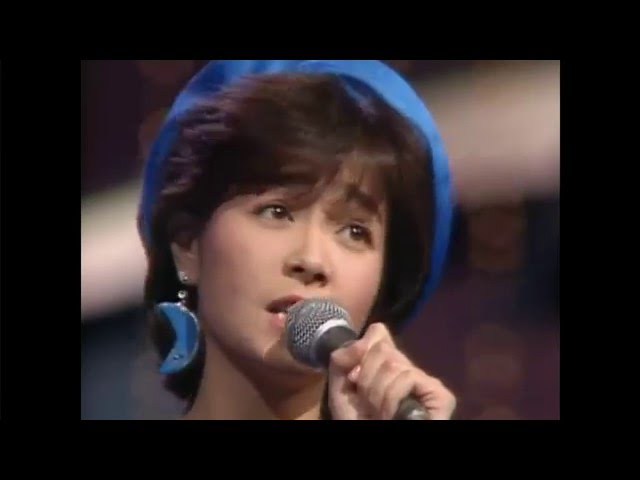
Speaking of Yoshie Kashiwabara, “Haru nanoni” and “Hello Goodbye” are famous.
At a time when many idols were singing upbeat pop songs, her hidden gem is “Camouflage,” written and composed by Miyuki Nakajima—a mellow, sentimental tune she delivered with a vocal prowess uncommon for idols.