

[Intermediate Level] Cool Piano Pieces You Can Play [Great for Recitals Too]
You’ve moved beyond the beginner stage, but you still need a bit more experience to tackle advanced pieces… This time, we’ve gathered a cool selection of pieces that are perfect for anyone looking for intermediate-level piano music.
From delicate tones to powerful resonance, from lyrical moods to lively vibes—the expressive range of the piano is limitless!
We’re excited to introduce wonderful pieces that let you fully savor the instrument’s charm.
Alongside classic staples, we’ve included a wide variety of selections such as film music and pop tunes.
These pieces are all great choices for recitals, so if you’re unsure what to work on next, be sure to check them out!
Playlist
| [Intermediate Level] Cool Piano Pieces You Can Play [Great for Recitals Too] | |||
|---|---|---|---|
| show_chart | Title | Playlist | Review |
| 1east | Gypsy dance (Gypsies’ dance)Heinrich Lichner |  play_arrow play_arrow | An exotic, virtuosic piano piece of Gypsy music |
| 2east | Etude Op. 25 No. 1 ‘Aeolian Harp’Frederic Chopin |  play_arrow play_arrow | Chopin’s masterpiece—a piece that pushes the piano’s expressive power to its limits |
| 3east | Fantasia “Sakura Sakura”Hirai Kōsaburō |  play_arrow play_arrow | A Japanese-Western fusion piano fantasia themed around cherry blossoms |
| 4east | Hungarian Dance No. 5Johannes Brahms |  play_arrow play_arrow | A passionate piece of Hungarian folk music |
| 5east | I am (Theme Song of “Hodo Station”)Morita Manami |  play_arrow play_arrow | Manami Morita’s jazz-and-classical fusion piece |
| 6east | “Baba Yaga” from the suite Pictures at an ExhibitionModest Mussorgsky |  play_arrow play_arrow | Introduction to Mussorgsky’s witch-themed piece |
| 7east | The Final Fantasy X Piano Collections: ‘The Decisive Battle’Uematsu Nobuo |  play_arrow play_arrow | Piano arrangement of an FFX battle theme |
| 8east | FlamencoWilliam Gillock |  play_arrow play_arrow | Spanish traditional music expressed on the piano |
| 9east | Waltz, No. 1 from the Suite “Masquerade”Aram Khachaturian |  play_arrow play_arrow | The appeal and characteristics of Khachaturian’s famous waltz |
| 10east | Prints, No. 3: ‘Gardens in the Rain’Claude Debussy |  play_arrow play_arrow | Honing expressiveness with Debussy’s 'Reflets dans l’eau' (The Garden in the Rain) |
| 11east | From the Dragon Quest V: Hand of the Heavenly Bride Official Score Book — “Engaging in Battle”sugiyama kouichi |  | Performing a piano arrangement of the Dragon Quest V battle theme |
| 12east | Piano Sonata No. 11 in A major, K. 331, Movement III “Turkish March”Wolfgang Amadeus Mozart |  play_arrow play_arrow | The Turkish March requires advanced technique |
| 13east | Take FivePaul Desmond |  play_arrow play_arrow | Take Five is a famous masterpiece in 5/4 time |
| 14east | EtudeAram Khachaturian |  play_arrow play_arrow | A piano piece fusing Armenian folk music and Western forms |
| 15east | Promenade (from the suite Pictures at an Exhibition)Modest Mussorgsky | 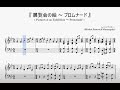 play_arrow play_arrow | Part of Pictures at an Exhibition, characterized by a distinctive rhythm and folk music |
| 16east | Etude AllegroNakata Yoshinao |  play_arrow play_arrow | A piece composed by Yoshinao Nakata at the request of his piano teacher |
| 17east | “The Great Gate of Kiev” from the suite Pictures at an ExhibitionModest Mussorgsky |  play_arrow play_arrow | A grand Russian folk music that begins with the sound of bells |
| 18east | Vamo alla Flamenco (Final Fantasy IX Piano Collections)Uematsu Nobuo |  play_arrow play_arrow | Piano arrangement of FF9 flamenco piece |
| 19east | The EntertainerScott Joplin |  play_arrow play_arrow | A ragtime piece, composed by Scott Joplin |
| 20east | Romanian Folk Dances: ‘Romanian Polka’ and ‘Fast Dance’Bartók Béla |  play_arrow play_arrow | Bartók: Romanian Folk Dances |
| 21east | Midnight Fire Festival from ‘Rhythm of the Rainbow’Hirayoshi Takeshu |  play_arrow play_arrow | A passionate, Spanish-style piano miniature |
| 22east | Sonatina Op. 40, Movement II: MinuetMaurice Ravel |  play_arrow play_arrow | Ravel's Sonatine. |
| 23east | Suite Ma mère l’Oye, No. 1: Pavane of the Sleeping BeautyMaurice Ravel |  play_arrow play_arrow | An explanation of Ravel’s Ma mère l’Oye |
| 24east | Impromptu Op. 90 No. 3Franz Schubert |  play_arrow play_arrow | Explanation of Performance Techniques for Schubert’s Impromptus |
| 25east | Sea Journal No. 24: ‘The Broken Murmur of the Tides’Miyoshi Akira |  play_arrow play_arrow | The diary of the sea is detailed and fast-paced |
| 26east | Waltz No. 14 in E minor, Op. posth.Frederic Chopin |  play_arrow play_arrow | Chopin’s Waltz: rich expressiveness and a sense of accomplishment |
| 27east | Five Pieces (Tree Suite), Op. 75: No. 5 “The Spruce”Jean Sibelius |  play_arrow play_arrow | Sibelius’s The Spruce. Expressing the nature of the Nordic region. |
| 28east | Spanish Dances, Op. 37 – No. 5 “Andaluza”Enrique Granados |  play_arrow play_arrow | A passionate masterpiece from the Spanish Dances collection |
| 29east | Bergamasque Suite No. 4 “Passepied”Claude Debussy |  play_arrow play_arrow | A graceful and lively piano piece composed by Debussy |
| 30east | Etude Op. 2 No. 1Alexander Scriabin |  play_arrow play_arrow | A short piece that showcases Scriabin’s youthful talent |
| 31east | Fountain of Stars from ‘Constellations of Sound’Yuyama Akira |  play_arrow play_arrow | Expressing children's sensibilities with a star fountain |
| 32east | Sicilienne, Op. 78Gabriel Fauré |  play_arrow play_arrow | Commentary on Fauré’s Sicilienne and tips for piano performance |
| 33east | Six Pieces for Piano, Op. 118 No. 3 “Ballade”Johannes Brahms |  play_arrow play_arrow | Introducing Brahms's ballads |
| 34east | Waltz No. 1 in E-flat major, Op. 18 “Grande valse brillante”Frederic Chopin |  play_arrow play_arrow | Chopin’s Grande valse brillante No. 1 |
| 35east | Impromptu, Op. 90 No. 2Franz Schubert |  play_arrow play_arrow | Developing expressive skills for Schubert’s Impromptus |
| 36east | Tarantella from ‘Album for the Young’William Gillock |  play_arrow play_arrow | Beginner piano pieces composed by Gillock |
| 37east | Impromptu FP 176 No. 15 in C minor “In Praise of Édith Piaf”Francis Poulenc |  play_arrow play_arrow | Poulenc’s piano piece, in the style of a chanson |
| 38east | Two Rhapsodies, Op. 79 No. 2Johannes Brahms |  play_arrow play_arrow | A piece by Brahms that is effective in performance and suitable for intermediate players |
| 39east | Waltz No. 1 in E-flat major, Op. 83Durand |  play_arrow play_arrow | Durand’s brilliant waltz, highly effective in performance |
| 40east | 10 Pieces, Op. 12: No. 7, Prelude “The Harp”Sergei Prokofiev |  play_arrow play_arrow | Prokofiev’s delicate yet powerful early works |
| 41east | Liebesträume No. 3Franz Liszt |  play_arrow play_arrow | Intermediate piano pieces by Liszt themed around love |
| 42east | Final Fantasy VII Piano Collections “One-Winged Angel”Uematsu Nobuo |  play_arrow play_arrow | Piano masterpiece of the Sephiroth battle theme |
| 43east | Arabesque No. 1Claude Debussy |  play_arrow play_arrow | Debussy’s elegant piano piece “Arabesque” |
| 44east | ToccataAram Khachaturian |  play_arrow play_arrow | Commentary on Khachaturian's Toccata |
| 45east | Tufted puffinHakasé Tarō |  play_arrow play_arrow | Tips for Playing Taro Hakase’s “Etupirka” on the Piano |
| 46east | Nocturne No. 2, Op. 9-2Frederic Chopin |  play_arrow play_arrow | Practice methods for Chopin's Nocturne No. 2 |
| 47east | Pirates of the Caribbean: “He’s a Pirate”Klaus Badelt&Hans Zimmer |  play_arrow play_arrow | Arrangements of film music are also popular at recitals. |
| 48east | Holberg Suite No. 1: PreludeEdvard Grieg |  play_arrow play_arrow | The Appeal of Grieg’s Holberg Suite and Practice Methods |
| 49east | 18 Characteristic Etudes, Op. 109 No. 13 “The Great Thunderstorm”Johann Burgmüller |  play_arrow play_arrow | Hone your expressive power with Burgmüller’s “The Thunderstorm” |
| 50east | Lyric Pieces, Book VIII, Op. 65: No. 6, Wedding Day at TroldhaugenEdvard Grieg |  play_arrow play_arrow | A wedding piece dedicated to Grieg’s wife |
| 51east | Tarantella, Op. 77 No. 6Moritz Moszkowski |  play_arrow play_arrow | Moszkowski’s cheerful and flamboyant piano piece |
| 52east | ToccatinaDimitri Kabalevsky |  play_arrow play_arrow | A lively piano piece from a collection in A minor |
| 53east | Piano Concerto No. 2 in C minor, Op. 18 – II. Andante (Second Movement)Sergei Rachmaninov |  play_arrow play_arrow | Play the second movement of Rachmaninoff's Piano Concerto No. 2 |
| 54east | Fantasiestücke, Op. 12: No. 2 “Flying”Robert Schumann |  play_arrow play_arrow | A passionate and beautiful piano piece composed by Schumann |
| 55east | Eight Pieces, Op. 84 No. 5: ImpromptuGabriel Fauré |  play_arrow play_arrow | Fauré’s romantic masterpiece for piano |
| 56east | Two Rhapsodies, Op. 79 No. 1Johannes Brahms |  play_arrow play_arrow | Requires the technique and expressive power of Brahms’s works |
| 57east | Etude Op.10 No.3 “Farewell”Frederic Chopin |  play_arrow play_arrow | Chopin’s Farewell Song is a beautifully soothing masterpiece. |
| 58east | Carnival Jest from Vienna, Op. 26 No. 1 “Allegro”Robert Schumann |  play_arrow play_arrow | A virtuosic piano piece composed by Schumann |
| 59east | Le Tombeau de Couperin No. 4: RigaudonMaurice Ravel |  play_arrow play_arrow | A piece in which Ravel mourned his fallen comrades |
| 60east | Moments Musicaux, Op. 16 No. 3 in B minorSergei Rachmaninov |  play_arrow play_arrow | Tips for performing Rachmaninoff’s Moments Musicaux No. 3 |
| 61east | Waltz No. 4 in F majorFrederic Chopin |  play_arrow play_arrow | How to play and characteristics of the Minute Waltz |
| 62east | Fountain on a rainy dayWilliam Gillock |  play_arrow play_arrow | Children's pieces composed by Gillock |
| 63east | Waltz No. 6, Op. 64 No. 1 “Minute Waltz”Frederic Chopin |  play_arrow play_arrow | Chopin’s Minute Waltz is a cute piece suitable for intermediate players. |
| 64east | Bergamasque Suite No. 1: PreludeClaude Debussy |  play_arrow play_arrow | Debussy’s works with approachable melodies |
| 65east | Arabesque in C major, Op. 18Robert Schumann |  play_arrow play_arrow | Develop expressive skills through Schumann’s elegant pieces |
| 66east | Lyric Pieces, Book VIII, Op. 65, No. 6: “Wedding Day at Troldhaugen”Edvard Hagerup Grieg |  play_arrow play_arrow | Grieg’s Silver Wedding Anniversary Piece |
| 67east | Préludes, Book I, No. 8: “The Girl with the Flaxen Hair”Claude Debussy |  play_arrow play_arrow | Debussy’s lyrical masterpiece |
| 68east | Play of WaterFranz Liszt |  play_arrow play_arrow | Ravel’s Jeux d’eau is a masterpiece that depicts the flow of water. |
| 69east | Piano Sonata No. 11 in A major, K. 331, Third Movement “Turkish March”Wolfgang Amadeus Mozart |  play_arrow play_arrow | About Mozart’s Turkish March |
| 70east | From the New World, Fourth MovementAntonín Dvořák |  play_arrow play_arrow | Piano arrangement of Dvořák’s From the New World |
| 71east | Symphonia No. 1 in C majorJ.S.Bach |  play_arrow play_arrow | A children’s piano piece from 1720 characterized by counterpoint |
| 72east | Rhapsody on a Theme of Paganini, Op. 43, Variation 18Sergei Rachmaninov |  play_arrow play_arrow | Rhapsody on a Theme of Paganini |
| 73east | Waltz ÉtudeWilliam Gillock |  play_arrow play_arrow | You can develop expressiveness with a bright waltz composed by Gillock. |
| 74north_east | Piano Sonata No. 8 “Pathétique,” Second MovementLudwig van Beethoven |  play_arrow play_arrow | The beauty of the second movement of Beethoven’s Pathétique Sonata |
| 75south_east | The Confectionery World, No. 14: “Demon Arare”Yuyama Akira |  play_arrow play_arrow | Fuse Japanese and Western music in a short piece |
| 76east | Suite bergamasque, No. 3: Clair de LuneClaude Debussy |  play_arrow play_arrow | Debussy’s Clair de Lune is a difficult piece suited for advanced players. |
| 77east | Amazing GraceSakkyokusha fumei |  play_arrow play_arrow | How to play Amazing Grace |
| 78east | Piano Sonata K. 545 in C majorWolfgang Amadeus Mozart |  play_arrow play_arrow | Mozart’s graceful three-movement piece |
| 79east | Children’s Corner No. 5: The Little ShepherdClaude Debussy |  play_arrow play_arrow | Composed by Debussy, “Children’s Corner” No. 5, where timing/ma (spacing) is important |
| 80east | Adeline by the SeasideRichard Clayderman |  play_arrow play_arrow | How to Play and the Appeal of Ballade pour Adeline |
| 81east | Sonatina Op. 40, 1st movementMaurice Ravel |  play_arrow play_arrow | Ravel’s Sonatine is a work that fuses Ravel’s distinctive style with classical forms. |
| 82east | Pavane for a Dead PrincessMaurice Ravel |  play_arrow play_arrow | A piano piece by Ravel, admired for its elegance |
| 83east | Vocalise, Op. 34 No. 14Sergei Rachmaninov |  play_arrow play_arrow | Expressively performing Rachmaninoff’s beautiful songs |
| 84east | 5 Pieces (Suite of Trees), Op. 75: No. 1, When the Rowans BloomJean Sibelius |  play_arrow play_arrow | A light and delicate piece composed by Sibelius |
| 85east | Für EliseLudwig van Beethoven |  play_arrow play_arrow | Attempting a full performance of Beethoven’s Für Elise |
| 86east | Suite “Dolly,” Op. 56 No. 2 “Mi-a-ou”Gabriel Fauré |  play_arrow play_arrow | A piano duet composed to celebrate a young girl's birthday |
| 87east | Impromptu of the WindNakata Yoshinao |  play_arrow play_arrow | A melody like a refreshing, free wind |
| 88east | Romanian Folk Dances, Sz. 56Bartók Béla |  play_arrow play_arrow | Bartók's Suite of Folk Dances |
| 89east | Arabesque No. 2Claude Debussy |  play_arrow play_arrow | Characteristics of Debussy’s Arabesque No. 2 and tips for performance |
| 90east | Music for Children, Op. 65: No. 4 “Tarantella”Sergei Prokofiev |  play_arrow play_arrow | Prokofiev’s vibrant, dynamic dance |
| 91east | Prelude (I) from Le Tombeau de CouperinMaurice Ravel |  play_arrow play_arrow | The six-piece suite In Memory of the Fallen, Le Tombeau de Couperin |
| 92east | Slower than LentoClaude Debussy |  play_arrow play_arrow | Debussy's bright waltz piece |
| 93east | Piano Sonata No. 11, K. 331, Movement III “Turkish March”Wolfgang Amadeus Mozart |  play_arrow play_arrow | Mozart's Turkish March is a difficult piece. |
| 94east | Nocturne No. 20, KK IVa/16 “Posthumous”Frederic Chopin |  play_arrow play_arrow | Chopin’s posthumous Nocturne — a sad and beautiful masterpiece |
| 95east | Sonatina No. 10, First MovementMuzio Clementi |  play_arrow play_arrow | A masterpiece that conveys the expressiveness and allure of piano music |
| 96east | 12 Variations on “Ah, vous dirai-je, Maman” (Twinkle, Twinkle, Little Star Variations)Wolfgang Amadeus Mozart |  play_arrow play_arrow | The Variations on “Twinkle, Twinkle, Little Star” is highly difficult. |
| 97east | 13 Preludes, Op. 32 No. 5 in G majorSergei Rachmaninov |  play_arrow play_arrow | How to Perform Rachmaninoff’s Prelude Op. 32 No. 5 |
| 98east | Waltz No. 6 in D-flat major, Op. 64 No. 1 “Minute Waltz”Frederic Chopin |  play_arrow play_arrow | Chopin’s Minute Waltz (Little Dog Waltz) is lively and suited for intermediate players |
| 99east | Eight Concert Etudes, Op. 40: No. 1 “Prelude”Nikolai Kapustin |  play_arrow play_arrow | Kapustin’s jazz-classical fusion piece |
| 100east | Fantasiestücke, Op. 12: FlyingRobert Schumann |  play_arrow play_arrow | Popular pieces from Schumann's Fantasiestücke |
| 101east | Lupin the Third Theme ’78Ōno Yūji |  play_arrow play_arrow | Let's practice the Lupin the Third theme with a focus on the bass. |
| 102east | Turkish RondoJohann Burgmüller |  play_arrow play_arrow | A hallmark of Burgmüller’s pieces is left-hand chords with a right-hand melody. |
| 103east | Arabesque of WavesMiyoshi Akira |  play_arrow play_arrow | Arabesque of Waves, a delicate piano piece |
| 104east | Romanian Folk Dances: Fast DanceBartók Béla |  play_arrow play_arrow | Bartók's Romanian Folk Dances |
| 105east | Those Who FightUematsu Nobuo |  play_arrow play_arrow | Powerful game battle track with an emotional melody |
| 106east | Songs Without Words, Book V, Op. 62, No. 6, Spring SongFelix Mendelssohn |  play_arrow play_arrow | Mendelssohn’s “Spring Song” is elegant but difficult to play. |
| 107east | Salon Pieces Op. 10 No. 4: MelodySergei Rachmaninov |  play_arrow play_arrow | A collection of elegant miniatures with a melancholy melody |
| 108east | Waltz Op. 83-1Auguste Durand |  play_arrow play_arrow | Duran’s Waltz, perfect for a recital |
| 109east | Fantasy Pieces, Op. 3 No. 2: Prelude “The Bell”Sergei Rachmaninov |  play_arrow play_arrow | Performance tips for Rachmaninoff’s masterpiece “The Bells” |
| 110east | Études “30 Pieces for Children, Op. 27” No. 3Dmitri Kabalevsky |  play_arrow play_arrow | A charming masterpiece in the style of a Russian folk song, a short piano piece for children |
| 111east | Sonatina Op. 13-1, First MovementDimitri Kabalevsky |  play_arrow play_arrow | You can hone your performance technique with a bright three-movement musical piece |
| 112east | 4 Etudes No. 4, Op. 7-4 in F-sharp majorIgor Stravinsky |  play_arrow play_arrow | A lively and innovative short musical piece that captivates listeners |
| 113east | Piano Concerto No. 2 in C minor, Op. 18, Movement ISergei Rachmaninov |  play_arrow play_arrow | Arrange Rachmaninoff’s Piano Concerto No. 2 for beginners |
| 114east | Humoresques, Op. 101 No. 7Antonin Dvořák |  play_arrow play_arrow | Sight-reading and key changes in Dvořák’s pieces are difficult. |
| 115east | Children’s Piano Piece: Etude AllegroNakata Yoshinao |  play_arrow play_arrow | Etude in C major, a famous piece suitable for recitals |