“What piece should I play at the piano recital?” From the day you find out you’ll be performing, you probably start thinking about what to play just like that!
Choosing a piece is exciting, but many people also find it hard to decide, don’t they?
In this article, we’ll introduce recommended pieces for piano recitals, especially for adults.
We’ve picked a wide range of famous pieces, so please choose according to your own level!
For Adults: Top Picks for Piano Recitals! A Curated Selection of Impressive Masterpieces (1–10)
Grand WaltzFrederic Chopin
[Thank you! 800,000] Grande Valse Brillante – Chopin Op. 18 – Classical Piano – CANACANA
This is a striking piece with a brilliant, light-footed melody.
While influenced by the musical scene in Vienna, it is said to be a work in which Chopin pursued his own expressive voice.
Published in 1833, the piece takes the form of a waltz—dance music—yet is distinguished by an artistic depth that goes far beyond mere accompaniment.
Written in E-flat major, it begins with a dazzling, fanfare-like introduction and unfolds in a structure divided into five sections.
Performances that fully draw on the piano’s virtuosity captivate listeners and evoke the atmosphere of a grand ball.
It is highly recommended for those looking to become familiar with classical music or who are interested in the expressive possibilities of the piano.
Rhapsody in Blue (Gershwin) Gershwin – Rhapsody in Blue Piano Solo
A signature work by George Gershwin, one of the leading American composers of the 20th century.
With its innovative fusion of classical music and jazz, it left a significant mark on American music history.
Premiered in New York on February 12, 1924, the piece opens with an expansive clarinet glissando, and its jazz rhythms blend exquisitely with classical elements.
It is a remarkably polished work—hard to believe it was composed in just five weeks.
Featuring a brilliant character that allows the pianist’s virtuosity to shine, it captivates audiences.
Highly recommended for those confident in their piano skills.
At Zanarkand – Final Fantasy X – 4K High-Quality Audio – To Zanarkand – Final Fantasy X – Piano Cover – piano cover – CANACANA
This piece is known for its hauntingly beautiful, bittersweet melody.
It is celebrated as a moving track that colors important scenes in the game.
Centered on piano within an orchestral setting, it features a quiet elegance and a wistful, melancholic tune.
To express both the tragedy and the hope in the story, careful thought has been put into the choice of instruments and the arrangement.
It’s recommended not only for game fans but also for anyone seeking emotionally resonant music.
Numerous piano arrangements have been released, and it is frequently performed at concerts, making it a beloved masterpiece that transcends the boundaries of game music.
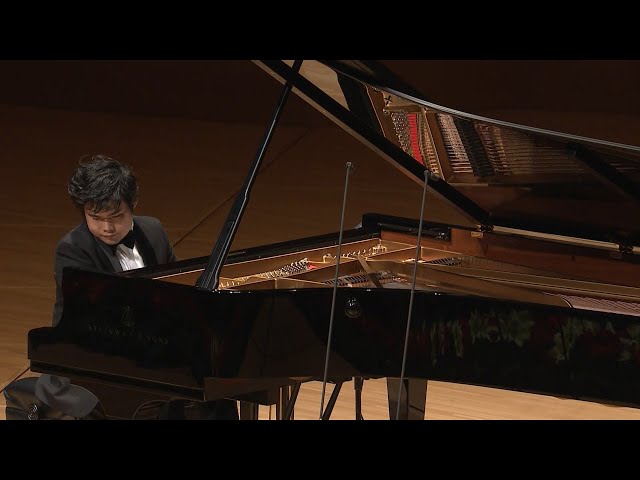
Nobuyuki Tsujii / Ravel: Pavane for a Dead Princess
Maurice Ravel, a composer whose avant-garde works had a profound impact on the world.
Pavane for a Dead Princess is one of his signature pieces.
Its soothing, beautiful melody and harmony bring tranquility to both performers and listeners.
While the overall difficulty is relatively low, it’s crucial to clearly distinguish the melody from the other voices, as the melodic line—often played with the right-hand pinky above the chords—needs to sing out.
Since it’s a leisurely piece, stay calm, listen closely to your own sound, and practice carefully at a measured pace.
A groundbreaking work that fuses classical music and jazz.
Based on a swinging rhythm, it’s a bright, energetic piece that captivates audiences.
While it demands advanced techniques that emphasize pianistic effects, it also embodies the free-flowing energy and rhythmic feel of jazz.
Completed in 1984 by Nikolai Kapustin, this collection is composed as études to develop both technique and expressive power, yet it also stands as concert-ready music with real listening appeal.
Highly recommended for those who want to enjoy both classical and jazz.
It is widely loved by piano enthusiasts, classical fans, and jazz aficionados alike.
Piano Sonata K.545 in C major – Mozart – Piano Sonata No. 16 in C major, K. 545 – Mozart – Classic – CANACANA
Among Wolfgang Amadeus Mozart’s piano sonatas, the most beloved is the Piano Sonata No.
16, K.
545.
While it is packed with quintessential Mozart charm, its level of difficulty is not very high, making it a classical piece that even those with relatively little piano experience can tackle.
Its bright, brilliant character and strong performance impact make it a guaranteed showstopper at recitals! Practice diligently with attention to detail so you can align the tone and play with lightness and clarity.


![[For Adults] Recommended for Piano Recitals! A Curated Selection of Impressively Sounding Masterpieces](https://i.ytimg.com/vi_webp/QOLnMXMJ-ng/maxresdefault.webp)