

[For Adults] Recommended for Piano Recitals! A Curated Selection of Impressively Sounding Masterpieces


“What piece should I play at the piano recital?” From the day you find out you’ll be performing, you probably start thinking about what to play just like that!
Choosing a piece is exciting, but many people also find it hard to decide, don’t they?
In this article, we’ll introduce recommended pieces for piano recitals, especially for adults.
We’ve picked a wide range of famous pieces, so please choose according to your own level!
- [Intermediate Level] Cool Piano Pieces You Can Play [Great for Recitals Too]
- Piano Masterpieces: Surprisingly Easy Despite Sounding Difficult!? A Curated Selection Perfect for Recitals
- [For Advanced Players] A Curated Selection of Classical Masterpieces to Tackle at Piano Recitals
- [For Intermediate Players] Challenge Yourself! Recommended Masterpieces That Shine at Piano Recitals
- For Advanced Players: Showstopping Classics to Play at a Piano Recital
- [For Piano Recitals] Simple yet Cool Classical Pieces
- [Intermediate Level] A curated selection of piano masterpieces featuring strikingly brilliant melodies!
- [Popular Piano] Capture the Audience’s Attention! Recommended Pop Songs That Shine at Piano Recitals
- Recommended for piano beginners! 10 sheet music picks that adults can enjoy too
- It’s so cool if you can play these on the piano! A selection of irresistibly charming masterpieces.
- [Piano Duets] Guaranteed to get the crowd excited! A roundup of recommended pieces
- [Intermediate] Recommended Piano Duets | A Curated Selection of Cool and Dazzling Pieces
- Cool jazz piano: from classic favorites to hidden gems.
[For Adults] Recommended for Piano Recitals! A Curated Selection of Impressive Masterpieces (21–30)
Ave MariaFranz Schubert

A shining star in the world of classical music, Franz Schubert.
Born in 1797, he was a genius composer who, in a life of only 31 years, left more than 600 songs.
This piece is a beautiful prayer inspired by a poem by Walter Scott.
Its simple yet profound melody soothes the listener’s heart.
The charm of this work lies in its relaxed tempo, which allows for richly expressive playing.
By singing the graceful melody fully and performing with heartfelt intention, you can create a wonderful rendition that moves the audience.
As a piece that will shine at a piano recital, why not give it a try?
Piano Sonata No. 14, Op. 27 No. 2 “Moonlight,” First MovementLudwig van Beethoven

Ludwig van Beethoven’s masterpiece, Piano Sonata No.
14, Op.
27-2 “Moonlight,” First Movement.
Its weighty melody is tranquil yet carries a powerful impact.
Naturally, it makes a striking impression in recitals as well.
Surprisingly, the difficulty level of this piece is relatively accessible! It is often performed at recitals by children and by adults who have only recently begun lessons.
For those who want to choose a showy piece that also happens to be a universally known classic, this work is a perfect fit.

[For Adults] Recommended for Piano Recitals! A Curated Selection of Impressive Masterpieces (31–40)
Lyric Pieces, Book VIII, Op. 65: No. 6, Wedding Day at TroldhaugenEdvard Grieg

Wedding Day at Troldhaugen, included in the eighth book of Lyric Pieces—a collection of piano works that Norwegian composer Edvard Grieg wrote over more than 30 years.
Troldhaugen is the name of the place where Grieg and his wife Nina lived, and this piece is dedicated to Nina.
The various themes in the piece differ completely in both tempo and character, making it ideal for developing expressive skills.
If you imagine specific scenes in your own way as you play, you’ll be able to perform with greater emotional richness.

Arabesque in C major, Op. 18Robert Schumann

A piano miniature composed in 1839 by Romantic master Robert Schumann.
It is characterized by an elegant, feminine style and is known as a delicate piece for ladies.
Employing a rondo form in which the main theme returns, its structure is appealing as a gentle, lyrical theme alternates with more intense motifs.
From the light, graceful melody at the opening, through a somewhat somber middle section, it concludes in a dreamlike, tranquil atmosphere.
Deeply reflecting Schumann’s inner emotions and artistic contemplation, this work combines elegance with expressive richness, making it a commendable recital piece that leaves a strong impression.
Rondo Capriccioso, Op. 14, U 67, E majorFelix Mendelssohn Bartholdy
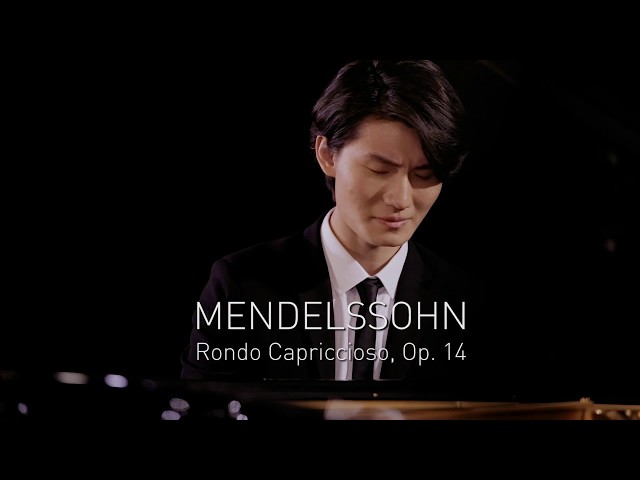
Among the piano works of the German composer Felix Mendelssohn, the Rondo Capriccioso in E major, Op.
14, U 67, is one of his most beloved pieces.
It is said that this work is based on his Etude in E major, written for his first love, to which he later added a gentle introductory section.
While it is not the most technically demanding piece, it requires delicate touch and a wide range of expression.
Perform it with abundant nuance—romantically and passionately.
Ombra mai fuGeorg Friedrich Händel

Handel’s masterpiece “Ombra mai fu.” Although it appears within the opera Xerxes (Serse), the opera itself is now rarely staged, and this aria alone is typically performed as a vocal piece.
Thanks to its strikingly beautiful melody, it is also often arranged for solo piano and is popular as a recital piece.
One of the work’s great charms is the way it unfolds from a clear, transparent middle register into the higher range.
The lyrics include the phrase “shade of a tree,” and the music splendidly conveys the feeling of soft, dappled sunlight enveloping the body.
Be sure to give it a listen.
Rain GardenClaude Debussy

For those who want a distinctive piece that will make an impression at a recital, Claude Debussy’s “Jardins sous la pluie” (Gardens in the Rain) is highly recommended.
In terms of difficulty, it’s somewhere around upper-intermediate, leaning toward advanced.
Just looking at the score, you might feel it’s quite difficult.
While the piece does contain many fast passages, the melodic lines are surprisingly playable, so you shouldn’t need to worry too much about fingerwork.
What matters more is expressiveness.
How well you can grasp Debussy’s intentions from the indications in the score will greatly affect the final result of this piece.