

[For Adults] Recommended for Piano Recitals! A Curated Selection of Impressively Sounding Masterpieces


“What piece should I play at the piano recital?” From the day you find out you’ll be performing, you probably start thinking about what to play just like that!
Choosing a piece is exciting, but many people also find it hard to decide, don’t they?
In this article, we’ll introduce recommended pieces for piano recitals, especially for adults.
We’ve picked a wide range of famous pieces, so please choose according to your own level!
- [Intermediate Level] Cool Piano Pieces You Can Play [Great for Recitals Too]
- Piano Masterpieces: Surprisingly Easy Despite Sounding Difficult!? A Curated Selection Perfect for Recitals
- [For Advanced Players] A Curated Selection of Classical Masterpieces to Tackle at Piano Recitals
- [For Intermediate Players] Challenge Yourself! Recommended Masterpieces That Shine at Piano Recitals
- For Advanced Players: Showstopping Classics to Play at a Piano Recital
- [For Piano Recitals] Simple yet Cool Classical Pieces
- [Intermediate Level] A curated selection of piano masterpieces featuring strikingly brilliant melodies!
- [Popular Piano] Capture the Audience’s Attention! Recommended Pop Songs That Shine at Piano Recitals
- Recommended for piano beginners! 10 sheet music picks that adults can enjoy too
- It’s so cool if you can play these on the piano! A selection of irresistibly charming masterpieces.
- [Piano Duets] Guaranteed to get the crowd excited! A roundup of recommended pieces
- [Intermediate] Recommended Piano Duets | A Curated Selection of Cool and Dazzling Pieces
- Cool jazz piano: from classic favorites to hidden gems.
[For Adults] Recommended for Piano Recitals! A Curated Selection of Impressive Masterpieces (31–40)
DedicationSchumann=Liszt

This Schumann-Liszt “Widmung” is Franz Liszt’s solo piano arrangement of the song cycle Myrthen, Op.
25, which Robert Schumann gave to his wife Clara on the eve of their wedding.
Among arranged classical works, there are many that add such distinctive changes that the originals are barely recognizable; however, in this piece, while faithfully reproducing Schumann’s song, Liszt adds his characteristically pianistic expression, resulting in a highly refined work.
If you listen to the original song before playing, your image of the performance will become much clearer!

Two Rhapsodies, Op. 79 No. 1Johannes Brahms

A masterpiece by Johannes Brahms, a composer who epitomizes German Romanticism.
Composed in 1879, this piece comes from Brahms’s mature period.
It opens powerfully and is characterized by intense emotional expression.
Structurally, it features a quiet middle section before returning to vigorous motion, and it concludes softly.
Written when Brahms was in his mid-forties, it is among his most popular piano works.
Dramatic and brilliant, it is sure to captivate the audience when performed at a piano recital!
Mephisto Waltz No. 1, S.514 “Dance in the Village Inn”Franz Liszt

Beloved as a recital staple, this passionate waltz portrays the romance between a devilish fiddler and a beautiful dancer.
It is a work by Franz Liszt, a pianist emblematic of the 19th-century Romantic era.
Composed between 1856 and 1861, it musically depicts a sensual tale set in a village tavern.
From the opening’s stacked fifths ringing out to the romantic melodies woven into driving rhythms, it irresistibly captivates listeners.
The piece has been used in numerous films and TV dramas, where its dramatic musicality proves highly effective on screen.
It makes full use of pianistic virtuosity—an ideal choice if you want to dazzle the audience at your recital.
Joy of LoveFritz Kreisler

It is a light, dance-like piece that incorporates elements of the traditional Viennese waltz, characterized by a bright and cheerful melody.
The work conveys joy and delight to the listener, expressing a sense of happiness that wells up from deep within.
Composed as part of the “Three Old Viennese Dances” published in 1905, it was initially presented as a work by a 19th-century composer.
While it is often performed as a violin and piano duo, there are also arrangements for solo piano and other instrumental combinations.
Widely cherished as a classic of classical music, it is frequently used in films, television programs, and commercials.
With its lively, sparkling melody, this piece is also recommended for beginners to classical music.
Song of SpringFelix Mendelssohn

If you can play Czerny No.
30 without trouble, this “Spring Song” is recommended.
It’s a famous piece by the great composer Felix Mendelssohn.
Its beautiful melody, both sparkling and tinged with poignancy, will make a strong impression at a piano recital.
Because the piece contains many arpeggios used as ornamental figures, it’s advisable to focus on practicing half-touch.
Until you get used to the fingering and the counting, try playing it at a slow tempo.

[For Adults] Recommended for Piano Recitals! Carefully Selected Impressive Masterpieces (41–50)
Adeline by the SeasideRichard Clayderman
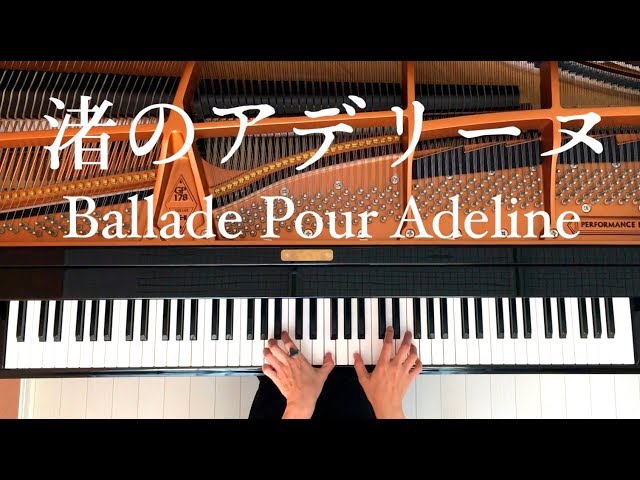
Richard Clayderman’s debut piece, Ballade pour Adeline, by the French pianist, is a famous piano work that became a massive hit, with records released in 38 countries and selling 22 million copies.
Many of you have probably heard it as background music on TV or in commercials, or as an auto-play song built into digital pianos.
As you relax into the performance, let the light, expectation-building introduction and the refreshing melody soothe you!
Slavonic Dance No. 8Antonin Dvořák

Are you looking for a classical piano duet piece for a recital? Antonín Dvořák’s Slavonic Dance No.
8, Op.
46-8, originally composed for piano four hands, is highly recommended.
From its intensely passionate introduction to its brilliant, driving dance melody, it captivates listeners.
The ensemble can feel like it might fall apart unless the duo breathes as one, so practice is essential to keep both players steady.
The music unfolds at a whirlwind pace, so be sure to maintain the tempo and not fall behind.
Pieces like this tend to rush, so take care not to egg each other on.
Although there is an orchestral version, the original is for piano duet, making it an excellent choice for those who want to perform or are searching for original piano four-hands repertoire in classical music.
