

![[Queen of Enka] A Collection of Easy-to-Sing Songs by Sayuri Ishikawa [2026]](https://i.ytimg.com/vi_webp/QIlGP6yCPI0/maxresdefault.webp)

Sayuri Ishikawa debuted as an idol at 15 but later shifted to enka.
In 1977, she skyrocketed to fame as a leading enka singer with the massive hit Tsugaru Strait – Winter Scene, a masterpiece that left its mark on enka history.
Since then, she has continued to sing many celebrated songs, earning the title “Queen of Enka,” while also showcasing her beautiful voice and vocal prowess across various genres, including pop-style tracks.
Ishikawa’s songs are, of course, hugely popular for karaoke.
This time, especially for beginners to enka, we’ve researched her more singable tracks and will introduce selections ranging from classic hits to songs released in the Reiwa era and beyond!
- [Tears and Alcohol] A Collection of Kaori Kozai’s Easy-to-Sing Songs [2026]
- Queen of Enka: A roundup of Aki Yashiro’s easy-to-sing songs
- [For Beginners] Recommended Enka Classics for Karaoke — Women Singers Edition
- [Final Boss] A Collection of Easy-to-Sing Songs by Sachiko Kobayashi [2026]
- The Most Idol-Like Star in the Enka World: Easy-to-Sing Songs by Kiyoshi Hikawa
- [2026] Easy-to-Sing Enka: From Classic Masterpieces to Recent Hits [Female Singers Edition]
- [Sub-chan] A Collection of Easy-to-Sing Songs by Saburo Kitajima [2026]
- [Mighty Guy] A Selection of Easy-to-Sing Songs by Akira Kobayashi
- [2026] Easy Enka Songs for Karaoke: Recommended Picks — Women Singers Edition
- [Wakayama’s Treasure] Fuyumi Sakamoto’s Easy-to-Sing Songs
- Queen of Local Songs: Kaori Mizumori's Easy-to-Sing Tracks
- [Enka] Songs that are easy to sing even for those who are tone-deaf [Female singers edition]
- [Japan’s Best Vocalist] Fukuda Kohei’s Easy-to-Sing Karaoke Songs
[Queen of Enka] A Collection of Easy-to-Sing Songs by Sayuri Ishikawa [2026] (1–10)
Noto PeninsulaIshikawa Sayuri

Following “Tsugaru Strait Winter Landscape” and “Amagi-goe,” Sayuri Ishikawa’s masterpiece “Noto Peninsula.” While this piece firmly carries the hallmarks of enka, it also features plenty of vocal lines closer to kayōkyoku.
In particular, the transition from the B section into the chorus has qualities reminiscent of 1970s kayōkyoku and pop ballads.
There are passages that use falsetto, so the range is somewhat wide; however, for a Sayuri Ishikawa song, the overall difficulty is relatively low because there are notably fewer kobushi (ornamental vocal turns).
If the early-chorus falsetto is difficult, I recommend lowering the key—or conversely, raising it slightly to make producing the falsetto easier.

Day by day, repeatedly and earnestlyIshikawa Sayuri
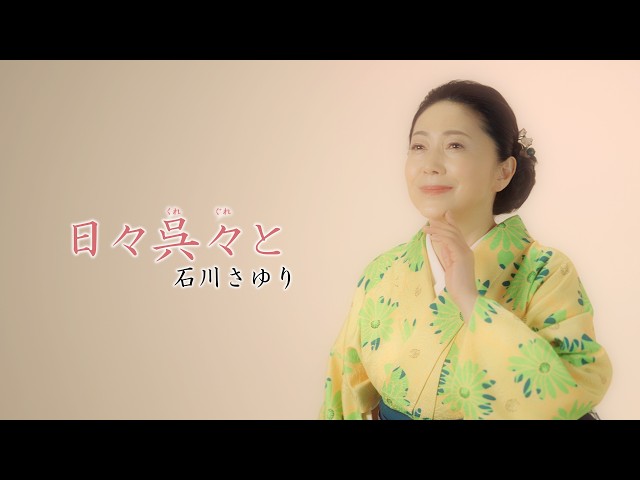
This is a message song that embraces the preciousness of the unassuming, everyday moments that repeat amid changing times.
Released as a single in April 2026, it drew attention for featuring lyrics and composition by Kazufumi Miyazawa of THE BOOM and arrangement by Takayuki Hattori.
Precisely because we live in an age of social uncertainty, it conveys a prayer-like wish to cherish small happinesses, expressed through Sayuri Ishikawa’s compassionate, loving vocals.
Please take your time to savor this heartfelt, high-quality music.
Tsugaru Strait – Winter SceneIshikawa Sayuri

Among Sayuri Ishikawa’s songs, Tsugaru Strait – Winter Landscape is one of the most widely known.
It’s a classic that represents the enka genre, familiar even to younger people who aren’t well-versed in enka.
Because the vocal line makes effective use of head voice, the song is often considered difficult.
It’s true that for those who struggle with head voice, the end of the chorus can be a tricky part.
However, for singers who are comfortable with head voice, the song is actually quite approachable, since the kobushi (ornamental bends) are not very demanding.
By paying close attention to dynamics, you can give the performance contrast and shape; try singing the A section with one level less volume than you might initially expect.
Love comes firstIshikawa Sayuri

When you think of anison sung by an enka singer, does this song come to mind? “Ai ga Ichiban” is a single released by Sayuri Ishikawa in 1999, and it was used as the ending theme for the TV anime Nintama Rantarō from the episodes aired between April and July of the same year.
It has a bright, energetic vibe that parents and kids can enjoy, with a very catchy melody.
Ishikawa also leans more toward a J-pop style rather than enka in her performance, so it seems like a very easy song to sing at karaoke.
If you’re at karaoke with people who were kids back then, definitely give it a try!

Burn my lifeIshikawa Sayuri

Sayuri Ishikawa, who was already active as a young enka star with hits like “Tsugaru Strait – Winter Scene” and “Noto Peninsula,” released the song “Inochi Moyashite” in 1979.
Following the previous year’s “Hi no Kuni e,” this track also secured her a spot on the Kōhaku Uta Gassen, and it’s a beloved classic that’s very popular for karaoke.
The song sits somewhere between enka and kayōkyoku, and Ishikawa’s vocals—she was 21 at the time—still carry a fresh, innocent quality.
With no complex melodic developments and lyrics that are easy to remember, it’s an ideal choice for karaoke.
I highly recommend it not only to enka fans but also to lovers of Shōwa-era pop.
I want us to be happy.Ishikawa Sayuri

Sayuri Ishikawa, who showcases her beautiful voice not only in the enka genre but also in the pop music field, released “Shiawase ni Naritai ne” in March 2020, right as the COVID-19 pandemic was taking hold.
Many people were likely comforted by her gentle delivery of the simple melody and heartwarming lyrics.
She sets aside the enka-style vocal approach here, opting for a J-pop singing style instead, so even those who aren’t fond of enka should find it easy to sing.
Because the song is built mainly around acoustic guitar and strings, you might find it a bit tricky to catch the rhythm, but it helps to count the relaxed tempo yourself as you sing.
Daikon BlossomIshikawa Sayuri

For Sayuri Ishikawa, the first song that marked the dawn of the 2010s was Daikon no Hana.
As you’d expect with Ishikawa, the lyrics are by Osamu Yoshioka, and the composition is by Chiaki Oka—her collaborator on songs like Hatoba Shigure.
It was released as a single in March 2010.
With lyrics and a melody that carry a sense of melancholy while still looking forward—an anthem to life—and Ishikawa’s signature soaring high notes, it’s a masterpiece many people will want to try at karaoke.
The vocal range is relatively wide, so focus on clear contrast between the high and low sections.
Since kobushi and vibrato aren’t emphasized much, it’s accessible even for beginners to enka.