

![[Wakayama’s Treasure] Fuyumi Sakamoto’s Easy-to-Sing Songs](https://i.ytimg.com/vi_webp/NF6RnQinqgc/maxresdefault.webp)
[Wakayama’s Treasure] Fuyumi Sakamoto’s Easy-to-Sing Songs

Fuyumi Sakamoto is a female enka singer from Wakayama Prefecture.
While she’s strongly associated with being a disciple of Kimimasa Inomata, she also has a background studying under the eminent female enka singer Yuriko Futaba.
Thanks to this, she has stable, assured vocal skills and can deliver not only enka but also kayōkyoku and pop songs.
This time, we’ve picked out some of Fuyumi Sakamoto’s songs that are especially easy to sing.
Many popular tracks are included, so be sure to check them out to the end.
[Wakayama’s Treasure] Fuyumi Sakamoto’s Easy-to-Sing Songs (1–10)
I’ve always liked you.Sakamoto Fuyumi
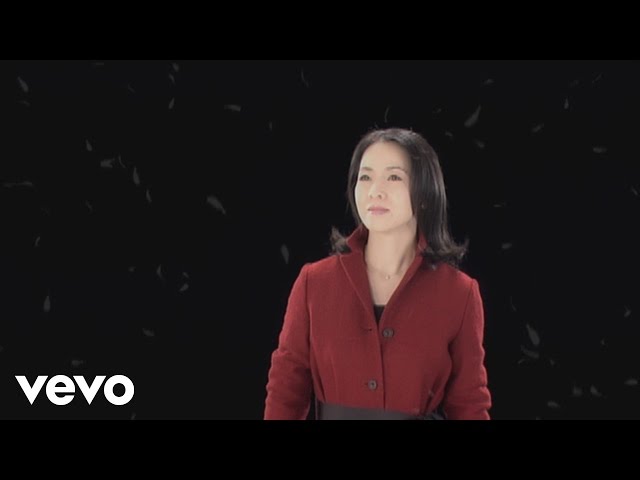
Among Fuyumi Sakamoto’s pop songs, “Zutto Anata ga Suki Deshita” is especially popular.
Many of you have probably heard Billy BanBan sing it in the iichiko commercial.
This piece contains none of the intricate vibrato ornamentation typical of enka.
Because the dynamics are emphasized throughout and there are no challenging elements like shouts or long sustained notes, even those who feel uneasy about singing enka should find it approachable.
Furthermore, its vocal range is quite narrow, making it easy to sing without strain even at a karaoke after-party.
It’s one of the easiest songs to sing in Fuyumi Sakamoto’s catalog, so be sure to check it out.

Tipsy Full MoonSakamoto Fuyumi

Fuyumi Sakamoto’s masterpiece “Tipsy Full Moon,” which gained popularity for its bewitching yet passionate melody.
The piece leans more toward kayōkyoku (Japanese popular song) than traditional enka, and the hallmark enka vocal ornament kobushi hardly appears.
The only instance is at the very end of the chorus, but even there it feels more like a slightly strong vibrato than a true kobushi, so there’s no need to clearly bend the pitch up and down.
Of course, vibrato is essential, so it’s more challenging than typical pop songs; however, for a song by an enka singer, it is exceptionally easy to sing.
I’m falling in love with you againSakamoto Fuyumi

Fuyumi Sakamoto’s cover of the classic song “Mata Kimi ni Koishiteru.” This work, a cover of Billy BanBan’s beloved hit, was the piece that opened the door for Fuyumi Sakamoto to enter the pop music scene.
Since the original is a folk song, it doesn’t carry any of the complexities typical of enka.
There’s no need for authentic kobushi ornamentation or a powerful voice, so anyone with a reasonable level of vocal ability can sing it.
Instead, sustained long tones and dynamic shading are the keys, so be sure to sing while expressing your feelings clearly.
Asian piratesSakamoto Fuyumi

The song “Pirates of Asia” is an unconventional classic that still enjoys strong support from many fans.
While it faithfully preserves core enka elements, its overall structure incorporates pop and dance music.
The most striking part is the chorus: it’s largely humming, with no intricate kobushi (ornamental melismas).
However, it features frequent use of hiccups—voice flips—so mastering this technique is essential.
If you absolutely can’t nail the hiccup, try lowering the key by one or two steps from your optimal range; you should be able to sing it without issues.
O-Shichi and the Night Cherry BlossomsSakamoto Fuyumi

Among Fuyumi Sakamoto’s songs, the masterpiece “Yozakura Oshichi” boasts exceptional popularity.
With its bewitching atmosphere and, for enka, relatively fast tempo, it’s often thought to be a difficult piece, but that’s not actually the case.
In fact, the number of kobushi (ornamental pitch turns) in this song is small, and each instance is low in difficulty even compared to typical enka.
In particular, there are few kobushi that move up and down by three or more pitches, making it a very singable song for those not accustomed to singing enka.
However, because the overall range is narrow, a certain amount of vocal power is needed to deliver impact in the mid-register.
Like cherry blossomsSakamoto Fuyumi

With its warm, lively melody and lyrics, “Sakura no Gotoku” is a fan favorite.
Released to commemorate the 25th anniversary of their debut, the single is crafted less as a showcase of virtuosity and more as an approachable enka number.
The kobushi (melodic ornamentation) is relatively easy, it’s rare to repeatedly move the pitch up and down on the same vowel, and there aren’t many particularly forceful sections.
However, there is a shout-like, raspy vocal delivery at the end of the chorus, so that part requires caution.
Men’s Fire FestivalSakamoto Fuyumi

The piece “Otoko no Himatsuri” is notable for its warm, comforting melody.
While it follows the classic enka tradition, the vocal line is surprisingly simple, with no complex kobushi ornamentation.
In addition, there are few long tones and no parts that require belting, so it doesn’t demand a high level of foundational singing technique.
The only challenging section is the kobushi in the middle of the chorus, where the ornamentation navigates three pitch changes.
Aside from that, the song is low in difficulty, so enka beginners should definitely consider adding it to their repertoire.