


The 1990s were an era when countless bands across a variety of genres were thriving.
Starting with the Being-kei bands, many visual-kei bands also emerged, and it was around the mid-90s that the melodic hardcore scene really took off in Japan.
Among them, quite a few bands are still active on the front lines today.
In this article, we’ll introduce classic songs by 90s bands that anyone who lived through that era will likely find “so nostalgic!!”
Of course, there are plenty of songs that feel nostalgic, but many of them are still beloved as timeless staples even now.
Please enjoy these tracks packed with the unique charm of that era.
- [J-Rock] Timeless masterpieces that colored the 1990s. Nostalgic hit songs.
- Debut song of a 90s visual kei band
- Band Rankings Popular Among People in Their 40s [2026]
- A special feature on classic and hit songs by bands that were active in the 1980s
- Popular Nostalgic Songs: J-Pop Ranking [1990s Japanese Music Ranking]
- Recommended Japanese bands for men in their 50s
- Iconic ballads of 90s J-pop: nostalgic mega-hits and fan favorites
- Ranking of Popular Songs by Japanese Male Singers from the 1990s [2026]
- Classic and hit J-pop songs from the nostalgic ’90s
- A coming-of-age song that was a hit in the ’90s. A classic and popular track in Japanese music.
- A 90s girls' band. A popular Japanese band.
- [Heisei Retro] Hit Japanese songs that defined the 1990s. Recommended J-POP classics.
- Hits that resonate across generations! Popular 1990s songs on TikTok
Classic and hit songs by nostalgic Japanese bands from the 1990s (1–10)
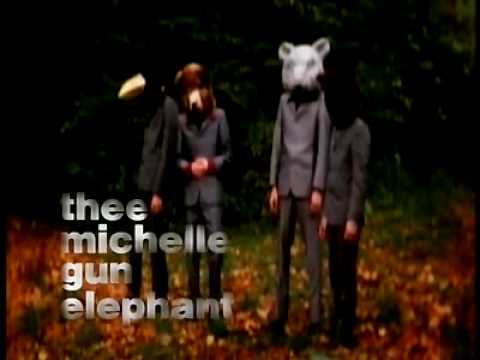
The End of the WorldTHEE MICHELLE GUN ELEPHANT
The late 1990s, often called the CD bubble era, was a strangely fortunate time: while million-selling singles were dropping every week, bands and artists whose music would normally have nothing to do with the pop charts were also managing to achieve solid commercial results.
Formed in 1991 and spending five years in the indie scene before making a somewhat belated major-label debut in 1996, Thee Michelle Gun Elephant are one of those legendary bands that stuck to their own style and still found success.
Their major-label debut track, and a song often played as the finale at their shows, was the classic “Sekai no Owari” (“The End of the World”).
Raw, ferocious guitars, a rampaging rhythm section, outstanding melodicism, and lyrics that capture the unique humor and melancholy of their early days—this track packs in TMGE’s unmistakable signature like no other.

ROSIERLUNA SEA

They are a five-piece band that shaped the visual kei scene from the 1990s onward, with every aspect of their career spoken of as legend.
They have a huge cult following, and it’s well known that their fan club bears the provocative name “SLAVE.” Since their major-label debut in 1992, while many bands were pushed through commercial tie-ins for commercials and TV dramas, they kept breaking records for commercial success and overwhelming live attendance without any tie-ins.
The song that became many people’s entry point to the band was one of their signature tracks, “ROSIER,” released in 1994.
The impossibly cool band ensemble, the melodies that stick in your head after a single listen, and the deeply meaningful mid-song English lines penned by J, the bassist who wrote the original track—every element is truly legendary.
The music video, so cool it won the Best Promotional Video at the 36th Japan Record Awards, inspired a wave of future band members across Japan.
frecklesJUDY AND MARY

All four members of JUDY AND MARY had distinctive personalities and talents, and they took Japan’s music scene by storm in the 1990s.
The bassist and leader, Yasuhito Onda, was already an accomplished musician who had made a major-label debut with a heavy metal band before JUDY AND MARY began, but after meeting the vocalist YUKI, the prototype of Judy and Mary was born.
After making their major-label debut in 1993, they continued their activities with unstoppable momentum, and their first and only song to top the Oricon charts was 1997’s “Sobakasu.” For many people, this is the first song that comes to mind when they think of Judy and Mary.
The moment guitarist TAKUYA’s unconventional riff kicks off the intro, your heart can’t help but flutter.
It’s also famous as the theme song for the anime Rurouni Kenshin: Meiji Swordsman Romantic Story, though it’s interesting that the song itself actually has nothing to do with the work.
Robinsonsupittsu

Spitz, led by Masamune Kusano—who handles both lyrics and composition—have continued to turn out numerous hit songs, powered by their inimitable, one-of-a-kind worldview, evergreen vocals, and delicate band arrangements, maintaining strong popularity well beyond the 2020s.
It may surprise some to learn that, back in their indie days, they were actually a punk band.
In the early stages of their major-label debut, there was even a period when they were grouped under the Shibuya-kei umbrella alongside bands like Mr.
Children and The L-R.
The song that served as the catalyst for Spitz’s major breakthrough, after they had been quietly building a following, was Robinson, released in 1995.
It’s a luminous masterpiece built around clean-tone guitar arpeggios—exactly in line with the image many people have of Spitz.
If you sing it at karaoke, be warned: the key to success is how cleanly you can deliver those androgynous high notes.
Forever LoveX JAPAN

They were pioneers of the so-called “visual kei” category, and it’s still fresh in our memories that their incredibly dramatic band history was released as the documentary film “We Are X.” With their striking looks, outrageous antics, and sophisticated musicianship, they became a hot topic on the indie scene, and after their major-label debut, X JAPAN grew into one of Japan’s leading bands.
In addition to their hard-hitting tracks, they produced many classic ballads, among which “Forever Love” is a signature song.
Upon its release, it was featured in the anime film “X,” based on CLAMP’s work, and later used in an LDP commercial starring Junichiro Koizumi, which made it one of the most widely known songs in X JAPAN’s catalog.
The piano and sweeping strings, the grand scale of the arrangement, and Toshi’s superb vocals—all of it is moving and brings tears to your eyes.
Flowers of EvilBUCK-TICK

Since forming as BUCK-TICK in 1985, they have never undergone a lineup change or taken an extended hiatus, continuing into the 2020s with a remarkable run of consistent releases and tours—a truly extraordinary band.
At their shows, you’ll often see parents and children attending together, a testament to their enduring, cross-generational popularity.
Because they keep pushing themselves musically with each release, it’s interesting how your impression of the band can vary depending on which era’s work you first fell in love with.
The song I’m introducing today, “Aku no Hana,” comes from the period when they fully embraced sounds associated with genres like goth and positive punk, and it was released as a single in 1990.
Despite its dark, intense atmosphere, it is also the only track of theirs to reach No.
1 on the Oricon charts, marking their first peak in terms of commercial success.
Red tambourineBLANKEY JET CITY

A quintessential 90s love song that symbolically captures pure feelings and passion for the one you love.
Released by BLANKEY JET CITY in January 1998, this track weaves a unique tapestry of metaphors to explore what love truly is.
The protagonist wishes to gift a shooting star to their beloved, and the way their heart quivers in everyday, ordinary moments is vividly portrayed, resonating with the bittersweetness of love that anyone can relate to.
Included on the album “Romeo no Shinzō” (Heart of Romeo) and used as the opening theme for TV Asahi’s “Sunday Jungle,” the song reached No.
11 on the Oricon Singles Chart for the week.
It’s a heartwarming piece with melodies and lyrics perfect for healing the wounds of heartbreak or reaffirming feelings for someone special.