



Lullabies have existed since ancient times in every country—they’re songs for soothing children.
I’ve put together a list of many lullabies, from the kind you might have heard on NHK’s educational channel to arrangements of foreign folk songs.
I’m sure there are songs in here that you sang together with friends when you were a child.
If you listen again now with the mindset of returning to childhood, you might discover something new.
If you “struggle every time to put your child to sleep,” please try listening—and singing—these songs to them at least once.
- [Lullabies] Recommended for putting children to sleep! Songs that lull babies to sleep
- [Warabe-uta] Beloved Classic Songs Passed Down Through Generations
- Lullaby Rankings [2026]
- [Lullabies] Gentle songs to help babies sleep — soothing lullabies for your little one
- Music That Soothes a Crying Baby | Recommended Songs to Lull Them into a Comfortable Sleep
- Nursery rhymes to sing to your baby! Recommended songs enjoyable from 0 months
- Japanese Shoka, Children's Songs, and Nursery Rhymes | Timeless masterpieces that resonate in the heart, passed down across generations
- Nostalgic Children’s Songs, Folk Songs, and Nursery Rhymes: The Heart of Japan Passed Down Through Song
- Lullabies of the World: Beloved and Popular International Songs That Soothe Children
- [For 0-year-olds] Recommended songs for babies: A special feature on bonding play and traditional nursery rhymes
- [Tanabata Children's Songs] Fun hand-play songs and a nostalgic collection of traditional nursery rhymes and folk songs
- Nursery rhymes and play songs to enjoy with your baby. Gentle children's songs.
- Japanese counting songs: nostalgic temari (handball) songs and children’s folk songs
Lullabies: nursery rhymes, folk songs, and children's songs. Nostalgic bedtime songs (1–10)
LullabySakushi: Kitahara Hakushū / Sakkyoku: Kusakawa Shin

Looking at the lyrics, there are descriptions like a canary singing, a mouse swaying a string, and loquats in bloom.
Perhaps in the past it was normal for children to take naps outside.
It’s perfect as a lullaby for when a baby falls asleep.
Edo Lullaby

This is a traditional Japanese lullaby that originated in Edo and spread across various regions, and is even said to be the root of many lullabies.
I’m sure many of you are familiar with it.
Its calm, whisper-like melody is enough to make you sleepy.
It’s a lullaby that even children can easily sing.

In a dreamSakushi: Higurashi Shinzō / Sakkyoku: Shibuya Takeshi

Tsuyoshi Shibuya, well known as a Japanese jazz pianist.
Since the 1980s, he has also contributed works as a composer to children’s programs such as NHK’s “Okaasan to Issho,” and this is one of those songs.
It’s easy to remember, yet it’s a wonderful piece sprinkled with stylish touches characteristic of jazz musicians.
On “Okaasan to Issho,” it was often sung by Brother Kentaro and Sister Ayumi.
I imagine some of you grew up listening to this song.

Schubert’s Lullaby

As its name suggests, this lullaby was composed by Schubert.
Remarkably, it is said he wrote it when he was 19, so reattribution would indeed be incorrect.
As for the German lyrics, it appears that the author is currently unknown.
Perhaps future research will reveal who wrote them.
Schubert himself lost his mother at the age of 15, so he may have composed it in fond remembrance of her.
In Japan, it is most often sung in translations by the French literature scholar Naito Atsushi or the lyricist Kondo Sakufu.
Mozart’s Lullaby

This piece has long been known as “Mozart’s Lullaby” and was thought to have been written by Mozart.
However, recent research, drawing on materials found in a Hamburg library, has revealed that it was composed by Bernhard Flies, a physician and composer.
As a result, it is sometimes referred to as “Flies’s Lullaby.” The lyrics were written by Friedrich Wilhelm Gotter.
In Japan, the most widely known and sung Japanese translation is by Keizo Horiuchi.
It’s a lovely piece in a gentle triple meter.
Light of Fireflies

This is a Japanese children’s song based on the Scottish folk song “Auld Lang Syne.” It’s a classic tune that plays at school dismissal time.
Although it has a somewhat melancholy feel, its gentle melody is comforting and makes it perfect as a lullaby!
hometownOkanoteiichi

Composed in 1914 as an elementary school song for sixth-year students, this piece is likely known by nearly everyone in Japan.
Although it was not written as a lullaby, it would suit being sung as one.
Like Western lullabies, it is in triple meter.
Frequently heard in various contexts—such as train station melodies and commercials—this song could be considered a symbol of the Japanese spirit.
Singing it while savoring the lyrics might even bring tears to your eyes.
Nenyamoya

This song with the curious title is a lullaby often sung in the Tsugaru region, and the representative lyrics are said to be from the Hirosaki area.
It is also believed that the title means something like, “Where has the child’s caretaker gone?” In the past, there was a practice called komori-boko, where children who worked as babysitters were hired by farming households and were allowed to return home during Obon or New Year’s.
This fascinating lullaby, which reflects the social background of Japan in earlier times, also has historical value.
May these orally transmitted lullabies be recorded and passed down to future generations.
Mom’s lullabyMayumiinu

This is a lullaby themed around an elephant parent and child, set to a gentle melody.
In the first half, it softly tells a story like a read-aloud, then the intro begins and it moves into the singing part.
As a lullaby, its appeal lies in the very calm, warm melody that evokes the tender gaze of a mother watching over her child.
It’s a piece you can use to gently stroke the body or rock like a cradle in time with the relaxed tempo.
Like the elephant parent and child, it seems sure to lead to a happy, peaceful sleep.

Twinkle, Twinkle, Little Star
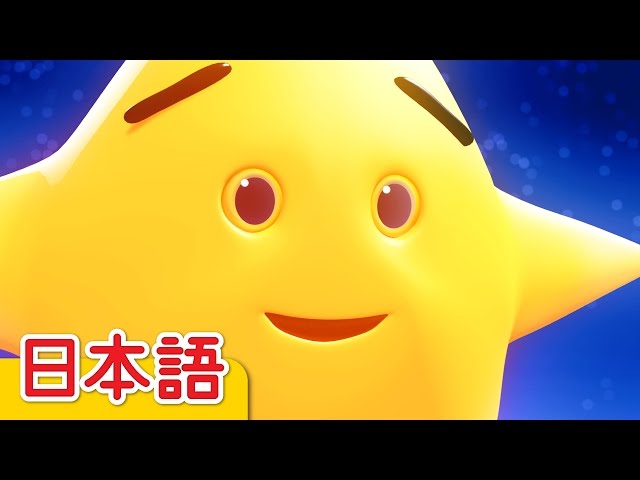
Speaking of children’s songs with a star motif that you want to sing at night, “Twinkle, Twinkle, Little Star” is well known.
It’s a piece that gently sings about the beautiful stars floating in the sky with a tender melody.
It’s also taught for performance in schools on instruments like the melodica and recorder, so it’s nice to have children sing it a lot and learn the melody.
Originally, it was a chanson popular in France, and the title “Twinkle, Twinkle, Little Star” is a parody version.
The original song’s Japanese title would be something like “Hey, Mother,” and its lyrics are also deeply evocative—why not give them a read?