

[Western Jazz] A Special Feature on Standard Numbers You’ve Heard at Least Once

When you hear the term “jazz standards,” what songs come to mind?
In fact, many of the tunes you’ve probably heard at least once in TV commercials or as background music in department stores are jazz standards.
This time, with “standards” as our theme—beloved for years as jazz music—we’ll introduce a wide range of classics, from songs originally written for films that went on to be covered repeatedly by jazz artists, to numbers composed by jazz musicians themselves.
We’ll present a broad lineup spanning everything from famous prewar pieces and postwar modern jazz to notable ’70s fusion tracks and even popular music from the ’80s.
- The Royal Road of Jazz: Classic modern jazz masterpieces. Popular tracks you should listen to at least once.
- [Jazz Intro] Classic Jazz Tracks Recommended for First-Time Listeners
- Famous Western jazz classics. Recommended popular songs.
- Jazz commercial songs. Popular commercial songs.
- Ranking of Popular Jazz Songs
- Start here first! Classic jazz-rock masterpieces. Recommended popular tracks.
- Jazz to Enjoy in Winter: Masterpieces and Legendary Performances Beyond Just Christmas Songs [2026]
- [2026] Masterpieces of jazz vocals: recommended albums you should listen to at least once
- Classic swing jazz tunes. Recommended popular songs.
- A classic jazz ballad from Western music. A world-famous masterpiece and popular song.
- [For Beginners] Classic Modern Jazz Albums: Recommended Records to Start With
- Introduction! A collection of recommended masterpieces and standard numbers for jazz beginners
- [2026] Introducing recommended jazz medley videos!
[Western Jazz] A Special Feature on Standard Numbers You’ve Heard at Least Once (11–20)
My Favorite ThingsJohn Coltrane

This “My Favorite Things” is another super-famous song that most people have probably heard at least once! Known in Japan by the title “Watashi no Okiniiri,” this classic was born as one of the numbers in the legendary musical The Sound of Music, and many people will immediately recall the memorable scene in the film version where Maria sings it.
“My Favorite Things” is also frequently covered by jazz musicians as an instrumental; perhaps the most famous version is by the giant who can be called one of the most important figures in jazz history, John Coltrane, included on his 1961 album of the same name.
It’s the best-known and most popular cover of “My Favorite Things,” and Coltrane himself reportedly loved performing it in concert.
Whether with vocals or as an instrumental, its friendly, familiar melody somehow lifts your spirits.
By the way, the main phrase of Ariana Grande’s 2019 hit “7 Rings” quotes “My Favorite Things”—you’ll recognize it when you hear it.
It’s fun to compare it with the original!

Fly Me To The MoonFrank Sinatra
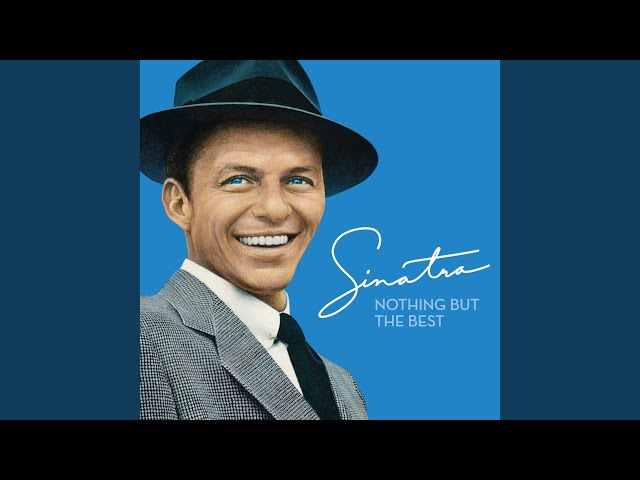
For those who first encountered this song not as a jazz standard but as the ending theme of the acclaimed anime series Neon Genesis Evangelion—actually, I’m one of them—it might be quite common among a certain generation in Japan.
“Fly Me to the Moon” is a renowned classic that has been passed down as a global jazz standard, and in Japan it has repeatedly been used in TV dramas and commercials, including the aforementioned Evangelion.
By the way, did you know that “Fly Me to the Moon” originally began as a song called “In Other Words,” written by American lyricist-composer Bart Howard in 1954? Its rhythm was in 3/4 time, arranged differently from the current version, and the first recorded vocalist was Kaye Ballard, who released it on record in 1954.
After various twists and turns, the title “Fly Me to the Moon” became established; in 1962, composer-arranger Joe Harnell adapted it in a bossa nova style, and two years later Frank Sinatra’s rendition became a major hit, leading to the version we know today.
Yardbird SuiteCharlie Parker

Together with trumpeter Dizzy Gillespie, he created the “bebop style,” considered the prototype of modern jazz.
Though his life was short—just 34 years—Charlie Parker, known as “Bird,” revolutionized the jazz scene with his genius for improvisation.
Parker was not only an unparalleled player but also wrote several classic compositions.
This time, let’s introduce Yardbird Suite, which Parker composed in 1946.
Known in Japanese as “Yardbird Kumikyoku,” this piece is regarded as a quintessential bebop classic and has been covered by many artists as a jazz standard.
The title, which combines Parker’s nickname “Yardbird” with the classical music term “suite,” is quite unique, isn’t it? The piece uses the so-called 32-bar AABA form, and many people have likely tackled it as an exercise piece when practicing jazz improvisation.
Incidentally, Bob Dorough—known as a pianist and singer-songwriter—included a vocal cover of Yardbird Suite, with lyrics he wrote himself, on his 1956 album Devil May Care.
The lyrics convey profound respect for Parker, so if you’re interested, be sure to check it out!
Feeling GoodNina Simone

As a song symbolizing freedom, liberation, and new beginnings, it has left a lasting mark on many people’s hearts.
Its powerful, emotive vocals inspire hope and courage in listeners.
Included on the 1965 album “I Put a Spell on You,” it became one of Nina Simone’s signature works.
It drew renewed attention in 1994 when it was used in a Volkswagen commercial in the UK.
Imbued with Simone’s convictions, closely tied to the civil rights movement, this piece is recommended listening at life’s turning points or before embarking on new challenges.
It will lighten your heart and give you the courage to look ahead.
How High the MoonElla Fitzgerald

Here is a jazz standard that weaves a moving love story.
Sung by Ella Fitzgerald, known as the Queen of Jazz, this piece is memorable for its poignant lyrics that compare the emotional distance between lovers to the height of the moon.
Her clear voice and masterful scat singing further enhance the song’s charm.
Since its premiere at Carnegie Hall in September 1947, it has continued to captivate many fans.
It’s a perfect track not only for jazz enthusiasts but also for those troubled by love—a classic to savor on a quiet night.
Time After TimeMiles Davis

When we hear the term “standard number,” we tend to picture songs born before the war or in the ’50s and ’60s.
However, the piece introduced here is a gem of a standard that emerged in the 1980s.
“Time After Time,” included on American singer-songwriter Cyndi Lauper’s blockbuster 1983 album She’s So Unusual—she’s also widely known as a great admirer of Japan—is a quintessential ’80s ballad that remains beloved even now, in the 2020s.
It’s been used countless times in commercials, and even younger music fans can instantly recognize it when they hear its wistful melody.
In fact, “Time After Time” has also become a standard in the jazz world, continually covered by many artists.
A direct catalyst was none other than the emperor of jazz, Miles Davis, who recorded an instrumental version in 1984, shortly after the song’s release, and issued it as a single the following year, in 1985.
After that, it became a recurring feature in Miles’s live performances.
Of course, beyond jazz, it’s an eternal ballad that continues to be covered across genres.
Be sure to enjoy both the original version and Miles’s cover!
[Western Jazz] A Special Feature on Standard Numbers You’ve Probably Heard at Least Once (21–30)
BirdlandWeather Report
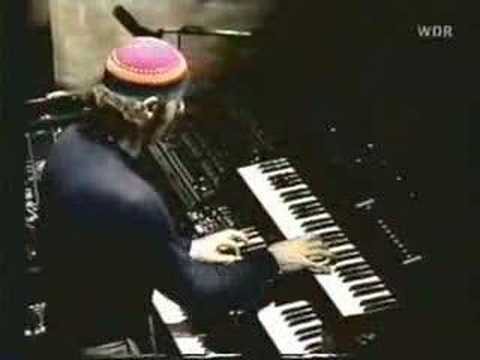
Weather Report, formed in 1970 around synthesizer player Joe Zawinul and saxophonist Wayne Shorter—who shared the common background of having played with Maynard Ferguson’s band and Miles Davis’s group—is a quintessential fusion/crossover ensemble.
It goes without saying that the group’s output, born from cutting-edge sensibilities and highly free-form ensembles that transcend genre boundaries, performed by musicians of extraordinary technical ability, exerted an enormous influence on subsequent artists and bands.
Many of the masterpieces they created have become established standards; among them, Birdland—the opening track of their landmark 1977 hit album Heavy Weather—is regarded as a towering classic and a work of great importance in the history of fusion.
The impact of the late, one-of-a-kind bassist Jaco Pastorius’s playing, which makes extensive use of picking harmonics on fretless bass, is immense, and the main theme’s melody is wonderfully memorable.
In fact, the jazz vocal group The Manhattan Transfer covered it with lyrics and turned it into a hit.
Incidentally, the song’s title pays homage to the jazz club that existed in Manhattan, New York City, from 1949 to 1965, which itself was named after Charlie Parker’s nickname.