

[Piano Beginners] J-POP That Looks Hard but Is Surprisingly Playable [2026]

Classical piano classics are great, but I also want to try playing my favorite J-pop hits on the piano… If you’ve ever felt that way as a beginner, you’re probably not alone.
That said, many J-pop songs aren’t structured with the piano in mind, so it can be tricky to recreate them using only the piano.
In this article, we’ve put together a selection of J-pop songs—from nostalgic classics to recent hits—that might seem a bit daunting at first but have plenty of beginner-friendly piano arrangements.
Even just tracing the melody with your right hand will make you think, “It’s that song!” right away, and adding some left-hand accompaniment little by little makes it even more fun.
We hope this article inspires you to express your favorite J-pop on the piano!
- Even beginners can play them easily on the piano! A curated selection of popular and latest J-POP songs.
- [J-POP] It's like free sheet music! Easy songs you can play on the piano while watching the video
- [Piano × J‑Pop] A curated selection of the coolest new hits and anime songs that’ll look great when you play them
- [Piano Sheet Music] Free downloads available! A roundup of easy-to-play pieces
- [Piano × J-POP] Tearjerker! A Selection of Moving/Touching Songs
- [Beginner] Recommended for adult piano beginners! Beautiful & stylish piano pieces
- [For Beginners] Recommended Ghibli Masterpieces You’ll Want to Play on the Piano
- It’s so cool if you can play these on the piano! A selection of irresistibly charming masterpieces.
- Piano Masterpieces: Surprisingly Easy Despite Sounding Difficult!? A Curated Selection Perfect for Recitals
- [Easy to Play Even If You're Not Good with Both Hands!] Simple piano pieces for absolute beginners. Recommended piano songs.
- Recommended for piano beginners! 10 sheet music picks that adults can enjoy too
- [For Elementary School Students] Brilliant, Showy Masterpieces That Sound Impressive at Piano Recitals
- [Disney] Playable even if you’ve just learned Do-Re-Mi! A selection of iconic songs from beloved Disney animations
[Piano Beginners] J-Pop That Looks Hard but Is Surprisingly Playable [2026] (21–30)
Biri MillionYuuri

Yuri’s “Birimirion” is memorable for its lyrics depicting a heartwarming exchange between an old man and a young person.
It’s a simple song that makes you reflect deeply on life.
With many repeated phrases and a relatively narrow vocal range, it should be fairly easy to play on the piano as well.
The instrumental interlude and the section later on where the beat feel changes are a bit more challenging, so first master the opening part, then steadily work your way through the rest.
Another key point is to keep your touch light so the mood doesn’t get too heavy from playing too cautiously.

horizonback number

Many of back number’s songs make effective use of the piano.
Among them, a top recommendation is “Suiheisen,” a digital-only single released in 2021.
It’s in B-flat major, a key with two flats that’s approachable for chord playing, and many of the chords can be played using just one flat.
The tempo is a relaxed ballad, making it accessible for beginners.
If you can play seven types of chords, you’ll be able to manage it—so give it a try and memorize them!

[Piano Beginners] J-POP That Looks Hard but Is Surprisingly Playable [2026] (31–40)
Marigoldaimyon

The music video has an astonishing 300 million+ views! Aimyong’s “Marigold” has earned strong support from many fans, with comments like “It hits me right in the heart” and “An overwhelmingly uplifting song.” Not only Aimyong’s vocals but also the melody itself conveys the song’s gentleness, making it sound wonderful on piano too! However, because the melody moves intricately, it’s best to start practicing slowly.
Build up your practice without rushing, and gradually aim for a tempo that recreates the comfortable, natural feel of Aimyong’s singing.
We are!kitadani hiroshi
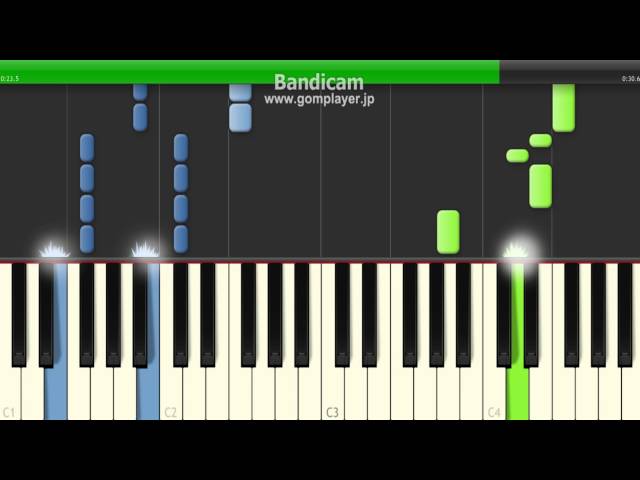
“We Are!” sung by Hiroshi Kitadani is known as the very first opening theme of the nationally beloved anime One Piece.
It’s also a staple anison that many people know, since it was used in the film version and a TVXQ version aired when the anime celebrated its 10th anniversary.
The original is an up-tempo rock tune, but its chord changes are gentle and the melody doesn’t use that many notes.
On piano, if you play the melody with your right hand and just the bass notes with your left, you might be surprised at how playable it is.
Give it a try!
A Bouquet for YouUtada Hikaru

Hanami singer Hikaru Utada, a beloved national icon, released the song “Hanataba wo Kimi ni” in April 2016 as the theme for the NHK morning drama series Toto Nee-chan.
It features a simple piano melody and beautiful strings.
The lyrics express the desire to convey feelings for a loved one not through words, but by presenting a bouquet of flowers.
With hints of gospel and R&B, this song appeals to listeners across generations and continues to be cherished by many.
Light and open in tone yet tinged with a certain wistfulness, its delicate character also makes it perfect for piano performance.
Give it a try.
Fortune Cookie in LoveAKB48

AKB48’s smash hit “Koisuru Fortune Cookie.” Many of you have probably tried mimicking that memorable hand choreography and danced along, haven’t you? True to the song’s concept—“Dance to Koi-chun and you’ll forget the bad things”—it’s a track that lifts your spirits.
Because many parts of the melody are built from repeating rhythms and note combinations, it’s also one of the easier J-pop songs to play on piano.
Once you can play the right hand, add a simple left-hand rhythm, then gradually increase the number of notes to bring it closer to the original.
rainbowSuda Masaki
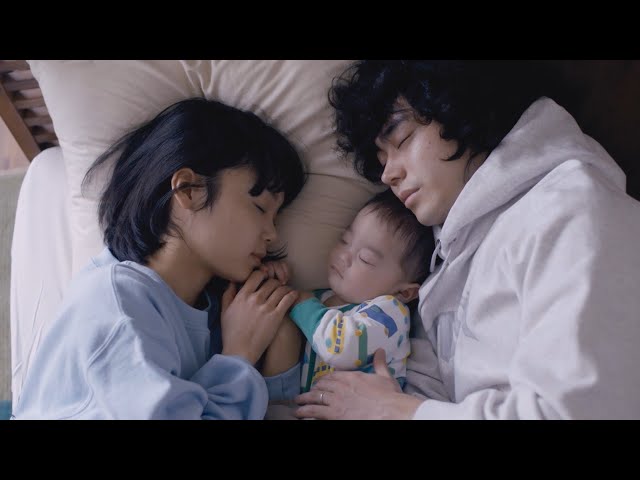
“Niji” is Masaki Suda’s fifth single, released in 2020.
It was chosen as the theme song for the film “STAND BY ME Doraemon 2” and reached No.
2 on both the Oricon and Billboard charts.
You can play it if you learn about seven basic chords that are easy for beginners to remember, and since it’s a slow-tempo ballad, it’s a good one to try.
The accompaniment uses a standard ballad pattern with quarter notes, so you can apply it to other songs as well.
Definitely start by practicing “Niji”!