

[Piano Beginners] J-POP That Looks Hard but Is Surprisingly Playable [2026]

Classical piano classics are great, but I also want to try playing my favorite J-pop hits on the piano… If you’ve ever felt that way as a beginner, you’re probably not alone.
That said, many J-pop songs aren’t structured with the piano in mind, so it can be tricky to recreate them using only the piano.
In this article, we’ve put together a selection of J-pop songs—from nostalgic classics to recent hits—that might seem a bit daunting at first but have plenty of beginner-friendly piano arrangements.
Even just tracing the melody with your right hand will make you think, “It’s that song!” right away, and adding some left-hand accompaniment little by little makes it even more fun.
We hope this article inspires you to express your favorite J-pop on the piano!
- Even beginners can play them easily on the piano! A curated selection of popular and latest J-POP songs.
- [J-POP] It's like free sheet music! Easy songs you can play on the piano while watching the video
- [Piano × J‑Pop] A curated selection of the coolest new hits and anime songs that’ll look great when you play them
- [Piano Sheet Music] Free downloads available! A roundup of easy-to-play pieces
- [Piano × J-POP] Tearjerker! A Selection of Moving/Touching Songs
- [Beginner] Recommended for adult piano beginners! Beautiful & stylish piano pieces
- [For Beginners] Recommended Ghibli Masterpieces You’ll Want to Play on the Piano
- It’s so cool if you can play these on the piano! A selection of irresistibly charming masterpieces.
- Piano Masterpieces: Surprisingly Easy Despite Sounding Difficult!? A Curated Selection Perfect for Recitals
- [Easy to Play Even If You're Not Good with Both Hands!] Simple piano pieces for absolute beginners. Recommended piano songs.
- Recommended for piano beginners! 10 sheet music picks that adults can enjoy too
- [For Elementary School Students] Brilliant, Showy Masterpieces That Sound Impressive at Piano Recitals
- [Disney] Playable even if you’ve just learned Do-Re-Mi! A selection of iconic songs from beloved Disney animations
[Piano Beginners] J-Pop That Looks Hard but Is Surprisingly Playable [2026] (41–50)
I LOVE YOUOzaki Yutaka

A ballad distinguished by its gentle piano timbre.
This gem of a song portrays the heartrending tale of two young lovers tormented by a forbidden romance.
Even as they carry loneliness and anxiety, the way they affirm their love in a room together, accompanied by the beautiful piano melody, resonates deeply.
Included on the December 1983 album “Seventeen’s Map,” it was released as a single in March 1991.
Also used in JR Tokai’s “Fight! Express” commercial, the piece, despite its simple structure, holds the power to convey profound emotion.
A timeless classic that speaks to the heart—one to listen to when standing at a crossroads in love or in life.
Kaikai KitanEVE

The opening theme for the first cour of the TV anime Jujutsu Kaisen is Eve’s Kaikai Kitan.
It even ranked fifth on Billboard’s download chart.
In the A section, there are parts built around two adjacent notes, and in the chorus, parts centered on the same note an octave apart, which makes it easier to remember which keys to play.
To bring out the uptempo sound of the track, the left hand keeps playing at the same pace, and because there are many repeated notes, it’s beginner-friendly as well.

LeoYuuri

“Leo” is a track included on Yuuri’s 2022 album Ichi.
There’s a piano accompaniment version of the music video, which makes it easy to grasp the feel of playing and singing, so I highly recommend it.
Another plus is that it’s in F major, which has just one flat, making the chords easy to finger and remember.
In the video, the accompaniment uses a variety of techniques, from quarter-note playing to arpeggios, so try it with the technique that suits your level!
Voice of the Seaurashima tarō (kiritani kenta)
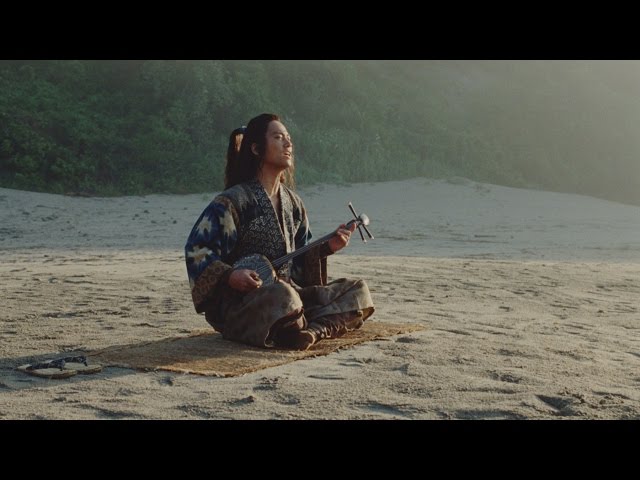
“Umi no Koe” is the song sung by Kenta Kiritani as Urashima Taro in au’s “Santaro Series” commercials.
Released as Kiritani’s single in 2015, it became a million seller.
The sound of the sanshin is memorable, but the piano intro and accompaniment are beautiful as well.
If you know basic chords, you can play it using just seven chords, so give it a try.
If you’re comfortable with sus4 and slash chords, you can make it sound even more authentic—try that too!
Kanata HarukaRADWIMPS

Kanata Haluka by RADWIMPS, the theme song for Makoto Shinkai’s film Suzume, features a simple, heartwarming melody that carries a hint of nostalgia and pairs beautifully with the piano.
Start by practicing the right-hand melody, which is easy on the ears and memorable, then add the left-hand bass notes to keep the beat.
To make the chorus truly soar, play the other sections gently; shaping the dynamics this way will evoke the film’s emotional impact.
Don’t hesitate to use expressive contrasts in volume.

Miracle of BondsMAN WITH A MISSION×milet

Kizuna no Kiseki, the theme song for the TV anime Demon Slayer: Swordsmith Village Arc, became a hot topic thanks to its star-studded collaboration between MAN WITH A MISSION and milet.
It’s a rock number full of driving energy.
While the original is up-tempo, if you’re tackling it on piano, start by practicing slowly! The range isn’t very wide, and there are many repeated phrases, so even beginners can play it if they calmly follow the notes.
With fast, cool songs it’s tempting to ramp up the tempo right away, but until your fingers move smoothly, hold back and practice carefully.
globeYonezu Kenshi

“Globe,” written as the theme song for Studio Ghibli’s The Boy and the Heron, directed and written by Hayao Miyazaki and released in 2023.
The song evokes hope for an endlessly continuing future—one that goes on no matter what happens along the way, whether joyful or sad.
On the score, it appears tricky at first because it mixes 4/4 and 2/4 time, but don’t worry about the meter changes too much; just follow the notes while picturing the melody.
Once you’re comfortable, add dynamics to build excitement in the chorus.