

Songs with titles starting with 'Ka'

When you hear “songs with titles that start with ‘Ka’,” what comes to mind?
It’s not always easy to think of them right away, is it?
But after doing some research, there are actually quite a lot—and many of them are hit songs that defined their eras.
I think you’ll have a great time with a mix of trending buzz tracks and timeless classics!
In this article, I’ll carefully select and introduce songs whose titles start with “Ka.”
Feel free to use this as a reference not only when you’re curious about what songs start with “Ka,” but also as a starting point for picking tracks at karaoke.
- Vocaloid songs that start with 'Ka'
- Summary of Vocaloid songs with titles that start with “Ga” (が)
- Masterpieces with titles that start with 'A'
- Songs with titles starting with “Ki” [Great for karaoke & shiritori!]
- Cool songs from the Showa era. Masterpieces from Showa that shine with sensuality, passion, and rugged charm.
- Introducing popular J-pop songs that start with “Ta”!
- A roundup of songs that start with “ku.” Perfect for shiritori or picking karaoke tracks!
- Songs with titles starting with “Ko” [Great for karaoke and shiritori, too!]
- [Tearjerker] Songs that make your heart tremble with tears & moving tracks with lyrics that touch the soul
- Songs with titles that start with 'Ke'
- Winter songs in 90s J-pop: a roundup of popular winter tunes
- [Classic Showa Kayō Hits] The captivating Showa-era pop songs beloved even by younger generations
- A compilation of Vocaloid songs with titles that start with “Ki”
Songs with titles starting with “Ka” (91–100)
MapleUeda Momoka

A singer-songwriter who has won numerous singing audition shows and drawn attention for her “soothing voice,” Monaka Ueda delivers a stripped-down, solo acoustic rendition.
The original is a classic by Spitz released in 1998, but her cover further brings out the poignancy of the lyrics’ world.
In the video released in October 2021, each word is carefully woven over a simple performance with just an acoustic guitar.
Although Monaka Ueda has an extensive track record of original work—including composing the theme song for the Chunichi Dragons support program “Doranavi”—here her true-to-life expressiveness shines.
It’s something I’d recommend to those who want to quietly sink into their memories at dusk or in a slightly chilly season.
A gentle singing voice that warms the heart just by listening.
MapleNinomiya Ai

This is an acoustic cover by singer-songwriter Ai Ninomiya, whose talents also shine in the musical Les Misérables and the stage production My Neighbour Totoro.
She delivers a heartfelt rendition of a classic: a 1998 single by Spitz that will also serve as the theme song for a film slated for release in 2025, interpreted with her uniquely expressive style.
While she’s known for her vocals in matthews and appearances on TBS’s UTAGE!, this March 2021 release stands out for its stripped-down, self-accompanied performance, where the guitar’s melodies and her breathing are palpably present.
Infused with feelings drawn from her time living in Vietnam, it carries a bittersweet sense of foreign atmosphere distinct from the original.
On a quiet night when you want to settle your heart, why not immerse yourself in her expansive, soothing voice?
MapleYūri × Sekitori Hana

This is a collaborative version sung by Yuuri and Hana Sekitori of one of Spitz’s signature songs, whose heartrending lyrics and melody deeply touch the heart.
Released on Yuuri’s YouTube channel in September 2025, this work features an appealing acoustic sound recorded at Amazon Music Studio Tokyo.
The original song was included on the 1998 album “Fake Fur,” and it has been loved for so long that it even inspired a film based on the track.
Yuuri’s powerful vocals interweave with Hana Sekitori’s lyric-focused singing, creating a must-hear harmony that showcases their individual styles.
It’s a track with warm, resonant vocals that I’d recommend to anyone trying to move forward while carrying the pain of heartbreak or parting.
MapleTomei

This is the version by the much-talked-about singer-songwriter Tomyo, produced as an insert song for the film “Kaede.” Discovered by RADWIMPS’ Yojiro Noda, her voice overlaps with Yaffle’s understated arrangement to draw out the story’s poignancy even more deeply.
In the film, which premiered in December 2025, the piece is used repeatedly as a key motif, moving audiences to tears.
As director Isao Yukisada chose her for evoking “the boundary between life and death,” her singing is marked by a translucent clarity tinged with shadow.
It’s also included on the “Kaede” soundtrack album—one you’ll want to savor slowly along with the film’s afterglow.
Different from Spitz’s original, its delicate, storyteller-like resonance is part of its charm.
MapleNatsuiro Matsuri & Rikka
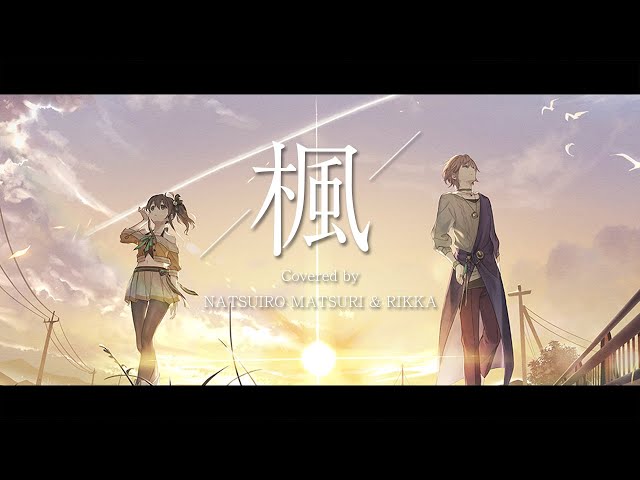
This is a duet version sung by Natsuiro Matsuri and Rikka, who belong to the virtual talent agency hololive production.
The original song is a single by Spitz released in 1998, widely known as an insert song for a TV drama.
The poignant lyrics, themed around parting and memory, are beautifully expressed by Natsuiro Matsuri’s clear, translucent high notes and Rikka’s gentle, enveloping low tones.
Released in September 2020, this work features professional-grade production—Bernis handled the mixing—and it’s crafted so finely that simply listening feels purifying.
The overlap of male and female vocals brings out a different narrative breadth from the original.
MapleGoto Maki

This is the version sung by Maki Goto, who supported Morning Musume’s golden era and commands an overwhelming presence as a solo artist as well! Released in August 2022 as part of her own YouTube project, this piece is a gem.
The original song, released in 1998, is a treasured ballad by Spitz and well-loved as a TV drama theme.
With her crystal-clear voice, she breathes a new life into it—tender yet aching.
It’s a departure from the powerful impression of her idol days, moving instead with delicate breaths and a mature warmth that truly touches the heart.
The way she carefully weaves each word brings the scenes of parting into even sharper relief.
It’s a deeply resonant cover you’ll want to listen to alone on a long autumn night, when you feel like quietly losing yourself in thought.
MapleShibuya Ryuta

This is the version by Ryuta Shibutani, the frontman of SUPER BEAVER who has won support with his fiery live performances.
It was featured as an insert song in a film released in December 2025, and, with an arrangement by Yaffle—who handled the film’s music—it’s expressed with a grand, expansive sense of scale.
Different from the expressions he shows with the band, his vocals resonate as if closely accompanying the film’s worldview, vividly reflecting the story’s sense of loss and hope.
The album “Kaede (Film) Original Soundtrack” also includes a cover by Tomaki and the original song by Spitz, letting you compare the nuances woven by each singer’s voice.
Why not immerse yourself in the gentle yet powerful vocals while picturing the scenes from the film?