



A well-rounded idol group that can talk, sing, dance, and play instruments—let’s research the popular songs of Kanjani Eight! While they’re often associated with Osaka-dialect songs, they actually perform across a wide range of genres—from gentle ballads to energizing anthems and even comic songs.
As a group boasting top-tier vocal ability among male idols, every track is a satisfying listen.
Based on fan feedback, we’ve compiled information from our site and carefully selected their most popular songs.
Please enjoy!
- Kanjani Eight Karaoke Popular Songs Ranking [2026]
- Kanjani Eight Popular Song Rankings [2026]
- Kanjani Eight Cheer Songs and Popular Tracks Ranking [2026]
- Johnny's WEST's masterpieces and popular songs
- Cool hit songs by Johnny’s (Johnny & Associates)
- Iconic and hit songs by Johnny’s from the 1990s
- Iconic Johnny’s songs from the 2000s onward. Nostalgic hits that bring back memories.
- Ikimono-gakari’s famous and popular songs
- KinKi Kids Popular Songs Ranking [2026]
- Hit and Popular Songs by Kis-My-Ft2
- [Popular Johnny's Songs] Johnny's masterpieces that both hardcore fans and casual listeners must hear
- Masterpieces and popular songs by Wagakki Band
- AKB48’s classic and hit songs: Relive your youth! A comprehensive introduction to their popular tracks
Kanjani Eight’s classic and popular songs (1–10)
T/W/LKanjani∞
This is the 16th single, released on April 20, 2011, as a double A-side with “Yellow Pansy Street.” It was used as the opening theme for the TV anime Crayon Shin-chan.
The title T.W.L stands for “towel,” and at concerts it’s customary for fans to wave towels along with the song.
The lyrics and music were written by Yuzu’s Yujin Kitagawa, and Yuzu also recorded a self-cover.
It’s become a staple upbeat crowd-pleaser, and attention often focuses on Ryo Nishikido playing the harmonica during the instrumental break.
Strongly, strongly, stronglyKanjani∞

Even among Kanjani’s songs, this number where they sing while playing guitar is one of my absolute favorites.
All the members sing while playing instruments, and even though they might usually seem like they’re goofing around, it really shows how much they love music and how talented they are.
Thirty-year-old BoyKanjani∞

It is included on their seventh album, Kanjanism, released on November 5, 2014.
Kenichi Maeyamada wrote and composed the song.
At the time, with six members of Kanjani∞ in their thirties except for Tadayoshi Ohkura, the track portrays the group still retaining a boyish side.
There’s also a staged argument between members partway through, and the lyrics showcase Kenichi Maeyamada’s sharp sensibility.
Rolling CoasterKanjani∞

It’s included on their third album “PUZZLE,” released on April 15, 2009.
It’s a song that member Ryo Nishikido has publicly said he loves.
The lyrics depict a slightly “pathetic guy” who gets pushed around by the girl he likes—an archetype that often appears in Kanjani Eight’s songs.
Irresponsible HeroKanjani∞

This is their ninth single, released on October 29, 2008.
It was used as the theme song for Egawa × Horio no SUPER Urugusu.
It’s a cheerful, uplifting track that’s very characteristic of Kanjani∞.
It’s often performed on TV and has become a staple at their concerts.
Dye D?Kanjani∞

It is included on their fifth album, “FIGHT,” released on November 16, 2011.
Member Shota Yasuda wrote the lyrics and composed the music, showcasing once again his inimitable, distinctive sensibility and talent.
The song is said to be about a vampire who falls in love with a human, with its eerie sound and English lyrics expressing that world.
The effective distribution of vocal parts—devised by Yasuda to highlight each member’s voice—has also become popular among fans.
NOROSHIKanjani∞
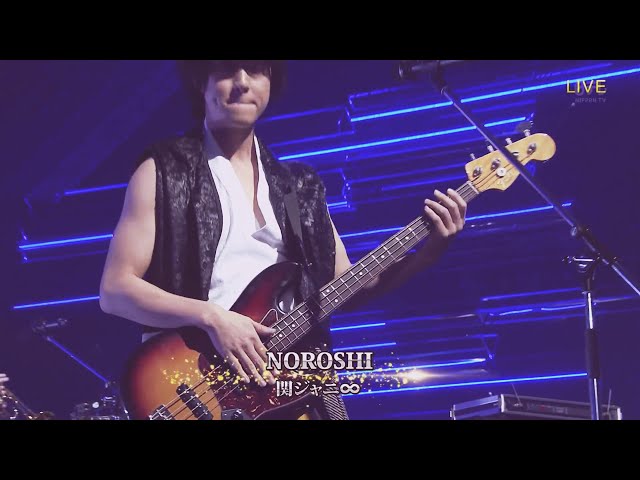
This is their 37th single, released on December 7, 2016.
It served as the theme song for the film “Mogura no Uta: Hong Kong Kyosokyoku” (The Mole Song: Hong Kong Capriccio).
In a full-fledged band style, it’s a track that keeps you glued to Kanjani∞’s performance.
From Ryuhei Maruyama’s bass in the intro to Yu Yokoyama’s trumpet, you can fully appreciate the markedly leveled-up “Band Kanjani∞.” Their appearance in traditional Japanese attire when performing it on TV also drew a huge response.