

If you’re unsure what to pick, you should definitely sing these! Recommended songs by female artists for karaoke


What kind of songs do you sing when you go to karaoke?
Many people probably have a go-to song they always sing.
Your song choices may also change depending on the situation—like when you go with women of the same age, or when you go with coworkers or your boss.
But when it comes to picking songs that are different from your usual choices—and that also match the situation—it can be surprisingly hard to come up with ideas.
So in this article, we’ll introduce classic karaoke songs by female artists that are easy to sing in any situation, especially for women who struggle with choosing what to sing.
We’ll focus on trending female artists while covering various eras, so use this as a reference when you want to sing something different from your usual lineup!
- Women's Popular Karaoke Rankings [2026]
- A must-see for low-voiced women! Popular songs that are easy to sing at karaoke
- Easy-to-sing karaoke songs: Classic picks for women in their 40s
- [Karaoke] A roundup of songs that are easy for women to sing!
- Songs Men Want Women to Sing at Karaoke: Irresistible Tracks [2026]
- Recommended karaoke songs for women in their 20s — Heisei/Reiwa hits and the latest tracks
- [Recommended for women in their 30s] Popular and latest songs that are easy to sing at karaoke
- Recommended for teenage girls! Easy-to-sing karaoke songs
- Great for karaoke song selection! Recommended easy-to-sing songs for Gen Z women
- [For Women] Easy-to-Sing and Crowd-Pleasing Karaoke Songs
- Karaoke songs that are easy to sing even if you’re not confident in your pitch (for women in their 50s)
- Karaoke songs that make it easy to score 100 points [for women]
- A lineup of classic hits! Karaoke songs recommended for the yutori generation
If you’re unsure what to pick, these are must-sing! Recommended songs by female artists for karaoke (91–100)
Tomorrow’s skySPEED
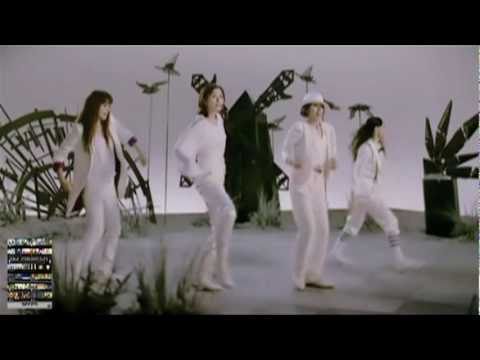
It was released in 2008 as SPEED’s 15th single.
As their first work following their third reunion and full comeback, it reached No.
3 on the Oricon Weekly Singles Chart.
It was SPEED’s first Japanese-language title, including albums, and was used as the theme song for the Nippon TV Wednesday drama “OL Nippon,” starring Alisa Mizuki.
Don’t say ‘I love you’!Nagayama Miho

Released in 1990 as Miho Nakayama’s 20th single.
It was used as the theme song for the Fuji TV drama “Sutekina Kataomoi,” starring Miho Nakayama herself.
The single reached No.
3 on the Oricon Weekly Singles Chart and was performed at the 41st NHK Kōhaku Uta Gassen.
It’s a charming song that reflects Nakayama’s idol-style pop sensibilities.
Miss youImai Miki

It was released in 1994 as Miki Imai’s 10th single.
The song was used as the theme for the Nippon TV drama “Forbidden Fruit,” with lyrics by Yuho Iwasato—who has provided many songs for Miki Imai—and composition by Tomoyasu Hotei.
It reached number one on the Oricon Weekly Singles Chart.
It’s a gentle yet somehow wistful masterpiece.
Don’t Stop LoveKōda Kumi

Released in 2011 as Kumi Koda’s 51st single.
The song was used as the music.jp TV commercial tune and as the theme song for the Shochiku-distributed film “Second Virgin,” and it was performed at the 62nd NHK Kohaku Uta Gassen in 2011.
It’s a heart-wrenching love ballad that matches the film’s story, and Kumi Koda’s sexy vocals make it utterly captivating.
SnowdomeKimura Kaera

It was released in 2007 as Kaela Kimura’s eighth single.
The song was used as the JR East “JR SKISKI” commercial theme, in which Kaela Kimura herself appeared.
It’s a straightforward yet slightly bittersweet love song.
The lyrics were written by Kimura herself, and her free, expansive vocals make it a track you’ll want to sing at karaoke.
Bloom like a rose, fall like a cherry blossom.Matsuda Seiko

Released in 2016 as Seiko Matsuda’s 82nd single, the song was written, composed, and arranged by YOSHIKI of X JAPAN, and was used as the theme song for the TBS Tuesday drama “Seisei Suruhodo, Aishiteru.” It debuted at No.
6 on the Oricon Weekly Singles Chart, and at the 67th NHK Kōhaku Uta Gassen, YOSHIKI—appearing as X JAPAN—accompanied on piano for a performance of the song.
ETERNAL WIND ~A Smile in the Shining Wind~Moriguchi Hiroko

Released in 1991 as Hiroko Moriguchi’s ninth single, it served as the theme song for the 1991 anime film Mobile Suit Gundam F91 and was also used as an insert song.
Written and composed by Yui Nishiwaki, it has been carried on as one of Moriguchi’s signature songs.
She made her first appearance at the NHK Kōhaku Uta Gassen in 1991 with this song.