

[Animal Song] Fun nursery rhymes popular with children

Picking out “animal songs” from popular children’s songs!
There are so many kinds of animals—dogs and cats that are popular as pets, and lions and pandas that are symbolic of zoos.
Did you know there are children’s songs that feature a variety of animals?
In this article, we’ll introduce many animal-themed songs, including the famous Inu no Omawari-san (The Dog Policeman) and Mori no Kuma-san (The Bear in the Forest).
There are also lots of finger-play songs you can use in childcare, so be sure to make good use of them.
If children become interested in animals, it might be nice to take a trip to the zoo!
- Nursery rhymes, folk songs, and children's songs about animals
- Get pumped with popular songs from “Okaasan to Issho”! A collection of timeless tunes everyone will want to sing together
- Popular Songs Ranking for Toddlers
- Fun to dance! A roundup of recommended dance songs for young children, perfect for daycare and sports days
- [Children's Songs] Cute songs recommended for childcare. List of popular nursery rhymes.
- Songs from Ponkickies: A roundup of nostalgic classics and popular tracks
- Nursery rhymes, folk songs, and children's songs about food
- Nursery rhymes to sing to your baby! Recommended songs enjoyable from 0 months
- [Elementary School Music] List of Popular and Nostalgic Songs That Have Appeared in Textbooks
- Collection of winter nursery rhymes, folk songs, and children's songs. Includes fun winter hand-play songs too.
- Get pumped with kids’ favorite songs! A memorable collection of classics that will make you want to sing along
- [Childcare] Fun Songs for 2-Year-Olds to Sing! Recommended Song Collection
- Snow Songs to Enjoy in Winter! Children's Snow Nursery Rhymes & Hand-Play Songs
[Animal Songs] Fun Nursery Rhymes Popular with Children (1–10)
Goat MailSakushi: Mado Michio / Sakkyoku: Dan Ikuma
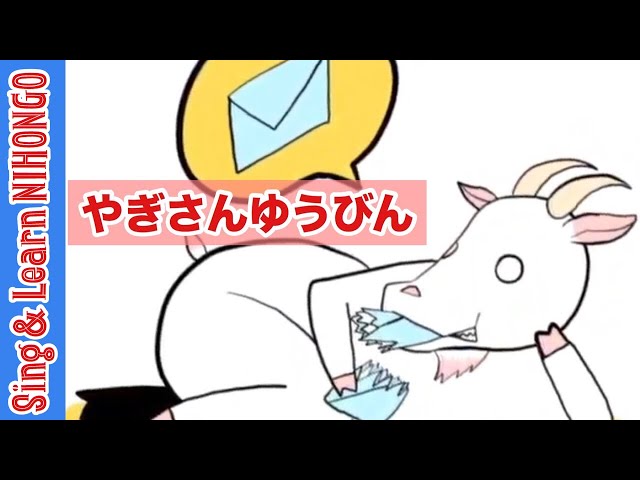
This is the children’s song “Yagi-san Yūbin” featuring the absent‑minded White Goat and Black Goat.
Goats are often thought to eat paper, and the story plays on that image: they end up eating the letters before reading what’s inside.
In reality, paper has ink on it and tissues contain various chemicals, so you shouldn’t let goats eat them.
Not knowing what was written, the Black Goat writes, “What happened?”—but the White Goat eats that letter again before checking the contents.
It’s a looping, yet gently heartwarming and slightly funny song.

Song of the Gluttonous GorillaSakushi: Abe Naomi / Sakkyoku: Ozawa Tatsuyuki
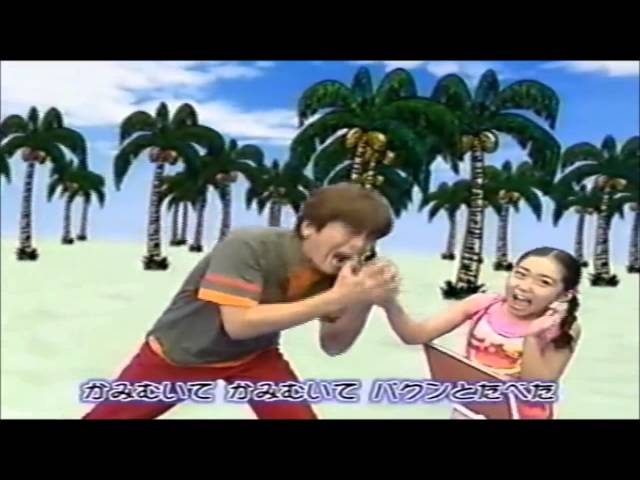
The children’s song “The Gluttonous Gorilla’s Song” depicts a gorilla who loves to eat, gobbling up one thing after another.
Many people may think that, like monkeys, gorillas eat bananas.
But the gorilla in this song doesn’t stop at bananas—he even eats chocolate and ice cream! After eating, he expresses his joy by “drumming,” beating his chest with his hands.
However, when an onion appears at the end, an unexpected tragedy strikes…
It’s a tune that’s sure to make you hungry as you watch the gorilla eat and eat.
rabbit

Many children have probably heard the story that there’s a rabbit on the harvest moon pounding mochi.
The children’s song “Usagi” depicts that rabbit and the shining harvest moon in the sky.
It’s an old nursery rhyme said to have been sung since the Edo period, and its melody leaves a strong impression with a distinctly Japanese sensibility.
The lyrics, which simply portray the rabbit responding to the harvest moon, seem to create a sense of open space that invites listeners to imagine what lies around it.
Just as people feel joy when they see the beautiful harvest moon, the rabbit, too, is surely filled with happiness at the sight of that lovely moon.
[Animal Songs] Fun Nursery Rhymes Popular with Children (11–20)
aye-ayeSakushi: Aida Hiromi / Sakkyoku: Uno Seiichirou

The more you sing the children’s song “Ai Ai,” which asks, “What kind of animal is the aye-aye?”, the more curious you become.
In the song it’s introduced as a kind of monkey, but its actual appearance is a bit different from the monkeys commonly seen in Japan.
It’s characterized by large ears and bulging eyes, and in some places it’s even considered an ill omen.
Still, in this song you can enjoy the aye-aye’s very adorable side.
While introducing the aye-aye’s features, most of the lyrics simply repeat its name, making it a rather unique tune.
If singing it piqued your interest, be sure to look up what kind of animal the “aye-aye” really is.
Frog ChorusYakushi: Okamoto Toshiaki / Sakkyoku: Doitsu min’yō

From around the rainy season into summer, you can hear frogs croaking from all sorts of places, right? Their calls can even sound as if they’re all singing together.
This is the children’s song “Frog Chorus,” which depicts frogs happily singing in unison.
Based on a German folk song, it’s often enjoyed as a round, with the lyrics taken up one after another.
When it goes well, it really sounds like a chorus, but it’s surprisingly tricky—you can easily get thrown off by the person before you! Don’t let the frogs outdo you—try singing it as a round with your friends or with Mom and Dad!
Rudolph the Red-Nosed ReindeerLyrics and Composition: Johnny Max
Rudolph the Red-Nosed Reindeer is beloved as a classic Christmas song.
It depicts a reindeer whose red nose makes everyone laugh at him, but who regains his confidence thanks to a single word from Santa.
Santa was the only one who recognized the charm of the reindeer’s red nose! When someone notices and praises the qualities in us that no one else sees—sometimes not even ourselves—it makes us happy.
Let this song inspire you to be like Santa and discover the good in each person’s unique individuality.
School of MedakaSakushi: Chaki Shigeru / Sakkyoku: Nakata Yoshinao

It’s getting harder to spot medaka swimming in the wild.
The children’s song “Medaka no Gakkō” portrays scenes of many medaka swimming together from a unique perspective.
It likens the way they gather and swim to students studying and playing at school.
You can’t help but imagine what the medaka might be talking about at school and what they might be learning! If you happen to find medaka swimming, remember this song and have fun imagining all sorts of things.