

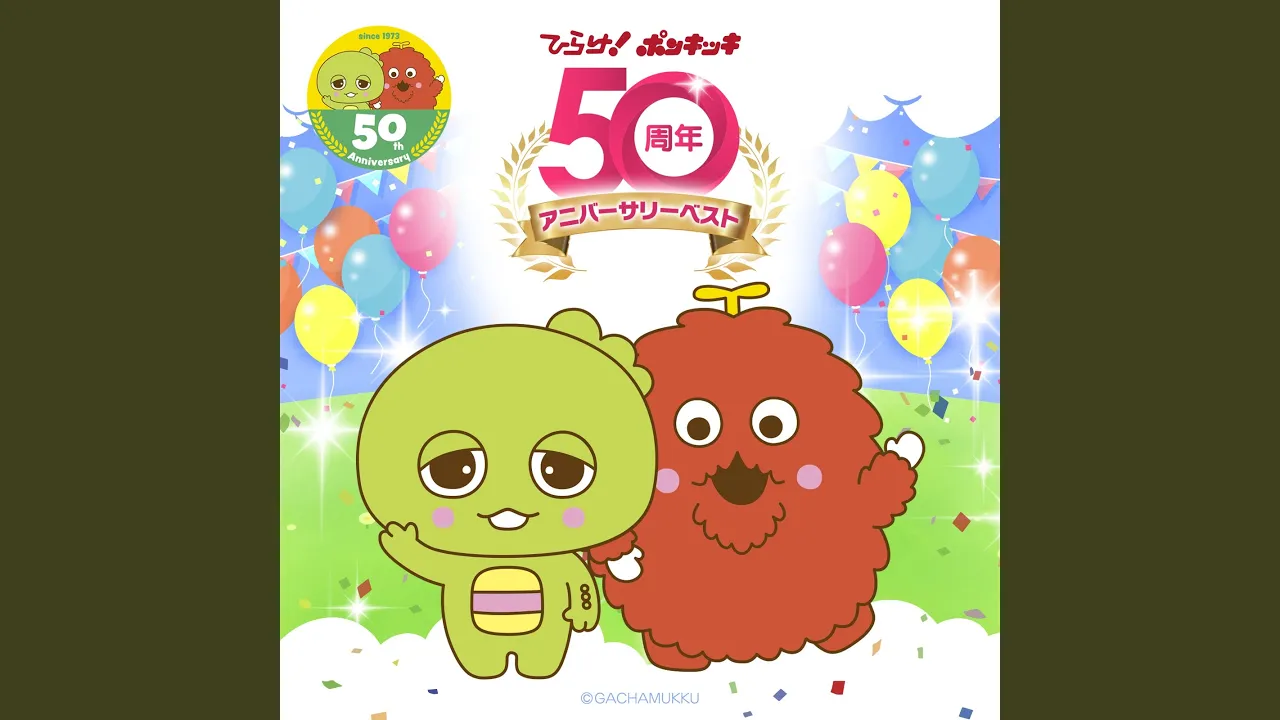
Songs from Ponkickies: A roundup of nostalgic classics and popular tracks


Don’t you ever find yourself humming the songs that played on the “Ponkikki/ Ponkikkids” series even now? Spanning from the 1970s to the 2010s, the music from the Ponkikki series has been beloved for decades—children’s songs that still leave a deep impression on adults’ hearts.
In this article, we’ll introduce plenty of tracks from “Ponkikkids” that are sure to stir up a wave of nostalgia.
Be sure to find your new favorite tune!
Songs from Ponkickies: A roundup of nostalgic classics and popular tracks (1–10)
aiueo staruraimisako

Its romantic worldview, which layers the Japanese syllabary with the night sky and the sparkle of stars, is truly enchanting.
Featured as an insert song on “Hirake! Ponkikki,” it was released as a single in February 1981.
Misako Urai’s clear voice gently paints the transition from dusk to night.
It’s more than just a wordplay song; its poetic beauty conjures vivid scenes, and many may remember being entranced by it even as children.
Give it a listen, and you’re sure to enjoy a soul-cleansing moment.
Rock-Paper-Scissors ParadiseHonma Yusuke

A song themed around rock-paper-scissors that you’ll never forget after hearing it once! Born from a popular segment on “Hirake! Ponkikki,” this track was released as a single in August 1984.
Yusuke Homma, known for scoring numerous TV dramas, takes the mic himself, delivering brilliantly unique lyrics over an irresistibly catchy technopop sound.
Its playful wordcraft—prioritizing rhythm and sound over literal meaning—captivates not only children but adults as well! Just listening will vividly bring back the excitement of that era.
Kung Fu LadyTakada Tomoko
This is a unique track featuring Chinese-style tones and lively shouts that leave a strong impression! Sung by Tomoko Takada, it was released as a single in September 1980 and is a song from Hirake! Ponkikki.
With lyrics and a melody themed around Chinese martial arts, it made such an impact that many people probably tried imitating the dance in front of their TVs.
The authentic sound, infused with elements of funk and soul, still gets your body moving to the rhythm even today.
Give it a listen and relive those nostalgic days!
Lucky and happyUentsu Eiji, Gachapin MUKKU

It’s a pop tune packed with boundlessly bright, positive messages that will make you smile just by listening.
“Lucky de Happy,” sung by Eiji Wentz along with Gachapin and Mukku, was released as a single in February 2007 and used as the theme song for Fuji TV’s “Ponkickies.” True to its title, it features a blissful worldview and fun choreography by Lucky Ikeda.
Perfect for when you need a boost of energy or want to have fun together with your kids.
Tanaage OndoOotake Shinobu

This work, with lyrics by playwright Kohei Tsuka, humorously—and with a slight bite—depicts everyday exchanges between parent and child.
The song portrays the mismatch between the parent’s and child’s viewpoints on table manners and picky eating, prompting an involuntary wry smile.
Shinobu Otake’s richly expressive vocals vividly bring the song’s world to life, like a short play.
Released as a single in 1988, it was used on the show “Hirake! Ponkikki.”
Flying tricyclenagira kenichi

This is a delightfully fun song that captures the uniquely childlike freedom of flying into the sky on a tricycle.
Released as a single in April 1976, it became familiar as an insert song on “Hirake! Ponkikki.” The singer is Kenichi Nagira.
It’s also known as a work by the duo Hiroo Takada and Juichi Sase, who created “Oyoge! Taiyaki-kun.” Nagira’s warm yet subtly humorous vocals alone will make your heart feel cozy.
When you’re worn out by busy days, be sure to give it a listen.
Even one carrotnagira kenichi

This is the classic song “Ippon Demo Ninjin,” born from the show Hirake! Ponkikki, where you can uniquely learn numbers and how to count things.
It’s sung by Kenichi Nagira, who’s also active as a folk singer and a TV personality.
His warm, conversational singing voice meshes perfectly with the comical lyrics, doesn’t it? For those who watched the show back in the day, it’s probably a very familiar tune.
It was included as the B-side to the single “Oyoge! Taiyaki-kun,” which became a record-breaking hit in 1975.