

[Piano Pieces] Easy for Children to Play! A Roundup of Simple Classical Works


One of the reasons children who have just started piano lessons lose interest is that they begin to feel, “Piano is hard…” If reading music is difficult and practice doesn’t progress, or if their fingers don’t move the way they want and they can’t get a passing mark from the teacher, they tend to develop negative feelings toward the piano they started with such excitement.
In this article, we’ll introduce easy classical pieces that are approachable even for children.
There are always individual differences in how difficult something feels and how quickly one progresses, but please pick pieces that suit your child so they can feel, “Piano is fun!”
- [For Elementary School Students] Brilliant, Showy Masterpieces That Sound Impressive at Piano Recitals
- [Beginner] Recommended Piano Pieces to Play at a Recital
- [For Piano Recitals] Simple yet Cool Classical Pieces
- For Beginners: Easy to Play and Sounds Impressive! Pieces That Shine at Piano Recitals
- [For Kids] Play Piano with One Finger! Recommended Songs Collection
- [Classical Music] All pieces under 3 minutes! A collection of short and cool piano pieces
- Disney Classics on Piano: A Curated Selection of Easy Pieces, Perfect for Recitals
- Piano Masterpieces: Surprisingly Easy Despite Sounding Difficult!? A Curated Selection Perfect for Recitals
- Beginner to Intermediate: Chopin pieces with relatively low difficulty. Recommended works by Chopin.
- Recommended for piano beginners! 10 sheet music picks that adults can enjoy too
- [Beginner] Also great for piano recitals! Classical pieces that look cool when you can play them
- Even beginners can play them easily on the piano! A curated selection of popular and latest J-POP songs.
- For Preschoolers to Elementary School Children: Challenging Piano Pieces — A Curated Selection from Competition Repertoire
[Piano Pieces] Easy Even for Kids! A Roundup of Simple Classical Works (21–30)
Polonaise in C major, Op. 155-4Theodor Oesten

“Polonaise” is a French word meaning “in the Polish style.” The Polonaise by Theodor Oesten, a piano teacher and composer active in 19th-century Germany, is a piece we especially recommend for children who are transitioning from beginner to intermediate level.
Its lively waltz rhythm and tempo may feel a bit challenging, but since the note patterns in both hands are simple, anyone comfortable with two-handed playing should be able to tackle it without too much difficulty.
Start slowly, then gradually speed up—and aim to perform it with flair.

ParadeMaurice Ravel
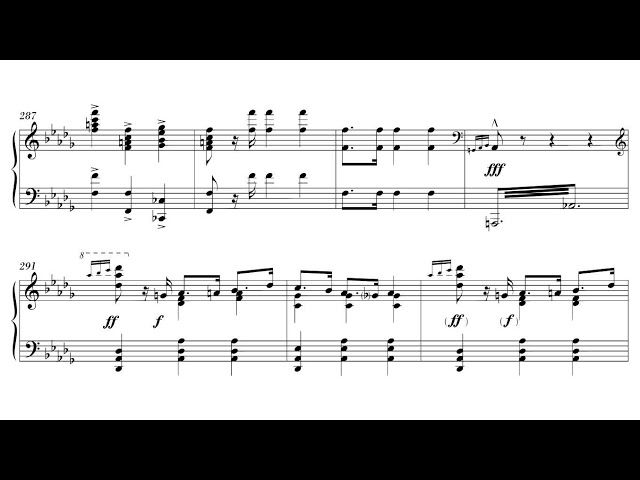
A piece whose powerful, dramatic sound stirs the listener’s heart, as if heralding the beginning of a grand tale.
It is a work by Toshio Horiuchi, who teaches in Hiroshima Prefecture and has composed numerous band pieces.
From the delicate interplay of sounds in the quiet sections to the breathtaking build toward a climax where the full ensemble charges forward as one, the piece offers a deeply immersive experience—like living through the prologue of a legend in music.
Composed in 2006 as a set piece for the All Japan Band Competition, it is featured in the album “Reference Performances of Set Pieces for the All Japan Band Competition 2005‑2008.” Demanding not only individual technique but the expressive power of the entire band, this masterpiece is one you’ll want to perform when you and your ensemble wish to weave a single, sweeping story together.
[Piano Pieces] Easy for Kids to Play! A Roundup of Simple Classical Works (31–40)
Polka from Album for ChildrenLouis Heinrich Köhler

Are you looking for a piece that will make you feel buoyant and joyful at a recital? This is a piece from the piano collection Kinder Album, Op.
210—a set of 30 works compiled in the 19th century for educational purposes.
Its lively polka rhythm conjures images of twirling around a ballroom.
It’s also ideal for learning to vary tone color—playing briskly with staccato and elegantly with legato.
With a brightness that brings smiles to listeners’ faces, it’s a recommended choice for children who want to develop expressive power and shine on stage at their recital.
Burgmüller 25 Etudes, Op. 100 No. 25 “La chevaleresque” (The Lady’s Ride)Johann Burgmüller

A dazzling and valiant piece that concludes the 1851-published album 25 Etudes, Op.
100.
The original title of this work means “chivalry,” and true to its name, it lets you feel like the dignified yet elegant hero of a story.
The staccato passages, like a horse stepping lightly, and the scales driving toward the climax make your heart dance just by listening.
In performance, the key is whether you can express the shifting scenes through dynamics and varied touch.
It’s a piece that invites you to imagine a narrative and enjoy discovering your own unique interpretation.
Carnaval, Op. 9 No. 12 – ChopinRobert Schumann

Written in A-flat major, this work is a musical portrait that Schumann dedicated to Chopin.
Composed between 1834 and 1835, it expresses Schumann’s deep respect and affection for him.
Characterized by delicate, poetic melodies, it is an enchanting piece that evokes Chopin’s signature, graceful piano sonority.
It is relatively approachable for beginner pianists and ideal for those who wish to learn Chopin’s musical traits.
Just as Robert Schumann introduced his contemporaries through the Neue Zeitschrift für Musik, this piece can be seen as a musical dialogue that conveys Chopin’s allure.
Despite its relaxed tempo, it offers richly expressive interpretation.
French Suite No. 1, BWV 812 – Menuet IJ.S.Bach

Among the dance forms of the Baroque era, this elegant piece in triple meter was composed around 1722–1725 and is also included in the Notebook for Anna Magdalena Bach.
While its melody is simple and approachable, it also contains contrapuntal elements, and imagining the refined timbre resonating in a church helps bring out its character in performance.
Because the technical difficulty of this work is relatively low, it is recommended for those who have only recently started playing the piano or who are drawn to Baroque music.
In classical music, where tone color, expression, and dynamics are emphasized, try practicing long tones and exploring a beautiful sound as you play.
Polonaise in G minor (BWV Anh. 119)J.S.Bach

This piece included in the Notebook for Anna Magdalena Bach is a brief yet captivating work in the form of the Polish folk dance, the Polonaise.
Its G minor tonality evokes a wistful atmosphere, and the dignified triple meter leaves a strong impression, conveying profound emotion despite its simplicity.
As one of the pieces composed for the notebook prepared for his wife in 1725, it reflects both domestic warmth and educational intent.
Structured in a typical two-part A-A-B-B form, it lasts about one minute, making it approachable not only for technical study but also for developing expressive skills.
It is an excellent choice for those who want to explore Baroque-style polyphony or learn a refined dance form.