

[Childcare] Let’s all play! A collection of recommended ideas for group play and games


Group play is essential in early childhood care, isn’t it?
But it’s easy to end up doing the same games over and over, and children can get bored.
So we’ve gathered a collection of group play ideas for teachers who have that concern.
We’ve included a variety of movement-based games that can be enjoyed both outdoors and indoors, so you can choose according to the day’s activity setting.
Another fun aspect of group play is that the level of excitement varies depending on the class’s age and the children’s personalities.
Try choosing while thinking, “Which games will suit my class?”
Let’s spend a fun time with the children.
- [For Kids] Indoor Fun! Large-Group Recreational Activities and Games
- [Childcare / Physical Play] Fun Activities to Get Moving
- Indoor games that different ages can enjoy! Ideas for fun everyone can get excited about together
- Ideas for indoor activities and group games that 5-year-olds like
- Recommended for 3-year-olds! Fun indoor activities and group game ideas
- [For 4-Year-Olds] A Collection of Indoor Play and Game Ideas That Get Everyone Excited
- [Childcare] Full of energy! Indoor activity ideas to get kids moving
- Let's play with a big group! A collection of fun children's recreational activities
- [Childcare] Play Right Now! Recommended No-Prep Games
- Ideas for indoor activities, games, and group play that 5-year-olds enjoy
- Indoor recreation for children: A roundup of exciting games
- Indoor games and recreational activities recommended for daycare and kindergarten
- Indoor Games for Small Groups: Exciting Recreational Activities
[Childcare] Let’s Play Together! A Collection of Recommended Group Play and Game Ideas (51–60)
balloon volleyball
@bear_kids_official Group developmental support: “Balloon Volleyball.” We use balloon play to develop motor skills and sense of balance. By cooperating as a team, children cultivate social skills and cooperation, while also improving concentration and attention.#BalloonVolleyballChild Development SupportAfter-school day service# developmental support (ryōiku)
♪ Original Song – BEAR KIDS – BEAR KIDS 🧸 Child Development Support / After-School Day Service
Tap the pom-poms and balloons to build motor skills and balance! Here’s a balloon volleyball idea.
All you need is a net and some balloons.
It’s a fun way to get moving! With this simple game using a net and balloons, kids will try not to let the balloon fall, reacting quickly and working to send it into the opponent’s court.
It not only boosts physical ability, but also serves as a great activity for learning cooperation and teamwork.
Give it a try!
Chestnut Ogre

A tag game perfect for autumn! Here’s an idea called Chestnut Tag (Kuri Oni).
It’s similar to Freeze Tag, but the twist is that you transform into a chestnut! Choose one person to be ‘it’ (the oni), and everyone else runs to avoid being tagged.
If you’re about to be tagged, you can transform into a chestnut to create a barrier.
If a teammate touches you, you can start running again.
However, if you get tagged before transforming into a chestnut, move to the spectator area.
gomudan
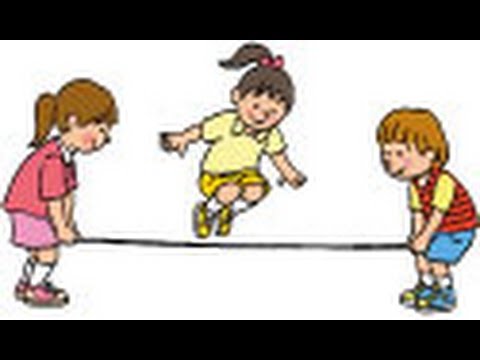
Here’s how to play Gomu-dan (rubber band jumping).
First, prepare a flat elastic band, and have two people hold the ends.
Let’s start with a simple jump-over game.
Hold the band at ankle height and jump over it.
Even if your feet catch on the band, it’s a success as long as you make it through to the other side.
Try different ways of jumping, like two-footed jumps, backward two-footed jumps, and cartwheel jumps! You can also raise the height to increase the difficulty and excitement.
Be sure to keep the band pulled tight—if it’s slack, it can be dangerous.

Daikon Game

Let me introduce the “Daikon Game,” a fun activity you can enjoy indoors while moving your body! Get everyone excited by having them pretend to be daikon radishes.
Lie down in a circle holding hands.
Stay in character as daikon and don’t let go of your friends’ hands so the ‘oni’ can’t pull you out.
The child who stays until the end wins! Rules vary by region, but if you link arms instead of holding hands, you can become even stronger daikon! It’s also fun to let the kids come up with ways to avoid being pulled out, so I highly recommend it.

[Childcare] Let’s Play Together! Recommended Ideas for Group Activities and Games (61–70)
Rokumushi

Are you familiar with the traditional playground game called “Rokumushi”? It has simple rules, but it’s a thrilling, heart-pounding ball game.
Draw a circle at each end of a space about 20 meters apart, and have one person stand inside each circle.
These two are “it.” The other children gather in one of the circles, and while the two “it” players are playing catch with the ball, everyone else tries to run to the other circle.
Each successful crossing counts as “ichimushi” (one), and if you go back and forth until you reach “rokumushi” (six), you win.
If you’re hit by the ball while running back and forth, switch roles and become “it.” Because it’s a folk game, the rules can vary a bit by region, but it sounds like a lot of fun, doesn’t it?
Handkerchief-snatching game

The classic indoor game you can play even on rainy days, the “Handkerchief Grab,” has lots of fun variations depending on the rules.
In this version, players sit on chairs facing each other with their knees touching, place a handkerchief in the middle, and grab it when the whistle blows.
It works well with a larger group, or you can do head-to-head matches and make it a tournament.
There’s also a high-level version where someone keeps chatting to distract players, then blows the whistle when their attention slips.
It’s a recommended game that everyone can enjoy while training reflexes and coordination!

Bingo Relay

Let me introduce a game called “Bingo Relay,” which gets kids using both their heads and bodies.
You’ll need bingo squares—prepare nine items you can use to mark off spaces, like mini hoops.
If you’re outside, you can draw circles on the ground instead.
Arrange them in a 3×3 grid.
Divide the children into two teams, and have only the first three players on each team hold their team markers.
At the signal, the first player from each team runs to the bingo grid and places their marker inside a ring.
When they’re done, they run back, tag the next player, and switch.
The team that first completes a line—vertical, horizontal, or diagonal—wins.
Starting from the third move onward, players should move one of their own team’s already placed pieces instead of adding a new one.
It’s a fun game that requires quick thinking!