

[January Childcare] Traditional New Year’s Games! A Collection of Ideas to Enjoy with Children


Are you wondering what kinds of activities to include in childcare in January? January is a perfect time for children to get familiar with Japanese culture through traditional games and seasonal recreation.
Here, we introduce New Year’s themed play ideas such as invisible-ink drawings (aburidashi), lion dance (shishimai), and shell matching (kai-awase).
Traditional games are full of elements that nurture children’s creativity and concentration.
They offer many ways to play—moving their bodies with friends, using their hands to make things, and more.
These ideas are also perfect for events in childcare settings, so please use them as a reference!
- From New Year’s games to winter crafts! A roundup of January recreation activities to enjoy in childcare
- Have fun in childcare! A collection of play ideas to liven up cold days in January
- Winter activities to enjoy at daycare! Outdoor play and nature play that warm the heart and body.
- Traditional Games: Fun Old-Time Play. Popular Activities Useful in Childcare
- Fun January Crafts! A Collection of Ideas You Can Make and Play With for 5-Year-Olds
- Ideas for Childcare Quizzes to Enjoy in January
- [For 3-year-olds] Perfect January Winter & New Year Crafts! A Collection of Fun, Hands-On Ideas
- Play activities recommended for childcare in February: ideas to enjoy seasonal events
- [January Crafts] Fun DIY Ideas for Kids: Perfect for Use in Childcare
- Origami to Enjoy January and Winter! A Collection of Simple Ideas to Use in Childcare
- [For 1-year-olds] Fun to make! A collection of winter craft activity ideas for use in childcare
- Useful for childcare! Today’s recommended recreational activities, including fingerplay and games!
- For 4-Year-Olds: January Crafts! A Collection of Fun Ideas with Winter and New Year Themes
[January Childcare] Traditional New Year’s Games! A Collection of Ideas to Enjoy with Children (61–70)
Hyakunin Isshu
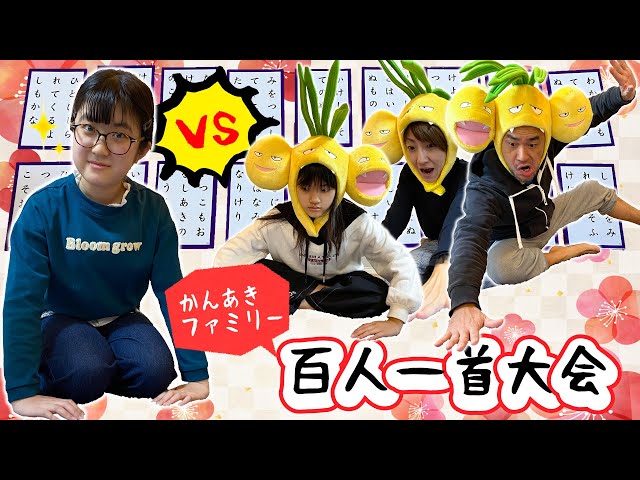
I’d love for you to play this with your kids over New Year! Let me introduce Hyakunin Isshu.
The rules are simple: one person reads the first half of a poem, and everyone else tries to grab the matching second half.
While the gameplay is simple, the depth is part of its appeal.
It’s also a great memory challenge—how quickly can you take the second half when the first half is read? There are apps that read the poems aloud, so it’s fun to listen, get into the reader’s rhythm, and memorize the Hyakunin Isshu.

Hanafuda

We’ll introduce simple Hanafuda rules for adults and kids who see it in games and wonder, “What is Hanafuda?” There are 48 cards in total.
Deal them into hands and to the table.
Play a card from your hand to the table; if there’s a card from the same month on the table, you capture it.
Next, draw one card from the deck and place it on the table.
If there’s no matching month, just leave it on the table.
Players take turns like this, and when someone forms a scoring combination with the cards they’ve captured, that round ends.
The points depend on the combination.
Decide the number of rounds in advance—the player with the higher total score at the end wins!
Shell matching

A perfect activity for January! Let me introduce “Kai-awase,” a craft that’s also fun to make with kids.
Kai-awase was a game played by nobles in the Heian period, similar to the modern card game Concentration (Memory).
You paint matching patterns on the insides of paired shells.
Turn them face down, mix them up, place one shell in the center, then arrange the remaining shells in a circle around it, and try to pick the one that matches the center shell.
Recommended shells include shijimi (corbicula), ark shells, clams, and abalone.
If you have leftover shells, remember this and give it a try!
Bozu Mekuri

Bozu Mekuri is a game that tests luck and memory using illustrated cards.
Born from the Ogura Hyakunin Isshu, this pastime is designed so everyone gathering for New Year’s can enjoy it.
The moment a teacher flips a card with a child and they try to guess what will appear is heart-pounding.
By incorporating local rules passed down in different regions, it can stimulate children’s creativity and also serve as a good opportunity to develop communication skills through play.
Moreover, engaging with traditional aspects of Japan through Bozu Mekuri gives the game value that goes beyond mere amusement.
There’s no doubt it can help families, including guardians, share a joyful time together.
Sugoroku

Sugoroku is a game that has long been loved in Japan.
Many of you may have played it with family and friends during the New Year holidays.
It’s a simple game where you move your piece according to the number rolled on the die and compete to see who reaches the goal first.
The Game of Life, which incorporates elements of sugoroku, is also well-known among children! Whether you play a commercially available game or create your own original sugoroku, it’s sure to be a hit.
Making your own is recommended, as it helps develop thinking and creativity.

In conclusion
Traditional January games and early childhood events offer rich opportunities to experience Japanese culture.
From time-honored activities like kakizome (first calligraphy of the year) and kai-awase (shell matching), to kagami mochi and oshikura manju, there are plenty of ideas you can enjoy with children.
Through play at the nursery, children’s smiles will grow, along with their excitement for the new year.
Be sure to spend a heartwarming time with New Year–specific recreations.