

[List] A roundup of games and recreational activities kids love

Here’s an article that rounds up games kids absolutely love!
If you’ve ever thought, “A bunch of kids are here—what should we have them do?” or “We always end up doing the same things and it’s getting stale,” this might be helpful.
We’ve included both outdoor and indoor activities, so you can decide based on the weather.
We’re also featuring classic games that have long been beloved in Japan—adults might find them nostalgic, too.
Above all, this is a collection of ideas chosen with the hope that everyone will have a great time!
- Play ideas kids can enjoy from 1st to 6th grade [indoors & outdoors]
- [For Kids] Today's Recommended Recreation Idea Collection
- [Elementary School] Quick and Easy! Indoor Recreational Activities Perfect for Lower Grades
- Recommended for upper elementary grades! Exciting indoor recreation and games
- Popularity ranking of recreational activities for children
- [Children’s Club] Easy and fun indoor games. Exciting party games
- [For Kids] Indoor Games and Activities Recommended for Winter Break
- Nostalgic games that were popular when we were kids
- [Play Right Away!] Exciting Recreation Games Recommended for Elementary School Students
- A big hit at after-school childcare! A special feature on group games and activities you can play without any equipment
- [For Kids] Outdoor Recreation Games: Fun Outdoor Play
- Indoor recreation for children: A roundup of exciting games
- [Elementary School Rec] Recommended Games and Performances for a Fun Party
[List] A roundup of games and recreational activities kids love (41–50)
Balloon Trampoline

Only two materials! Here’s an idea for a balloon trampoline.
The bouncy, springy feeling of a trampoline excites both kids and adults, doesn’t it? This time, let’s play with a DIY trampoline.
All you need is a large vacuum/compression storage bag and balloons.
Inflate the balloons and pack them into the storage bag.
Seal the bag, compress it, and you’re done! A balloon-made trampoline is colorful and sure to capture kids’ attention!
Trump Tower
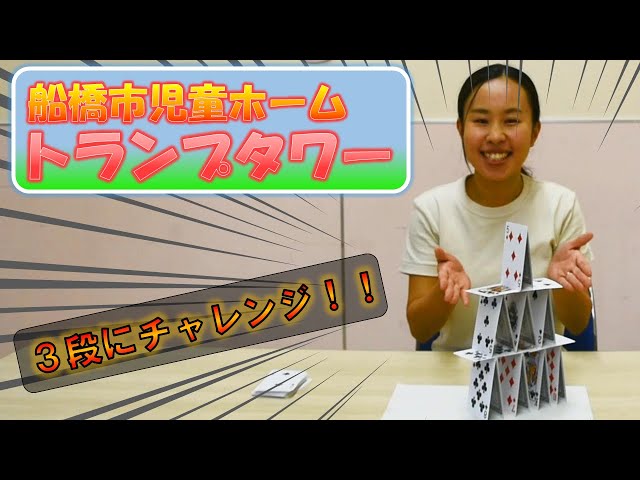
A heart-pounding, nerve‑racking card tower where you carefully stack playing cards.
It’s great fun with a crowd using rules like “whoever knocks it down loses,” but you can also enjoy it solo with quiet tension.
Because you can focus entirely on your own world, it naturally nurtures concentration and dexterity.
Even if it collapses, if you don’t give up and try again, you’ll experience the joy of success—“I did it!” The more you find your own tricks and stack it higher, the more fun it becomes.
You can take it slow at your own pace, build confidence, and it’s a perfect recommendation for solo indoor play.

kickbase

Kickbase isn’t just a physical game.
Kicking the ball, running, defending—every part is filled with children’s creativity and teamwork.
You’ll hear them calling out, “Who’s up next?” “How should we defend?” as they communicate and share roles.
Because it’s played with the feet, differences in strength matter less, making it fun for kids of different ages to play together on the same field.
They laugh when things don’t go well and high-five when they succeed.
Those small moments build confidence and cooperation.
Kickbase, which nurtures relationships while letting kids move their bodies to the fullest, is a perfect collaborative play activity for after-school programs.

G Dodgeball

“G-Dodgeball” is a hugely popular team-based game in after-school care.
By adding a new role—the “Goalie,” a target that must be protected—to regular dodgeball, the game gains strategy and tension.
Each team selects one Goalie from among the first- or second-graders, and if that child is hit, the game ends immediately.
The infield players act as “Guardians,” doing everything they can to protect the Goalie.
Meanwhile, the outfield has “Getters” waiting to throw the ball at the opposing Goalie.
Because there are defined roles, everyone can shine, and with age-appropriate tweaks, the game evolves into an activity that excites players across grade levels.
It’s a great example of how a few simple rule additions can make dodgeball so much more fun.
Sandwich Game

Here’s an idea for a “Sandwich Game” that’s a guaranteed hit in after-school care.
Adults holding mattresses play the “bread,” while the kids each become their favorite sandwich “fillings” and run around.
The rules are simple: when you sandwich a child with the mattress, you just say, “I’ll eat you!” And somehow, that’s all it takes to get everyone excited.
Both the chasers and the runners go all-in.
The kids dash around to avoid getting sandwiched, warming up both body and mind.
Even without elaborate setups, the thrill of almost getting caught and the fast pace make it a perfect group game for active days.
Dodgeball tag

Ball Tag with a Throw is a high-energy indoor game that’s hugely popular in after-school programs.
The rules are simple: the “it” player chases with a ball and tries to tag the others by hitting them with it.
Despite its simplicity, the speed and thrill make it incredibly exciting! Whoever gets hit by the ball becomes the next “it,” so the game keeps changing rapidly and never gets boring.
Using a soft ball makes it safe for indoor play.
In smaller spaces, you can adjust by setting boundaries or requiring shorter strides.
It’s a perfect game to bring out lots of energy and create a lively, fun time.
Bomb Game

Children dash past, laughing, “Run for it!” That’s the thrilling scene of the Bomb Game.
Place mats for the start and finish, and if you make it across while dodging the rolling balls, you succeed.
The rules are simple, but by gradually increasing the balls’ speed, throwing in feints, or changing the timing, it stays fresh and exciting every time.
Each playthrough builds problem-solving—“How should I dodge?”—and trains not only physical ability but also reflexes and concentration.
It’s safe to play indoors, and the easy setup is another big plus.