

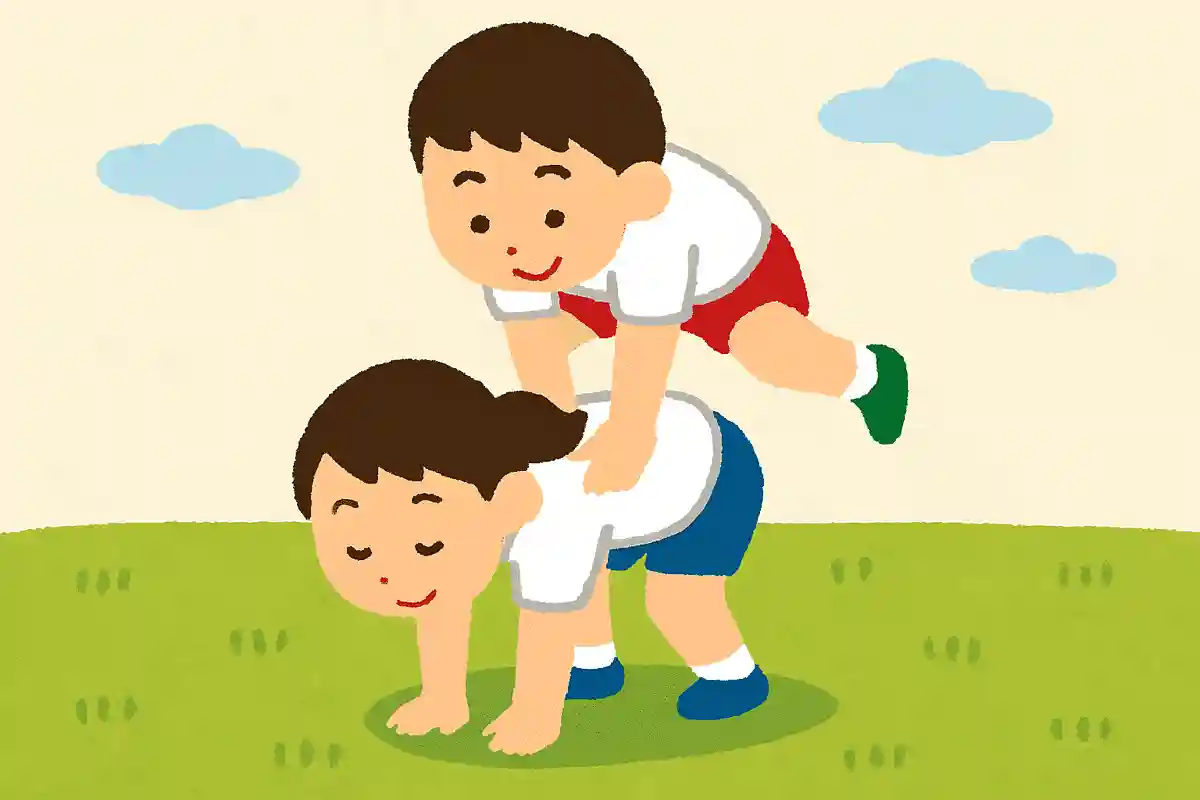


Speaking of leapfrog, it’s popular both as a warm-up in PE and as an event at school sports days.
All you do is place both hands on the back of the “horse” and hop over, but in fact many people aren’t good at it.
For most, it’s due to the fear of jumping over a person, but some people also struggle because they overthink about their partner—worrying, “Will I feel heavy?” or “Am I putting too much strain on them?” when they jump.
In this article, we’ll cover not only key points and practice methods for jumping, but also how the “horse” should position their body, plus tips for winning leapfrog races.
If you want to get better at leapfrog or learn how to jump without putting a burden on your partner, be sure to check it out.
- Vibrato practice piece. Take the first step toward becoming a great singer!
- [Blazing] Carefully selected tracks perfect as BGM for cavalry battles at sports festivals!
- Popular Dance Songs Ranking [2026]
- Perfect for kindergarten middle-years! A collection of recommended dance song ideas for sports day
- [Dance Basics] Simple Choreography for Middle School Students
- Horses Appear! Recommended Collection of Nursery Rhymes, Children's Songs, and Hand-Play Songs
- [Sports Day] Let's synchronize everyone’s timing! Songs that hype up long rope jumpingNEW!
- Sports Day/Athletic Festival: In Perfect Sync! Songs That Hype Up the Three-Legged RaceNEW!
- Japanese songs about horses – popular tracks. Heart dances to the galloping melodies.
- Music to Hype Up Sports Day! Classic Songs and J-POP That Make Races More Fun
- [Sports Day] A roundup of exhilarating, fast-paced tracks perfect for relay race BGM!
- Dances that elementary school kids can do! Recommended tracks to liven up a school sports day
- [March] Carefully selected popular songs recommended for entrance and exit at sports days and athletic festivals!
Tips for Jumping (1–10)
The hands can reach beyond the middle of the back.
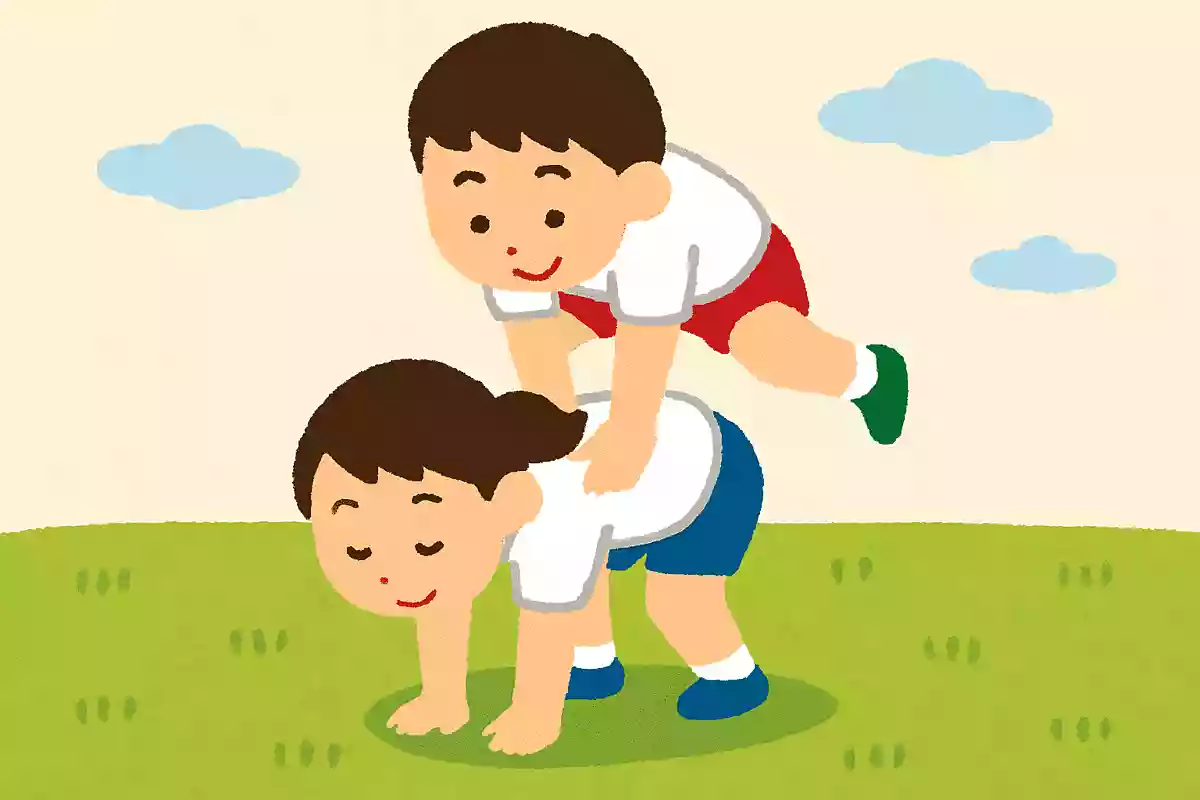
When doing leapfrog, the position of your hands is more important than you might think.
With a vaulting box, many people find it easier to place their hands toward the far side.
The same applies to leapfrog: place your hands slightly beyond the “horse.” As a guideline, your fingers should hook around about the side of the torso.
This way, your palms land around the firm spine area for stability, and when you push off with your fingers as you vault, your body naturally moves forward.
If you can’t do leapfrog yet, first check where you’re actually placing your hands.
Look ahead, not down.
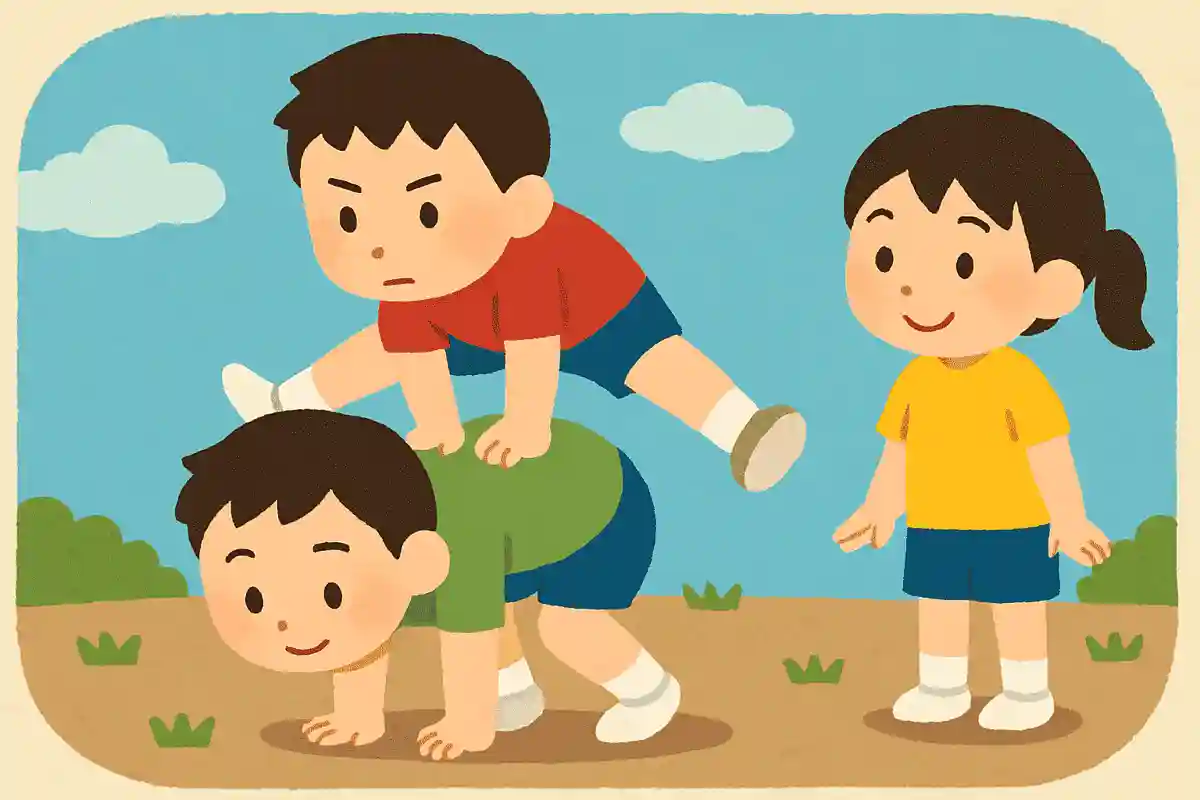
Many people feel scared and end up jumping while looking at the horse or their hands.
However, if you want to overcome the vault, it’s best to look forward as you jump.
When you keep your head down, it’s hard to generate momentum.
You also tend to lean forward, which can throw off your balance and increase the risk of falling.
I understand it’s scary, but try to be mindful of this little by little.
Once you can jump while looking ahead, you’ll also have the presence of mind to check the position of the next horse during a vaulting race!
Spread your legs firmly.

My foot got caught on the vaulting horse and I fell… I bumped into a friend’s leg and it was awkward… If you’ve had experiences like these while doing the vault, check how wide you’re spreading your legs during the jump.
Are you really opening your legs wide enough? Even if your jumping power isn’t the problem, you can still fail if your legs aren’t sufficiently open.
Rather than thinking, “This much should be fine,” try to spread your legs as wide as possible.
Also, lifting your hips high is another key point.
What makes a horse easy to jump? (1–10)
Maintain a stable posture
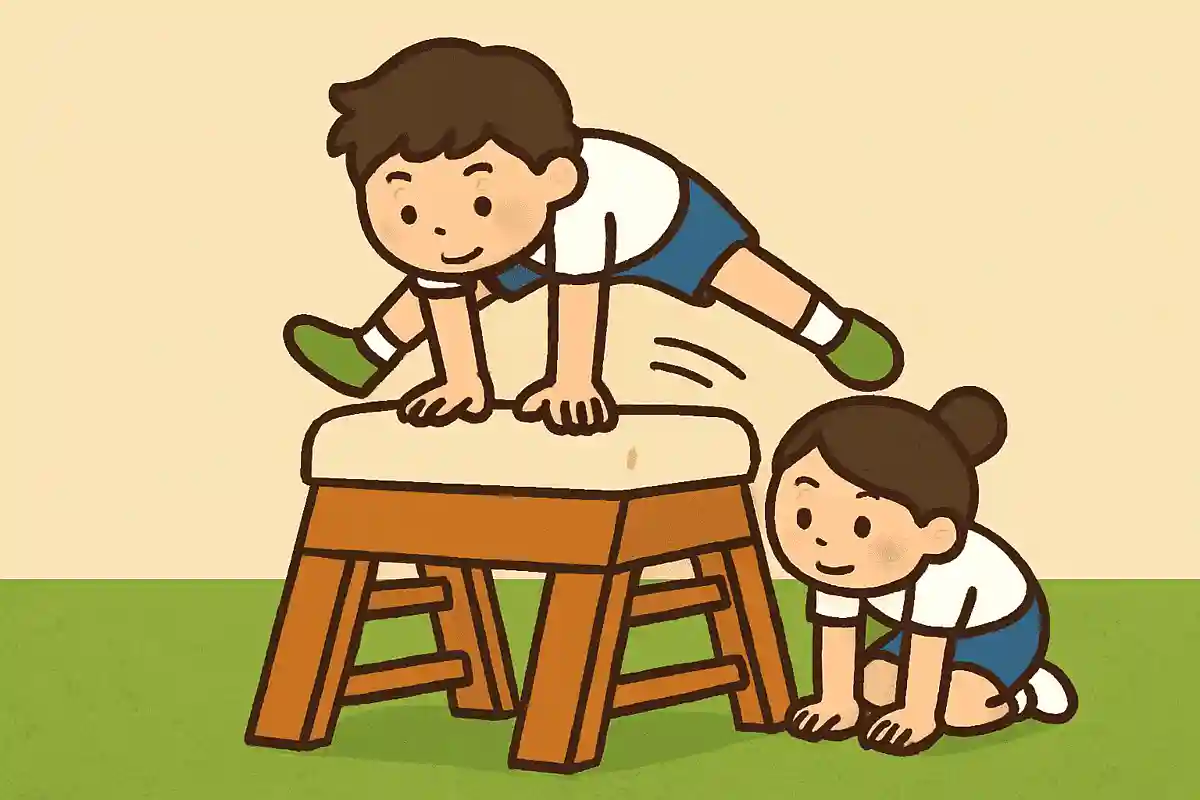
If the “horse” is unstable, the person jumping will feel uneasy, and there’s also a risk that both of you might fall and get injured.
Before doing leapfrog, make sure you can create a solid, stable “horse.” First, place your feet shoulder-width apart and firmly grip your knees with both hands.
Then lower your head as if looking at your belly button.
This will keep you steady without wobbling even when weight is placed on your back, making you an easy “horse” to jump over.
Shoulder width is only a guideline, so find the stance that keeps you steady even if you’re pushed side to side.
Keep your back parallel to the ground
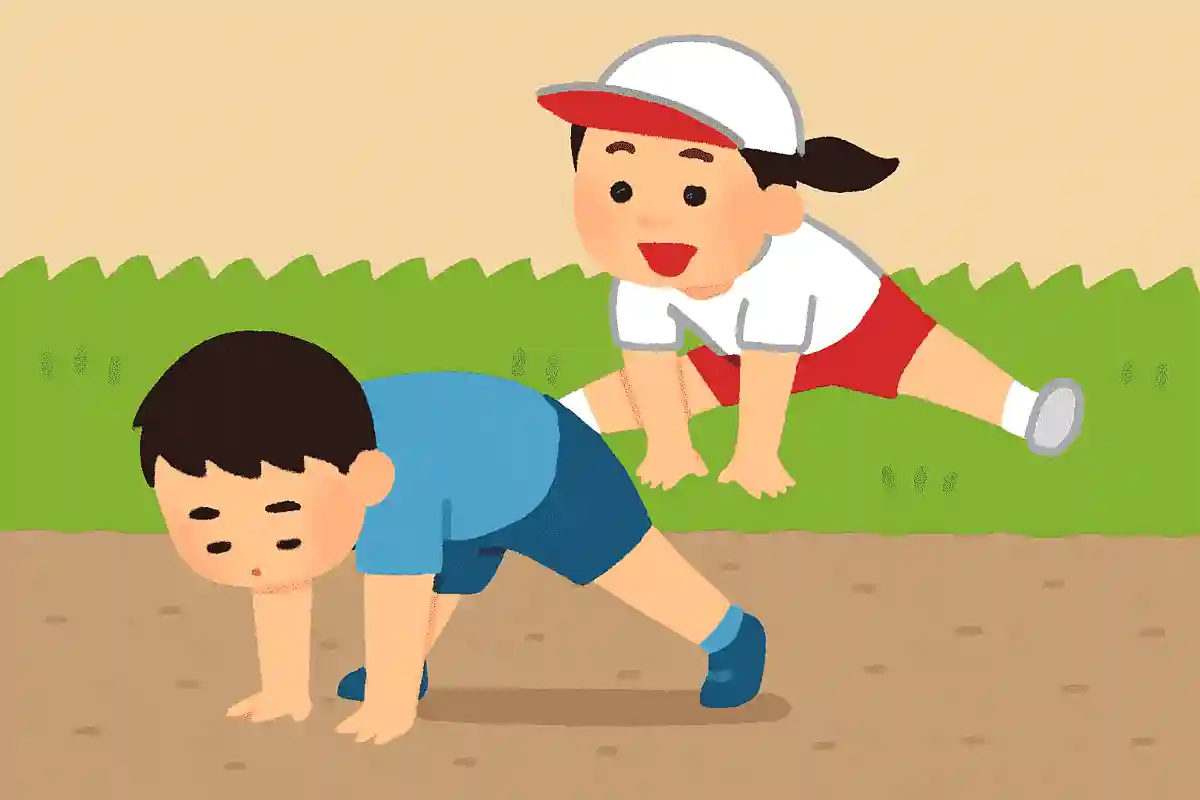
If your back is rounded, the space to place hands becomes narrower.
In that state, the jumper can’t plant their hands firmly and it’s unstable, making it hard to jump.
So the person acting as the “horse” should consciously make their back flat and parallel to the ground.
Think of a vaulting box.
Be careful not to overdo it and let your back cave in.
If you can’t tell whether your back is flat, have someone else check for you.
Once they do, remember that feeling!
Practice Methods (1–10)
Start with the lower-ranked horses first.

For your first practice, I recommend jumping over a low vaulting horse.
I think the biggest enemy in vaulting is fear.
To overcome that, start by trying a height you can clear comfortably.
If it’s too low, it can actually be hard to jump, so find the height that feels easiest for you.
Gaining the confidence that “I can do it little by little” will give you the courage to move on to the next step.
Don’t force yourself to jump a high horse—build confidence with small steps!
Take a running start and try jumping
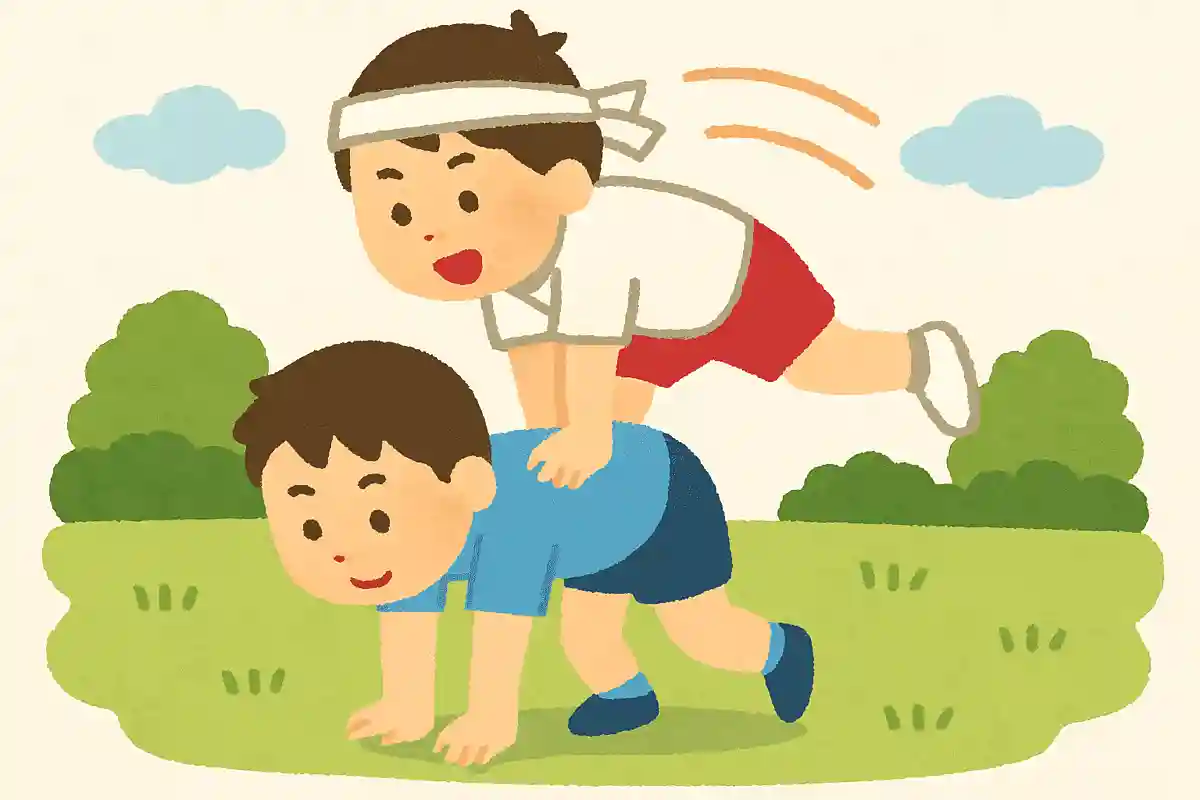
Unlike the vaulting box, there’s no springboard for leapfrog.
Since you have to jump using only your own power, some people may stumble there.
In that case, start by practicing jumps with a run-up.
With a run-up, you gain momentum, and some people will find they can clear it.
It also gives you a reference for how much momentum you need when there’s no run-up.
Some may worry about the burden on the “horse,” but surprisingly, having more momentum actually reduces the load on the horse.