

![[Piano Sheet Music] Playable with the Left Hand Only! Carefully Selected Pieces from Beginner to Ultra-Advanced](https://i.ytimg.com/vi_webp/LXEL5DQVUh0/maxresdefault.webp)

When playing the piano with both hands, many people struggle with things like “my left hand just won’t move the way I want” or “I’m not good at reading notes in the bass clef to begin with.” If that’s the case, why not try intensive practice with pieces that use only the left hand? In this article, we’ve picked out pieces playable with just the left hand across a range of difficulty levels, from beginner to very advanced.
We’ll introduce them along with sheet music you can download or purchase online.
If your goal is to “read the bass clef smoothly” or “move your left hand more freely,” why not overcome your weak left hand by choosing pieces that fit your objectives?
- [Easy to Play Even If You're Not Good with Both Hands!] Simple piano pieces for absolute beginners. Recommended piano songs.
- [Piano Sheet Music] Free downloads available! A roundup of easy-to-play pieces
- [Piano Beginners] J-POP That Looks Hard but Is Surprisingly Playable [2026]
- Self-Study Piano Lessons! A Complete Introduction to Easy and Recommended Sheet Music for Adults
- It’s so cool if you can play these on the piano! A selection of irresistibly charming masterpieces.
- [J-POP] It's like free sheet music! Easy songs you can play on the piano while watching the video
- [Disney] Playable even if you’ve just learned Do-Re-Mi! A selection of iconic songs from beloved Disney animations
- [For Piano Beginners] How to Practice “Für Elise”
- [Beginner] Recommended for adult piano beginners! Beautiful & stylish piano pieces
- [Free Piano Sheet Music] Beginner-Friendly! Carefully Selected Pieces Available for Immediate Download
- Recommended for piano beginners! 10 sheet music picks that adults can enjoy too
- [For Kids] Play Piano with One Finger! Recommended Songs Collection
- Even beginners can play them easily on the piano! A curated selection of popular and latest J-POP songs.
[Piano Sheet Music] Playable with the Left Hand Only! Carefully Selected Pieces from Beginner to Ultra-Advanced (1–10)
Grandes études de Paganini, S.141 No. 3 “La Campanella”Franz Liszt


A masterpiece by the Romantic virtuoso pianist Franz Liszt.
Based on Paganini’s violin concerto, this work is an exercise in transcendental technique crafted specifically for the piano.
Its bell-like high-register sonorities are striking, and the left-hand writing is intricate.
First published in 1838 and revised in 1851, it is recommended for those looking to improve their ability to read the bass clef and to strengthen left-hand technique.
With its brilliant melodies and demands for pinpoint accuracy in leaps, it stands as a landmark among piano études.
Piano Concerto in D major for the Left HandMaurice Ravel


Maurice Ravel, the French composer who gave the world numerous masterpieces such as Pavane for a Dead Princess, Jeux d’eau, and Rapsodie espagnole.
The work he wrote for the Austrian-born pianist Paul Wittgenstein, who lost his right hand in the war, is this Concerto for the Left Hand.
Many later pianists who perform with the left hand alone have taken up this piece, and it holds a very important place among piano works intended for left-hand performance.
It is remarkable enough that, in the early 1930s, Ravel composed a piano concerto that incorporated influences from jazz and blues; but one cannot help being astonished that such free and dramatic expression could be achieved with only the left hand, using a wide range of techniques.
As the music drives toward its climax, the melody scarcely seems like something played with just the left hand.
Since it is a piece that cannot be played without considerable technical skill, I hope advanced players who wish to push their left-hand expressive power to the limit will take on the challenge.

Pieces for Two Left Hands, Op. 9: No. 1, PreludeAlexander Scriabin


The Russian composer and pianist Alexander Scriabin, despite his advanced piano technique, is said to have had small hands.
He once injured his right wrist by forcing himself to keep playing pieces of extreme virtuosity, and in response he further developed his left-hand technique and devised a distinctive pianistic writing style.
His Piece No.
2, “Prelude,” from Two Pieces for the Left Hand, is a work that, while overall calm in mood, features a beautifully rich layering of sound that makes it hard to believe it is played with the left hand alone.
Strongly influenced by Chopin, it is especially recommended for those who love Romantic-era music.
It is also shorter in performance time than No.
2, “Nocturne,” so it might be a good idea to start practicing with this piece first!
Ode to Joy (from Symphony No. 9, Fourth Movement)Ludwig van Beethoven


Just hearing the melody of this extremely famous theme inevitably makes any Japanese person conjure up year-end scenes.
Once we’re past mid-December, it’s practically a seasonal tradition to hear either Christmas songs or “Ode to Joy” echoing through towns across Japan.
What’s commonly called “Daiku” (“the Ninth”) or “Ode to Joy” actually refers specifically to the first theme of the fourth movement of Beethoven’s Symphony No.
9.
If you don’t know the work in its entirety, be sure to check out the orchestral concerts held around the country at year’s end.
But I digress—given how famous the piece is, there are many sheet music editions available for solo piano with simple arrangements.
Among them, of course, are versions playable with the left hand alone.
These are easy arrangements where a single-note melodic line is occasionally joined by chords, so please make good use of them for practicing your left hand.
Nocturne, Op. 9 No. 2: A Piece for Two Left HandsAlexander Scriabin
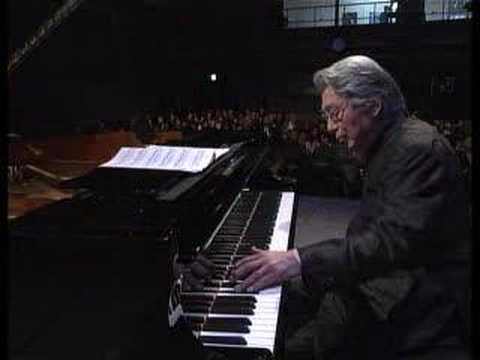

Your right hand can smoothly handle fairly intricate notes, but your left hand just won’t move freely… If that sounds familiar, I highly recommend trying “Two Pieces for the Left Hand.” Composed by the Russian composer-pianist Alexander Scriabin, this work was born from his own disadvantage as a pianist—his relatively small hands.
The second piece, “Nocturne,” employs Scriabin’s distinctive piano writing—sometimes called the “Cossack of the left hand”—to roam effortlessly across a wide range, spinning a beautiful yet slightly wistful melody that hardly seems possible with just the left hand.
Practicing this piece will undoubtedly elevate your left hand’s expressive power at the piano.
53 Studies after Chopin’s Etudes Op. 10–12 “Revolutionary”Leopold Godowsky


As introduced in the section on “Tristesse” in this article, Leopold Godowsky—the Polish pianist and composer—created Studies on Chopin’s Etudes that include famous Chopin pieces arranged for the left hand alone.
The work discussed here is Etude Op.
10, No.
12, the so-called “Revolutionary Etude.” In the original, both the right and left hands race across the keyboard with overwhelming intensity, making it a piece that, naturally, only advanced players can master.
Imagining how difficult it is to perform such a challenging work with just the left hand is not hard.
Be sure to check out videos of left-hand-only performances of the “Revolutionary Etude” by pianists with truly extraordinary technique and expressive power.
Twinkle, Twinkle, Little StarWolfgang Amadeus Mozart


Twinkle, Twinkle, Little Star is a melody with a certain nostalgia that naturally soothes the heart—no wonder it’s beloved by many in Japan.
It wouldn’t be surprising if some people mistake it for a Japanese children’s song, but in fact, the original tune was an 18th-century French chanson, and it became globally popular as a nursery rhyme through English lyrics set to the melody.
Because the tune is simple, it’s often the first piece played by young beginners learning piano, and sheet music arranged to be played with the left hand only is also available.
For adults returning to the piano, especially those who struggle with the left hand, starting with this piece could be a great idea!