

[Lower Difficulty] Recommended Piano Pieces by Franz Liszt [Intermediate]

Franz Liszt is one of the quintessential pianist-composers of the 19th century, and he’s also known for his virtuosic style influenced by Niccolò Paganini.
Signature works such as La Campanella—an arrangement based on the theme from Paganini’s Violin Concerto—and the Hungarian Rhapsody No.
2 demand advanced technique, and even the famously “easier” Liebesträume No.
3 is actually an advanced piece when you sit down to play it.
Even so, for intermediate players who still want to try their hand at Liszt, this article gathers pieces— including some lesser-known works—researched for relatively lower difficulty within Liszt’s output.
A must-check for anyone looking to level up as a pianist!
- Piano Masterpieces: Surprisingly Easy Despite Sounding Difficult!? A Curated Selection Perfect for Recitals
- [Intermediate Level] Cool Piano Pieces You Can Play [Great for Recitals Too]
- [For Advanced Players] A Curated Selection of Classical Masterpieces to Tackle at Piano Recitals
- [Beginner-Friendly] Rachmaninoff’s Piano Pieces | A Curated Selection of Accessible Works!
- [Highest Difficulty] A selection of challenging pieces crafted by Liszt, the magician of the piano
- [For Adults] Recommended for Piano Recitals! A Curated Selection of Impressively Sounding Masterpieces
- [Intermediate Level] A curated selection of piano masterpieces featuring strikingly brilliant melodies!
- Beginner to Intermediate: Chopin pieces with relatively low difficulty. Recommended works by Chopin.
- Brahms Piano Pieces | A Curated Selection of Easier, Beginner-Friendly Works
- Lower difficulty: Not as hard as it sounds!? Debussy’s piano pieces
- [For Elementary School Students] Brilliant, Showy Masterpieces That Sound Impressive at Piano Recitals
- [For Intermediate Players] Challenge Yourself! Recommended Masterpieces That Shine at Piano Recitals
- [Classical Music] All pieces under 3 minutes! A collection of short and cool piano pieces
[Low difficulty] Recommended Piano Pieces by Franz Liszt [Intermediate] (1–10)
Poetic and Religious Harmonies No. 2 “Ave Maria”NEW!Franz Liszt

Published in 1853 as the second piece of the large piano cycle Harmonies poétiques et religieuses, this work is a quiet, profound music of prayer that emerged as Liszt transcribed his choral piece of the same name for solo piano.
Rather than dazzling technique, it calls for sustained legato, resonant harmonies, and a vocal, devotional character to be realized at the keyboard.
Among Liszt’s works, which are famed for transcendental virtuosity, it is relatively approachable, yet it demands the expressive power to suggest the words of prayer on a textless instrument.
It is a hidden gem, perfect for those seeking inner depth or wishing to encounter a different side of Liszt.
G minor – Molto agitato, No. 6 from the 48 Etudes for Practice in All Major and Minor KeysNEW!Franz Liszt

This solo piano piece was composed by the 15-year-old Franz Liszt in 1826 as part of his grand plan for a set of 48 etudes.
Its appeal lies in a dramatic character that conveys youthful, restless energy and the raw tension unique to minor keys.
Compared to his later monumental works, the score is relatively simple and concise, making it perfect for those who want to take a step up into a more passionate sound world.
While it demands a fast tempo and intense emotional shifts, don’t let it become mere finger exercise—let the feelings welling up from your heart resonate fully through the sound!
F major – Allegro sempre legato, No. 3 from 48 Etudes for the Practice of All Major and Minor KeysNEW!Franz Liszt

A beautiful étude in F major with a bright, gentle resonance, published in 1826.
It is included in the album Étude en douze exercices, S.136, a set of twelve pieces that would later develop into the Transcendental Études.
For a work by Franz Liszt, its performance time is relatively short at about two minutes and thirty seconds, but it is a miniature rich in lyricism that goes far beyond mere finger exercises.
Rather than sharp attacks or flashy leaps, it calls for continuous, singing phrasing that keeps the melody connected.
It’s the perfect piece for those who want to refine their sense of smooth legato before tackling works that demand dazzling technique.
Try to keep the tone soft while maintaining finger independence as you play.
[Easier Difficulty] Recommended Piano Pieces by Franz Liszt [Intermediate] (11–20)
Years of Pilgrimage, First Year: Switzerland, No. 9 “The Bells of Geneva”NEW!Franz Liszt

A beautifully drawn nocturne that captures the quiet afterglow felt at the journey’s end, it closes the album “Années de pèlerinage, Première année: Suisse.” It is grounded in experiences from a stay beginning in 1835 and has a history of repeated revisions before its publication in 1855.
The distant tolling of bells in the night’s stillness and the calm atmosphere by the water are exquisitely expressed through gentle harmonies and a singing melody.
Rather than dazzling technique, this work calls for delicate control of sonority.
Careful pedal use to produce a clear, transparent tone without muddiness is key.
It is an ideal piece for those who wish to linger over soothing, poetic lines rather than tackle turbulent passages.
Years of Pilgrimage, Third Year, No. 3: Funérailles sur deux Cyprès des Jardins d’Este II: ElegyNEW!Franz Liszt

The third piece from the 1877 piano collection Années de pèlerinage, Third Year, inspired by the garden vistas of the Villa d’Este near Rome.
An elegy themed on the cypress—regarded in the West as a symbol of mourning—it is imbued with profound sorrow and prayer.
Dark, somber harmonies centered on E minor unfold, and the weighty bass and ambiguous harmonies gradually evoke an intractable sense of loss.
Rather than dazzling virtuosity, it calls for control of phrasing space and sustained tension.
Why not broaden your expressive range as you engage with the introspective world of Liszt’s late style?
Years of Pilgrimage, Third Year, No. 7 ‘Lift Up Your Hearts’NEW!Franz Liszt
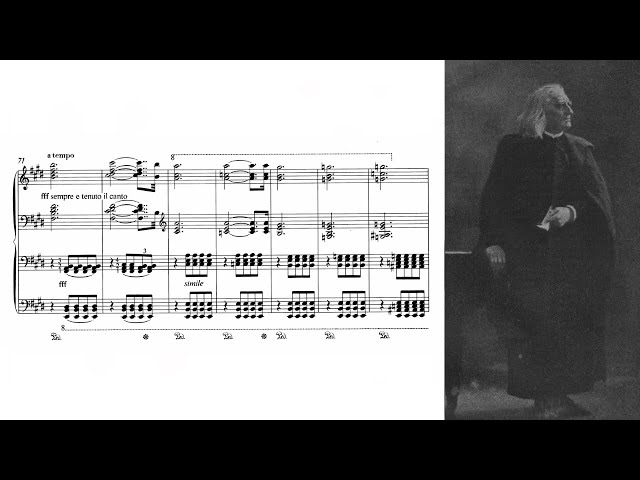
This is the seventh piece placed at the end of Années de pèlerinage, Third Year, a work whose title bears the prayerful phrase “Lift up your hearts.” It is characterized by a concentrated sonority that seems to reflect the spiritual world of Liszt in his later years as he turned toward religious profundity.
It is said that he repeatedly revised the piece until it reached its final form, culminating in its publication in 1883.
Unlike the dazzling works filled with unrelenting virtuosity, this piece is relatively short, about three minutes.
It possesses a quiet strength that, through sorrow and prayer, gently turns the heart upward.
Because it allows the listener to savor the resonance of chords and the layering of sounds within a brief span, it is a highly recommended piece for those who wish to focus on the very timbre of the piano.
Traveler’s Album Part I: Impressions and Poems “Psalms”NEW!Franz Liszt

Composed based on travel experiences in Switzerland in the late 1830s, this short piece closes Part I of the complete edition published in October 1842.
It is built on a hymn melody by a 16th-century composer and exudes a calm, meditative atmosphere.
Unlike brilliant works that demand flashy virtuosity, it is characterized by prayerful, gentle chords and a beautiful melody.
Because the technical hurdles are relatively low, it is an ideal piece for those looking to take a small step up and challenge themselves with deeper expressiveness.
Imagine the solemn, pure tone that resonates through a church, and play carefully with inward emotion.