

![[Lower Difficulty] Recommended Piano Pieces by Franz Liszt [Intermediate]](https://i.ytimg.com/vi_webp/3zrnE3eFxFw/maxresdefault.webp)

Franz Liszt is one of the quintessential pianist-composers of the 19th century, and he’s also known for his virtuosic style influenced by Niccolò Paganini.
Signature works such as La Campanella—an arrangement based on the theme from Paganini’s Violin Concerto—and the Hungarian Rhapsody No.
2 demand advanced technique, and even the famously “easier” Liebesträume No.
3 is actually an advanced piece when you sit down to play it.
Even so, for intermediate players who still want to try their hand at Liszt, this article gathers pieces— including some lesser-known works—researched for relatively lower difficulty within Liszt’s output.
A must-check for anyone looking to level up as a pianist!
- Piano Masterpieces: Surprisingly Easy Despite Sounding Difficult!? A Curated Selection Perfect for Recitals
- [Intermediate Level] Cool Piano Pieces You Can Play [Great for Recitals Too]
- [For Advanced Players] A Curated Selection of Classical Masterpieces to Tackle at Piano Recitals
- [Beginner-Friendly] Rachmaninoff’s Piano Pieces | A Curated Selection of Accessible Works!
- [Highest Difficulty] A selection of challenging pieces crafted by Liszt, the magician of the piano
- [For Adults] Recommended for Piano Recitals! A Curated Selection of Impressively Sounding Masterpieces
- [Intermediate Level] A curated selection of piano masterpieces featuring strikingly brilliant melodies!
- Beginner to Intermediate: Chopin pieces with relatively low difficulty. Recommended works by Chopin.
- Brahms Piano Pieces | A Curated Selection of Easier, Beginner-Friendly Works
- Lower difficulty: Not as hard as it sounds!? Debussy’s piano pieces
- [For Elementary School Students] Brilliant, Showy Masterpieces That Sound Impressive at Piano Recitals
- [For Intermediate Players] Challenge Yourself! Recommended Masterpieces That Shine at Piano Recitals
- [Classical Music] All pieces under 3 minutes! A collection of short and cool piano pieces
[Low difficulty] Recommended Piano Pieces by Franz Liszt [Intermediate] (1–10)
E-flat major – Allegro grazioso, No. 9 from 48 Exercises for the Practice of All Major and Minor KeysNEW!Franz Liszt
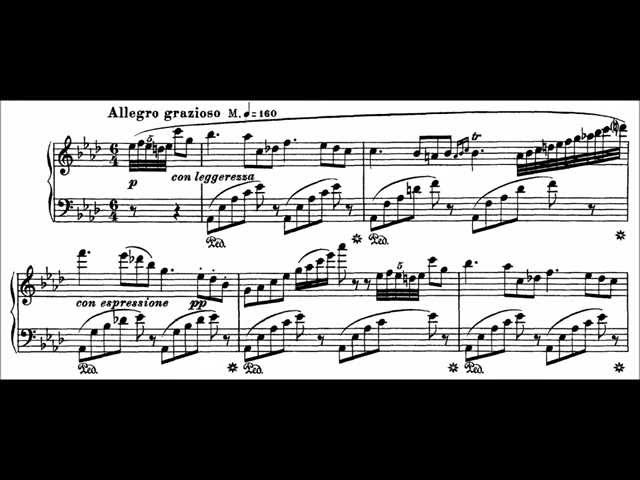
Etude No.
9 from Franz Liszt’s early set composed in 1826 is a significant milestone that foreshadows his later masterpieces.
Marked by flowing, graceful melodies and an improvisatory sense of timing, its warm sonority in A-flat major creates a romantic atmosphere.
Rich with elements for refining expression—such as delicate right-hand ornamentation and flexible tempo—it offers deep musicality that goes far beyond mere finger exercise.
It’s an ideal piece for those who wish to let a singing melody shine rather than showcase flashy technique.
Be mindful of pedal usage and the shifting harmonies as you savor the dreamlike world painted by the young genius.
Hungarian Rhapsody No. 17NEW!Franz Liszt

This is a late work by Franz Liszt, composed in 1884.
Unlike his earlier rhapsodies, which are often bold and flamboyant, it exudes a concise, shadowed, and distinctive atmosphere.
While it retains the contrast between slow and fast sections, the stripped-down ornamentation and highly concentrated development are striking.
Folk-inflected sonorities meld beautifully with Liszt’s characteristic introspective expression, packing a complex aesthetic into a short duration.
Even if you’re not yet ready for the large-scale works that demand transcendental virtuosity, this is a piece I highly recommend to anyone wishing to experience the depth of Liszt’s unique musicality.
Try performing it while savoring the nuances of tone.
Years of Pilgrimage, Year 1: Switzerland, No. 1 “The Chapel of William Tell”NEW!Franz Liszt

The first piece that opens the collection published in June 1855, inspired by travels in Switzerland.
It is a symbolic work praising a founding-legend hero, featuring a grand design that moves from a solemn depiction of a quiet chapel interior to a leap toward heroic action.
In performance, it is important to skillfully evoke the effect of a horn echoing through the mountains by means of weighty chordal sonorities and delicate tremolos.
Unlike a flashy, highly virtuosic showpiece, this is a work you can savor by lingering over the depth of each note and the shifting harmonies as you play.
It is recommended for those who wish to let a rich tone resound at their own pace while imagining the majestic natural landscapes and the powerful figure of the hero that Franz Liszt depicts.
Years of Pilgrimage, First Year: Switzerland, No. 7 ‘Pastorale’NEW!Franz Liszt

A collection of nine piano pieces that express impressions of Swiss nature and literature through music, Années de pèlerinage, Première année: Suisse.
Among the pieces that had become established by around 1855, the seventh is a beautiful miniature that seems to depict a tranquil morning scene.
Lines describing a morning landscape from a long poem by the English poet Byron are appended, and a fresh atmosphere filled with light and air unfolds.
Liszt’s works may have a reputation for being demanding, but this piece is short—about four minutes—and technically approachable, which is part of its appeal.
Avoid excessive exaggeration and try to play with supple phrasing, as if painting the scene.
Years of Pilgrimage, Second Year: Italy, No. 3 ‘Canzonetta by Salvator Rosa’NEW!Franz Liszt

The third piece from Franz Liszt’s piano collection Années de pèlerinage, Second Year: Italy, bearing a title that means “little song.” In sharp contrast to the ponderous preceding piece, it features a bright, sprightly melody and is highly approachable.
Published in 1858, it carries the name of the 17th-century artist Salvator Rosa, though the lyrics Liszt included are attributed to Giovanni Bononcini.
Among Liszt’s works it is relatively short and not hard to follow note-wise, but the key is to play it while preserving the poise of an old-fashioned song and a light, witty humor.
It’s a perfect choice for those who want to hone their expressiveness with Liszt’s music!
Years of Pilgrimage, Third Year, No. 2: “The Cypresses of the Villa d’Este I: Elegy”NEW!Franz Liszt

This work is a quiet yet deeply contemplative solo piano piece composed in 1877, inspired by a famed tree at the Villa d’Este near Rome.
It unfolds an introspective world rich in chiaroscuro—one reached in the twilight years of a Romantic master renowned for dazzling virtuosity.
As the title “Lament” suggests, the hesitant harmonic progressions and the weight of the lower register eloquently convey unspoken emotions of loss and prayer.
Since it does not require flashy transcendental technique, it is recommended for those who wish to focus deeply on chordal resonance and tone color.
Why not savor its profound sonorities in silence, imagining the landscapes and inner visions beheld by the composer in old age?
Traveler’s Album Part II: The Blossoms of Alpine Melodies 7c. Allegro pastoraleNEW!Franz Liszt

“7c.
Allegro pastorale,” included in Part II, “Flowers of the Alps,” of the piano collection Album d’un voyageur, is said to depict in music Franz Liszt’s experiences and the natural scenery he encountered while traveling through Switzerland.
It appears in one of his early collections published in Paris in 1840, and it later served as the prototype for the third piece of the celebrated Années de pèlerinage, Première Année: Suisse.
With a pastoral character and a light sense of forward motion, the piece calls less for transcendental virtuosity than for nuanced control and cantabile phrasing.
Cherish a transparent sonority and flexible breathing of tempo as you spin a simple melody that evokes the nature of the Alps.