

"Take photos at the live show!" Things to watch out for when a beginner with a DSLR camera is asked to shoot
I’ve put together a few things to keep in mind when shooting live events with a DSLR camera.
I hope you find it helpful.
Live shooting with a DSLR
https://static.pexels.com
I’m Nayuta Miyahara, a music filming producer.
I currently earn money by doing photography and videography related to music.
Partly because I started with video first, it’s really only quite recently that I began getting paid to do photography.
As with video, I’ve basically improved my skills in photography by joining live shows of musician friends as staff and getting permission to shoot them.
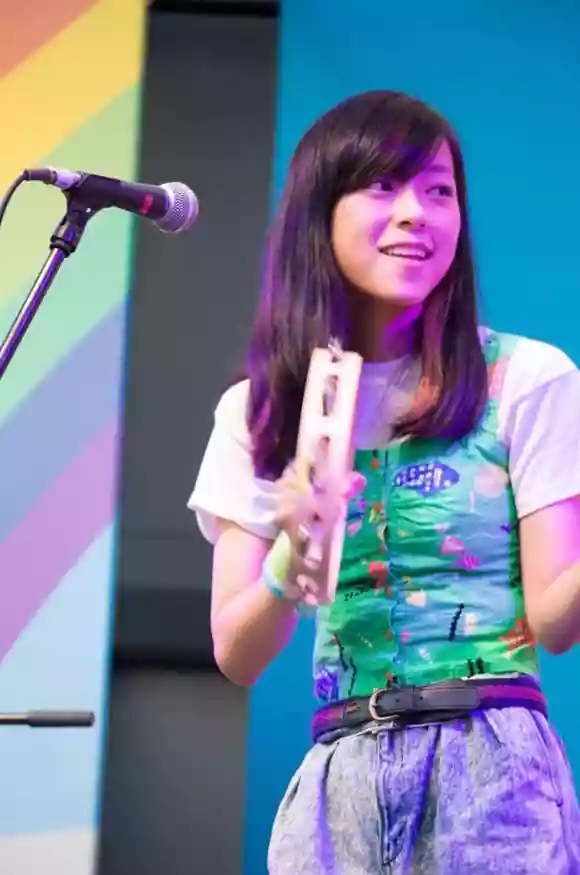
And, probably,I don’t think musicians often hire professionals to photograph their live shows.。
Hiring professionals can be quite expensive (though the quality is of course high), so for booking-style live shows, we can’t easily ask them.
I’m not sure about a one-man show or a planned event, though...
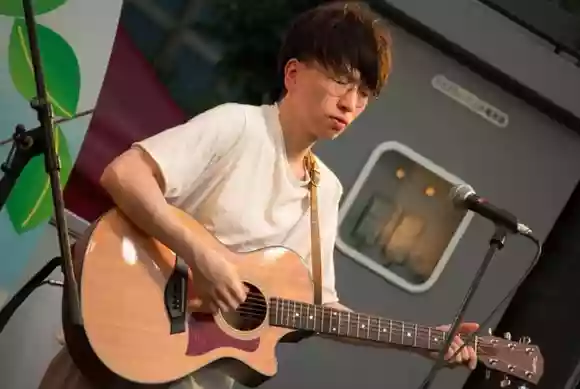
However, when there was demand for wanting fairly high-quality photos even for booking live shows, probably...The most common thing is probably asking an acquaintance who owns a DSLR, “Hey, could you take photos at the next live show?”。
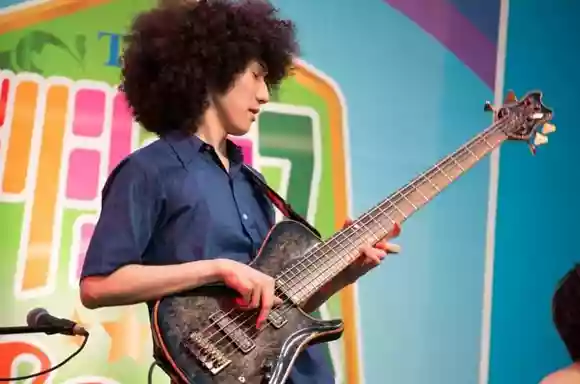
That’s perfectly fine, of course, but if the person with the DSLR is a beginner—someone who always just shoots whatever they like on auto—then shooting in a live music venue, which is a different environment from usual, can be confusing because things work differently than they’re used to, and they may not know what to do.
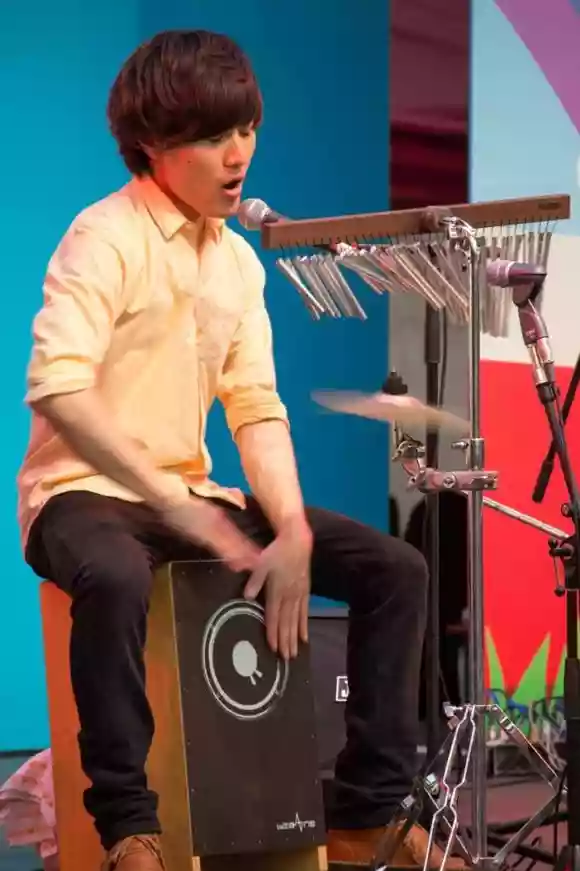
So this time, something I’d normally only shoot in autoI want to write some tips to help DSLR beginners get through “live house” concert photography with decent quality.I think so.
Those aiming to go pro or already professionals might think, “That’s just common sense...” or “No, that’s not right,” but please understand this is intended for people who usually only shoot in auto mode.
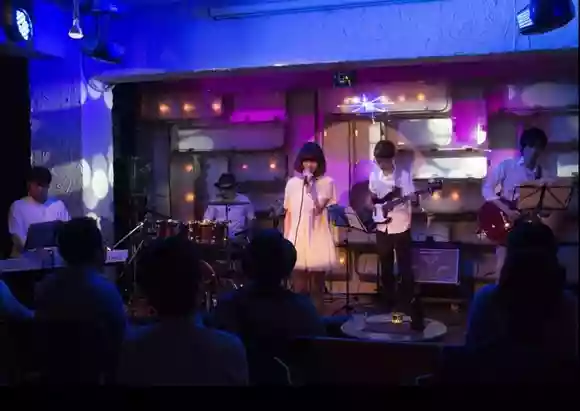
Now I will describe the points to be careful about when photographing live performances.
- Shoot in Shutter Priority or Manual mode
- Use a telephoto zoom lens
- In continuous shooting, you fire the shutter many times.
- Take pictures from various places
- I'll shoot in RAW and develop/process it for you.
- Make sure not to disturb other customers.
Let's go through them one by one.
1.
Shoot in Shutter Priority or Manual mode
It might be a bit advanced for those who have only ever shot in auto mode, but when it comes to shooting at live music venues, the basics are…Shoot with a fixed shutter speedIt is necessary.
Because musical performances involve movement, if the shutter speed is too slow, there is a high chance of motion blur in the subject.
Also, since I usually don’t use a tripod or monopod, there’s a high chance of camera shake.
When I try to shoot on auto, live music venues are often quite dark, so the shutter speed inevitably becomes slow.
Therefore, you need to lock in at least a certain shutter speed; using Shutter Priority or Manual mode, you must ensure the shutter speed is properly maintained.
As a guideline, I think faster than 1/50 second is preferable.
For video, 1/30 second is fine, but for photos, this is a bit risky.
If possible, having something like 1/80 should let you shoot with confidence.
Of course, if there are intense moves, you’ll need a slightly faster speed, but that depends on the situation.
2.
Take with a zoom lens
Since you'll be shooting in a dark live house (club), you might be tempted to use a fast prime lens with a small f-number,From experience, prime lenses are hard to use when shooting at live houses (live music venues).It is.
In a live music venue, the best spot for filming is where the audience is.
Therefore, it is almost impossible to move to what would be considered the optimal position when using a prime lens.
If you're shooting under limited conditions and in a constrained environment, you inevitably have to use a zoom lens to determine your framing.
Since you can’t open up the aperture enough and the shutter speed is fixed, I think you’ll need to raise the ISO quite a bit… Live houses are tough environments for photography, so there’s only so much you can do.
Basically you’ll need a telephoto zoom, but having a standard zoom on hand will let you capture shots of the entire stage, which artists will appreciate.
However, swapping between two lenses inside a live house—when you're short on time and it's dark—is pretty troublesome.
Professionals often prepare two cameras and attach a telephoto zoom to one and a standard zoom to the other.
3.
Take a lot of shots in continuous shooting mode
this isThe most important point in my opinionIt is.
Basically, during a live performance, the moments when a musician looks cool are often just fleeting instants.
Even a difference of just 0.1 seconds completely changes things like the expression, the shape of the mouth while singing, and the angle of the guitar, so you never know when it will look cool.
So anyway, it's best to fire off lots of shots.
A DSLR should have a mode that allows continuous shooting.
For shooting at a live music venue, it's generally best to use burst mode like this.
Even in really great moments, if your eyes are closed or your mouth looks a bit odd, it would be a shame to miss those important shots.
By the way, when I shoot live performances, I usually end up taking about 200 photos in 30 minutes.
This is probably still on the low side.。
Maybe about ten of those photos seem usable...
I don’t think the success rate for live concert photos is very high, so just keep pressing the shutter as much as you can.
4.
Take pictures from various places
Because there are customers in the live music venue, the optimal spots are of course already taken.
However, in order to take photos in a variety of patterns, you still need to move around to different places as much as possible and press the shutter yourself.
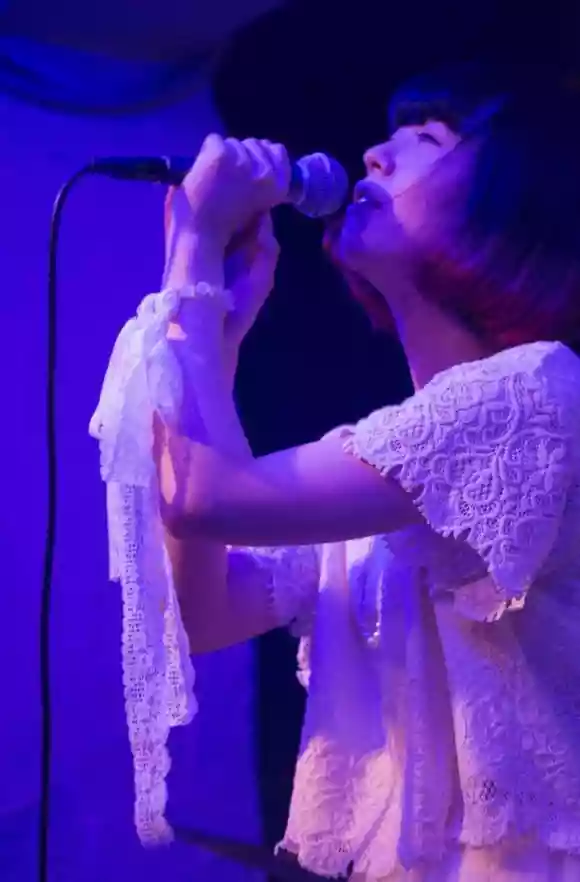
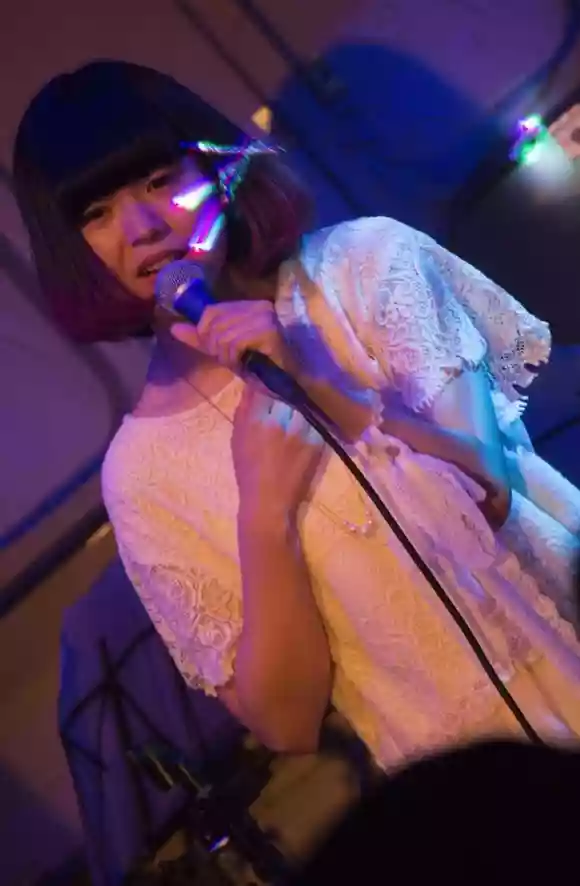
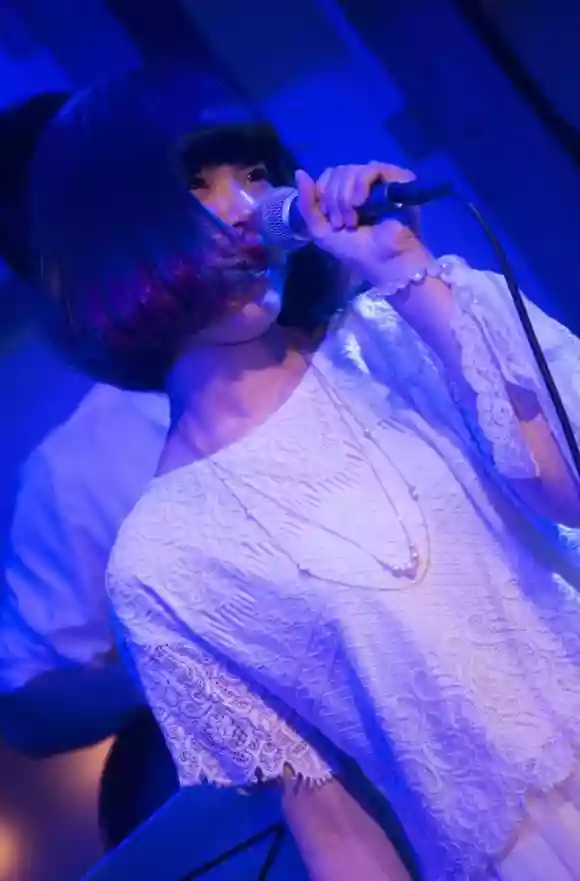
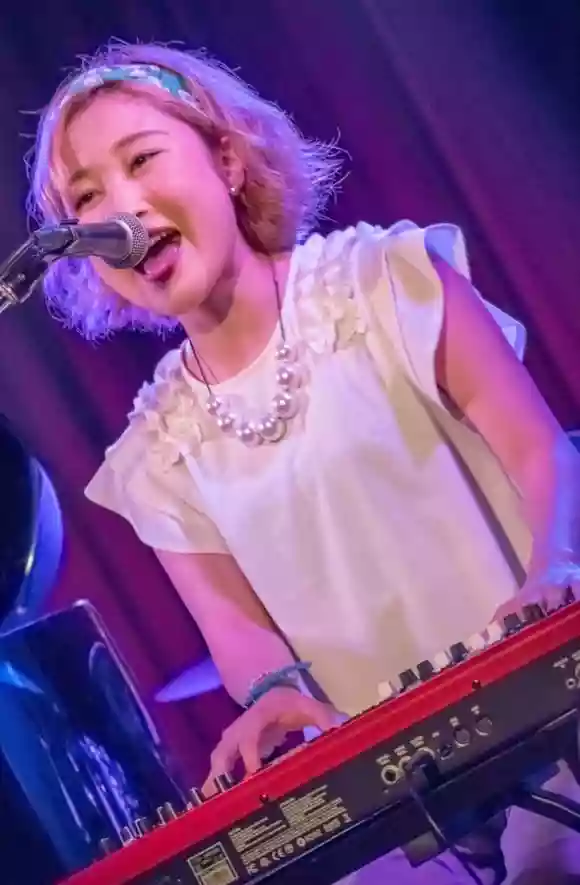
Regarding Ms. Tsubasa Furu's photos from the other day, each one was taken from different angles—some from the right, some from the front, and some from the left.
By doing this, you can see expressions from various angles, creating more variation.
And,the other day’s articleAs I briefly mentioned,"low angle (worm’s-eye view)", "bird’s-eye view (overhead)", "eye level"You should also try to be creative with things like that.
Also, while two out of the three shots are tilted, it’s important to skillfully switch between vertical, horizontal, and diagonal orientations in how you hold the camera.
If you can use all of these conditions,(right + front + left) × (low angle + bird's-eye view + eye level) × (vertical + horizontal + diagonal) = 27 combinationsCan you take a photo of ... ?
It’s not easy for live houses to offer variety, but keeping this in mind might be a good approach.
5.
I'll shoot in RAW and develop/process it for you.
If you’re not used to developing RAW files, it can be quite challenging, but this might be a good opportunity to give RAW processing a try.
Anyway, the lighting conditions at live houses change, and since the same moment never happens twice,It’s difficult to decide all the settings at the time of shooting.It is.
If you have time to spare, it’s safer to shoot in RAW and develop it later.
However, depending on the artist, there are cases where they want the photos right away because they want to use them on their blog or Twitter.
In that case, it would be best to shoot in RAW+JPEG.
But then the burst shooting speed would slow down, so I decided to buy a high-speed SD card...
6.
Make sure not to disturb other customers.
Other customers are going out of their way to pay money to come and see that artist’s live show.
Even so, if the photographer is moving around and constantly snapping away to the point that it’s annoying and people can’t focus on the show, it ends up causing trouble not only for that person but also for the artist.
Therefore,I want to take the utmost care not to disturb our customers.。
Let’s be careful not to cause inconvenience—for example, don’t stand in front of other audience members, and try not to press the shutter during quiet parts of songs.
Lastly
Well then, I jotted down whatever came to mind.
In truth, there are many more fine details, but a lot of them you’ll understand once you actually try it.
If you’re asked to shoot at a live music venue, keep these things in mind and head into the shoot with them in mind.
And one more for the artist who asks a friend to take photos.
If you’re asking someone to take photos, please treat them as staff whenever possible.。
It wouldn’t be right to make someone who’s doing us a favor pay for things like drinks or tickets, and it’s important to clearly distinguish them from other customers.
Also, since at many regular live shows only authorized personnel are allowed to film, it would be better to arrange a staff pass for them.
Live concert photos serve as PR material for the artists, and for the photographers, it’s a great environment to shoot in, so it’s really enjoyable.
I hope we can both make compromises and approach the shoot with that mindset.