

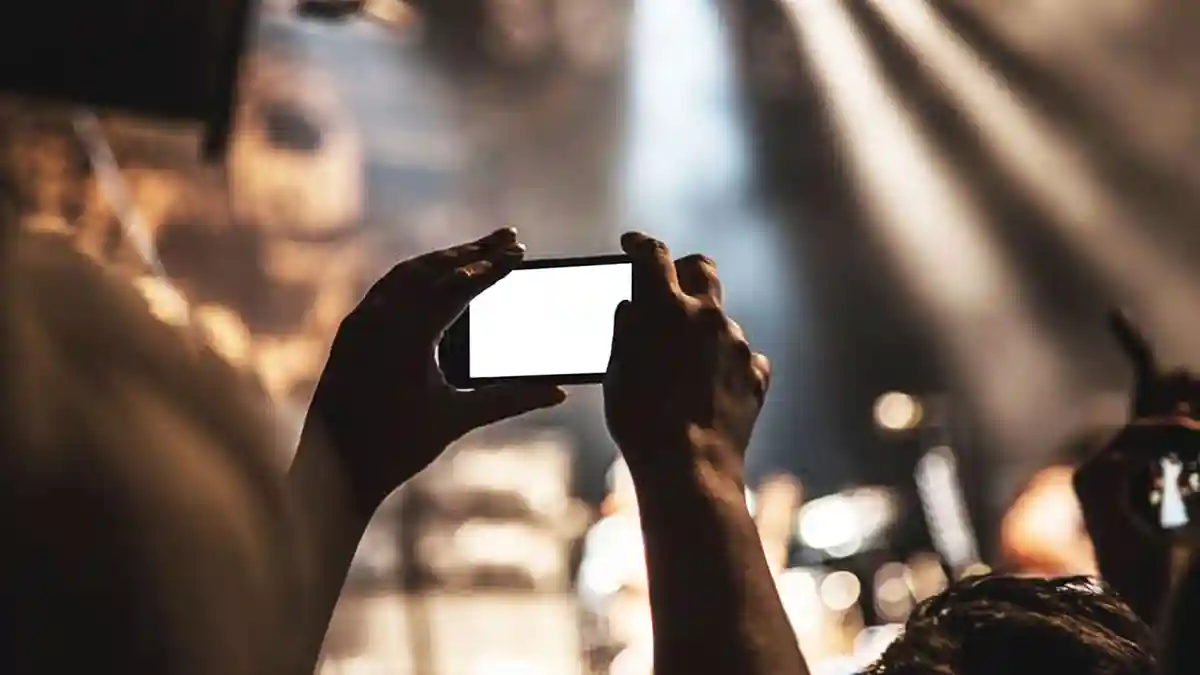
Visual knowledge for musicians: Filming in live music venues is difficult precisely because of the lighting.

I’m Nayuta Miyahara.
It’s been a while since I last wrote “Visual Knowledge for Musicians.”
This time, it’s about filming video at live music venues.
What factors increase the difficulty of filming in live music venues?
This photo is the video thumbnail of me, Miyahara, that was uploaded on Live Song TV in 2014.

This is a capture from the video, so it reflects the actual image quality.
This time, I’d like to talk about the challenges of shooting in live music venues, as seen in this photo.
The article I wrote last year, ‘Why are videos from in-house live music venue cameras so disappointing?This is a continuation of '.
In fact, when it comes to the field of video production, live filming is actually quite challenging.
The reason, simply put,
Because there is lighting.
It is.
Let me say first that it’s by no means that the lighting is bad.
It goes without saying that the lighting effects make live footage from a live house incredibly captivating.
Even setting that aside, the presence of this lighting is one of the factors that makes shooting in live music venues difficult.
The factors that are increasing the difficulty are:
- The contrast is too strong.
- The temporal change in brightness is too strong.
- The brightness varies a lot depending on the live house (venue).
and so on.
Let’s go through them one by one.
1.
The contrast is too strong.
http://o-dan.net/ja/
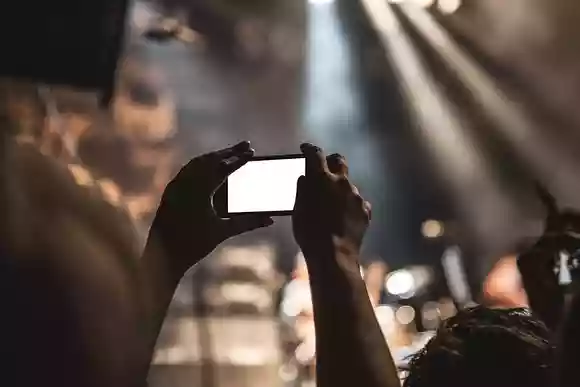
In simple terms, contrast is the difference between the bright areas and the dark areas.It is.
In live music venues, depending on how the lighting hits, this contrast becomes intense.
About the photo from earlier, I think you can tell that my skin is a bit overexposed.
Inside a live music venue, it’s basically pitch dark, and the setup works by illuminating the stage with lighting.
Unlike indoor fluorescent lights, that lighting illuminates the areas it should and leaves the others unlit.
As a result,It ends up as an image with very high contrast, where the bright areas are blown out and the dark areas are crushed.It is (that).
Things like, “If I lower the brightness because the spotlight’s on the vocalist, the guitarist ends up looking super dark,” happen all the time…
To alleviate this even a little, the only option is to increase the camera’s dynamic range.
With the CANON SX230HS, which I mainly used last year, you can adjust the contrast during video recording under the Custom Color setting.
I shoot with the contrast set to the lowest level.
By lowering the contrast, you can capture darker areas slightly brighter and brighter areas slightly darker.It is (that).
To put it in terms of recording, I guess it's kind of like printing compression on the way in.
2.
The temporal change in brightness is too strong.
This is also related to contrast, but the lighting in live music venues keeps changing along with the progression of the song.
Sometimes it becomes completely dark, and at other times it becomes extremely bright.
That change over time is quite a tricky one, too.
For example, autofocus.
Autofocus makes shooting a lot easier, but when the lighting gets dim in the middle of a song, the autofocus often hunts and the shots end up out of focus.It is.
So I basically shoot using manual focus.
For example, items related to brightness such as ISO sensitivity and gain.
Because the lighting changes over time, there was a period when I shot with the brightness set to auto without using AE lock.
It’s true that when the lighting gets darker the sensitivity goes up, and when it gets brighter it sometimes holds the sensitivity down, which is convenient in a way. But because the contrast between the background and the subject is strong, it often ends up adjusting sensitivity to the background, and the person’s face ends up blown out.
So basically,Using manual focus with AE lock means you'll need to configure various settings in advance.
But during the scene change the stage goes dark, so it’s hard to find the focus, and once the show starts I end up missing it quite a bit…
It’s fine as long as you’re there from the rehearsal, but depending on the camera, you can’t save the settings and it can be a hassle.
3.
The brightness varies a lot depending on the live house (venue).
http://o-dan.net/ja/
This is the real troublemaker.
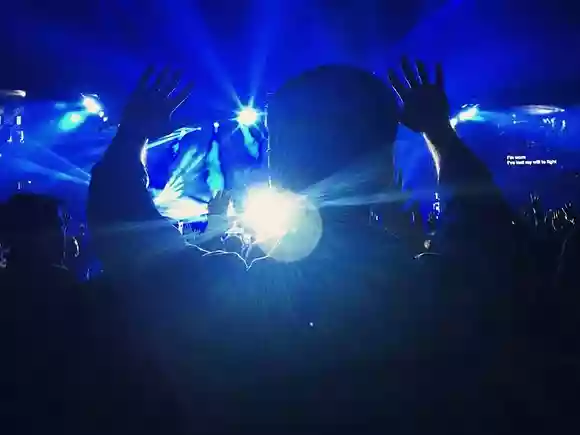
The brightness of the lighting in live music venues changes depending on the venue.
And quite significantly at that.
A bright live house would still be okay, but...The problem is a rather dark live music venue.。
Of course, it depends on the camera’s capabilities, but even with the brightness set to the maximum, sometimes it only captures footage so dark that it’s practically unwatchable.
Even if we brighten it later in editing, there’s a limit.For this, the only option is to buy a “good camera.”I kind of feel that way...
There are a few venues where I feel like, “I don’t really want to shoot here anymore…”
Well, the lighting in live music venues is for the audience, not for video recording.
Conversely, I often remember live houses that have lighting just right for video shoots as venues that are compatible with filming.
Because things like this can happen, filming video at live music venues is quite difficult to do well unless you’ve built up a certain amount of experience.
Now then, how was it?
There are times when lighting designed to make a live performance look beautiful actually makes things more challenging from a video standpoint.
Of course, if you can overcome that and capture good footage, there’s no doubt you’ll end up with something very beautiful.
For those of you who are thinking of trying this from now on, "Live music venues are a challenging environment for video shooting.With that in mind, please go ahead and give it a try.
Right, just one more note regarding the brightness.
At live houses where smoke machines are available, be sure to try releasing smoke when you shoot.
Without smoke, light from lighting only reveals its color when it hits 'things' like skin or costumes, but by using smoke, you can color the space itself.
This not only makes the visuals more beautiful, but also plays an important role in lowering the overall contrast of the image.
Without smoke, the background is completely black, but with smoke, the space has color and becomes very well balanced.
In terms of LiveSong TV, for example, there are videos like Masao’s that have beautiful smoke visuals.
Can you tell that the space is being colored by the light from the lighting?
At some live houses, using a smoke machine is a paid option (1,000–2,000 yen), but if you’re filming video, please use plenty of smoke.
I think the video will look much cleaner compared to not using it.