

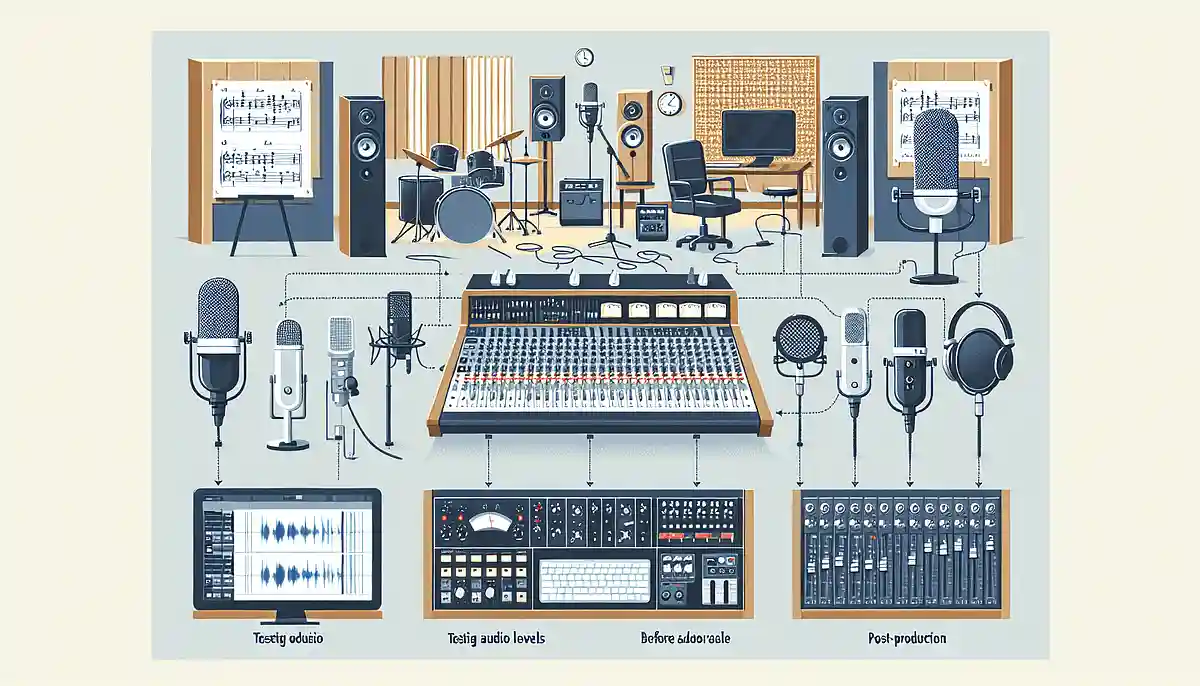
How to successfully do a live recording
“How are live audio recordings made?” “What are the methods for live recording?” Many of you may have wondered this when listening to an artist’s live tracks.
Today, we’re talking about live recording.
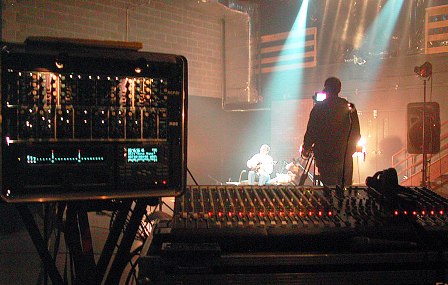
Live recording = recorded in one take during the actual performance
http://www.riccisound.com/venue-studio-acoustics/live-recording
There can never be the same take twice on a live stage where artists perform and the audience’s excitement and frenzy intertwine.
Recording the sound that's happening right there is, obviously, the same as doing a one-take recording.
Since do-overs are basically not possible, advance preparation is crucial to ensure the recording can proceed without any trouble.
Air mic recording
http://www.businessinsider.com/monday-scouting-report-june-24-2013-2013-6
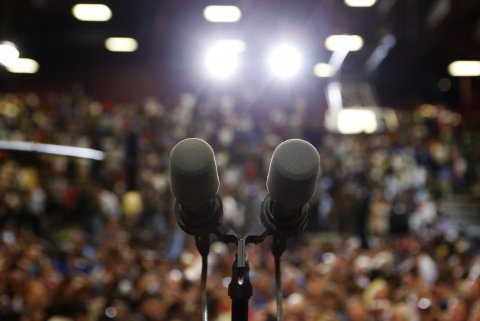
This method involves setting up two microphones toward the back of the audience (around the FOH/PA position) to record a stereo capture of the sound exactly as it’s heard in the venue.
This is the method used at classical concert venues and the like.
In recent years, high-quality handheld recorders have become readily accessible, so I think many people are familiar with them.
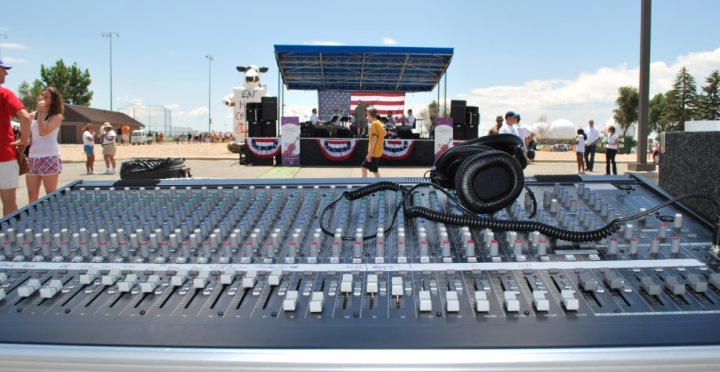
2-mix line recording from the PA console
http://www.carnaghipro.com/?_escaped_fragment_=live-sound-production/zoom/mainPage/i320r5
This is a method for recording, with a recorder, the signal output directly from the PA speakers at a live venue.
The sound heard in the audience at a live venue also includes the direct sound from the instruments playing on stage, so what you hear here is with that portion subtracted—i.e., only the sound captured by the microphones on stage.
You may sometimes receive a “line recording CD-R” at live houses and similar venues, but some of them don’t have very good instrument balance for this reason.
Of course, depending on the venue, some places will separately balance the audio for recording and capture it for you.
Multitrack Recording
http://m-aquastaff.blogspot.jp/2010/05/201051-3-brass-band-live-recording_05.html
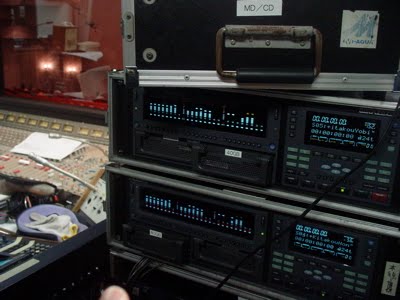
As with a regular recording, we’ll record each instrument separately onto its own track and then do a proper mixdown later.
Of course we’ll do it in a single take, but we can adjust the sound balance later, and by recording the audience’s cheers at the venue, we can ultimately convey the live atmosphere as well.
Being able to make fine adjustments to the performance is also one of the major advantages.
How do professional artists do it?
Most audio in professional artists’ live DVDs and videos is recorded using multitrack recording, with mixing and editing performed later.
http://www.mi7.co.jp/products/presonus/livesound_nobumasa.yamada_page3.php
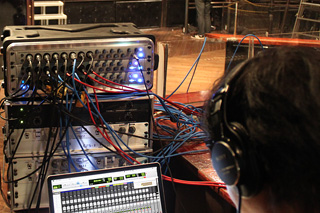
We received the offer from Natsuko Kondo because we had worked on recording and mixing for her singles. At that time, running through the PA console’s mic pres would make it sound like a PA mix, so we took a split at the head and recorded 24 channels. The setup was drums, bass, guitar, and piano with lead vocal. In addition, there were four channels of synced tracks and percussion. Since Natsuko Kondo’s case was a pop multi-recording, we didn’t use EQ at the tracking stage; we focused entirely on getting a solid, focused sound with the mic pres.http://www.mi7.co.jp/products/presonus/livesound_nobumasa.yamada_page3.php
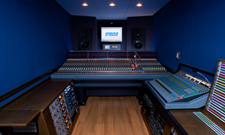
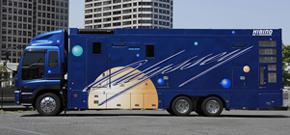
At music festivals or concerts held in domes and arena-class venues, sometimes a mobile recording/broadcast truck is deployed!
It’s literally a recording studio on wheels!
http://blog.hibino.co.jp/?eid=64
http://blog.hibino.co.jp/?eid=64
In particular, the Odyssey is a “mobile recording relay vehicle.” Since it’s a vehicle, it can drive anywhere in Japan. It’s essentially a full-fledged recording studio packed with precision equipment, mounted in a car and driven around. The vehicle itself uses structures to reduce vibration, but if equipment is placed directly on surfaces, it inevitably picks up the car’s vibrations. That’s why they use measures like floating the gear on anti-vibration rubber and apply various other clever solutions throughout.http://blog.hibino.co.jp/?eid=64
You can do multi-track recording even at a live house?!
http://www.homerecording.be/forum/t18724.htm
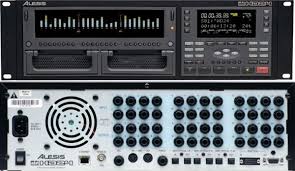
In recent years, with Alesis’s HD24 multitrack recorder and PC-based DAW software like the Pro Tools system, it has become easy to do multitrack recording even in live music venues.
It’s not just a dream to turn a once-in-a-lifetime, precious live performance into an audio work you can listen to for years.
Live recording has become more accessible!
I'll try recording during the rehearsal as well.
http://onkyodirect.jp/pc/shop/g/g09DR072G01/
It’s extremely important to check whether the recording captured exactly as intended.
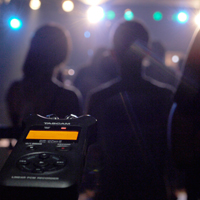
If you’re placing a handheld recorder or similar device in the audience, do a test recording and listen back to check for the best microphone position.
During the live performance, make sure to speak into the microphone for things like the MC segments.
http://galleryhip.com/microphone-stage-audience.html
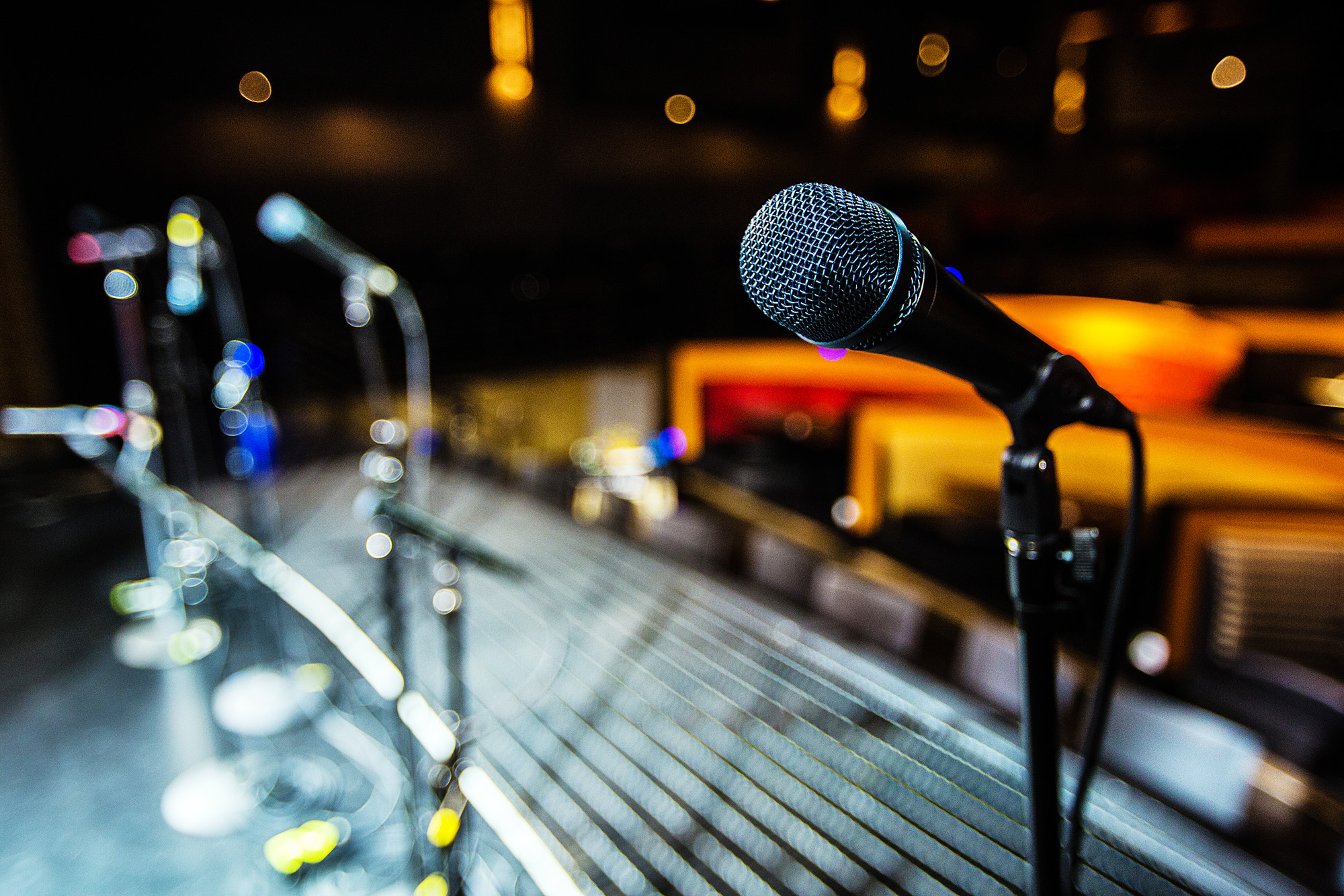
Doing a live recording means that capturing sound with the microphones on stage is crucial.
Things like the onstage MC during the live show are also important parts of a live recording work.
When speaking on stage, be sure to hold the microphone close to your mouth and speak clearly!
Data capacity check
http://tsubuzorotta.com/labo/tools/thunderbolt-ssd/
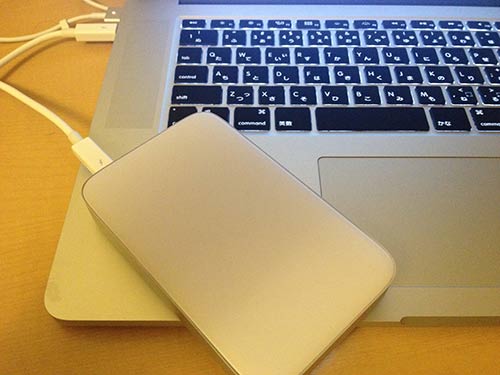
If you’re recording with your handheld recorder, make sure in advance that there’s plenty of free storage space and sufficient battery so you don’t run into issues like “The storage is full!” or “The battery died!” in the middle of the live performance.
In the case of multitrack recording, the audio data recorded on the day of the live performance must first be transferred to external storage and stored.
Depending on the length of the live performance, multi-track recordings can result in long audio files, and their total size is expected to be around 30GB to 50GB.
If you plan to do the editing yourself, you’ll need to launch your DAW at home and import/export the audio data on your computer, so make sure your personal computer and any external storage have ample free space.
When mixing, start by checking the phase first.
http://pohwa.adam.ne.jp/you/music/stereo.html
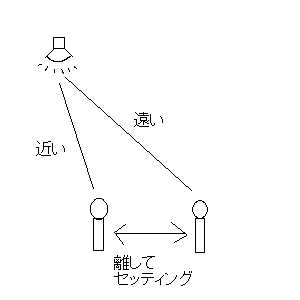
There are dozens of microphones standing on the stage.
Especially in multi-recording, there will be a slight timing mismatch between the mixed sound captured by the microphone and the actual sound from the microphone. (This is what we call a phase shift)
If this remains misaligned, the clarity of the sound will decrease and it will be difficult to balance the audio properly (for example, each part won’t cut through).
In a normal recording session, we check the phase during tracking, but when mixing after a live recording, we start by checking the phase.
We should also be mindful when outsourcing the mix to an external engineer.
Reference:Invert the phase using the invert function
Mastering is important too.
http://www.darkhousemultimedia.com/cd-mastering
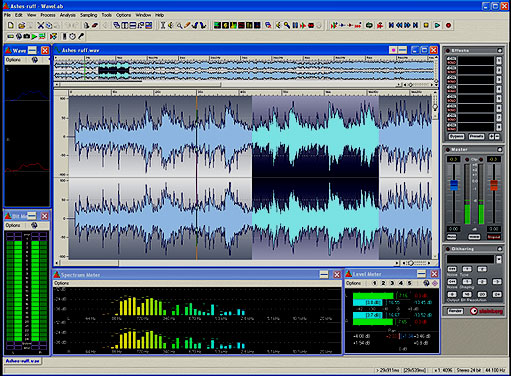
We recommend having the final mix mastered as the last step.
I think it's necessary in order to experience live audio more closely and vividly.
How to Make a Best-Selling CD: Easy-to-Understand Online Mastering
Lastly
These days, many people are considering posting on video sites, so I think there will be more opportunities to record live performances.
And to create a great live recording, you must not forget to get the audience at the venue excited and, above all, make it the best live performance.
I would be grateful if this is of even a little help.