

Surprising tidbits you might not know! Learn mackerel trivia through a quiz!

Mackerel is something we casually eat all the time.
But when it comes to knowledge about it, many of us might only manage something like, “You should watch out for anisakis.” So this time, we’re introducing some surprising mackerel trivia in a quiz format—facts that will make you go “Wow!” Not only will it give you fun conversation starters, but you’ll also learn plenty of tips for enjoying mackerel safely and deliciously.
Now, let’s dive right into the mackerel quiz!
- [Knowledge Expander!] A Three-Choice Quiz about Fish for Elementary School Students
- Quiz on various kinds of fish
- Deepen your knowledge of food! A three-choice trivia quiz
- [Trivia] A quiz to learn about the ecology and habits of medaka (Japanese rice fish)
- How many can you answer? Trivia and fun facts quiz about rice
- A surprisingly little-known collection of trivia quizzes and fun facts about the sea
- Trivia Quiz About Cats: Things You Think You Know but Don’t?
- Learn while having fun! Ocean Trivia Quiz & Fun Facts for Kids
- Trivia quiz with useful tips to know: fun facts that come in handy at school or at home [for kids]
- Trivia and fun facts about food (summary)
- [Trivia] Do you know the answers? A roundup of animal quizzes
- [For Elementary School Students] 3-Choice Quiz to Deepen Knowledge of Living Things
- Surprisingly unknown? Health trivia quiz. A multiple-choice (three options) mini knowledge quiz about health.
Lesser-known fun facts! Learn mackerel trivia through a quiz! (1–10)
What is the origin of the name “kubiori-saba” (neck-broken mackerel)?
- How to drain blood
- distinctive pattern on the neck
- the taste of the neck part
See the answer
How to drain blood
Kubiore mackerel gets its name from the method used to preserve freshness: immediately after being caught, the fish’s neck is broken and it is bled. This process allows it to be shipped in a fresh state.

What is the origin of the expression “saba o yomu”?
- Because they quickly counted the number of mackerel in old markets
- Because the mackerel had many patterns, it was difficult to count.
- Because they had falsified the number of bones in the mackerel
See the answer
Because they quickly counted the number of mackerel in old markets
Because mackerel spoils easily, sellers and buyers in old markets hurried to count them. As a result, it was hard to count accurately and people were often shortchanged, which gave rise to the expression “saba o yomu” (to fudge the numbers).
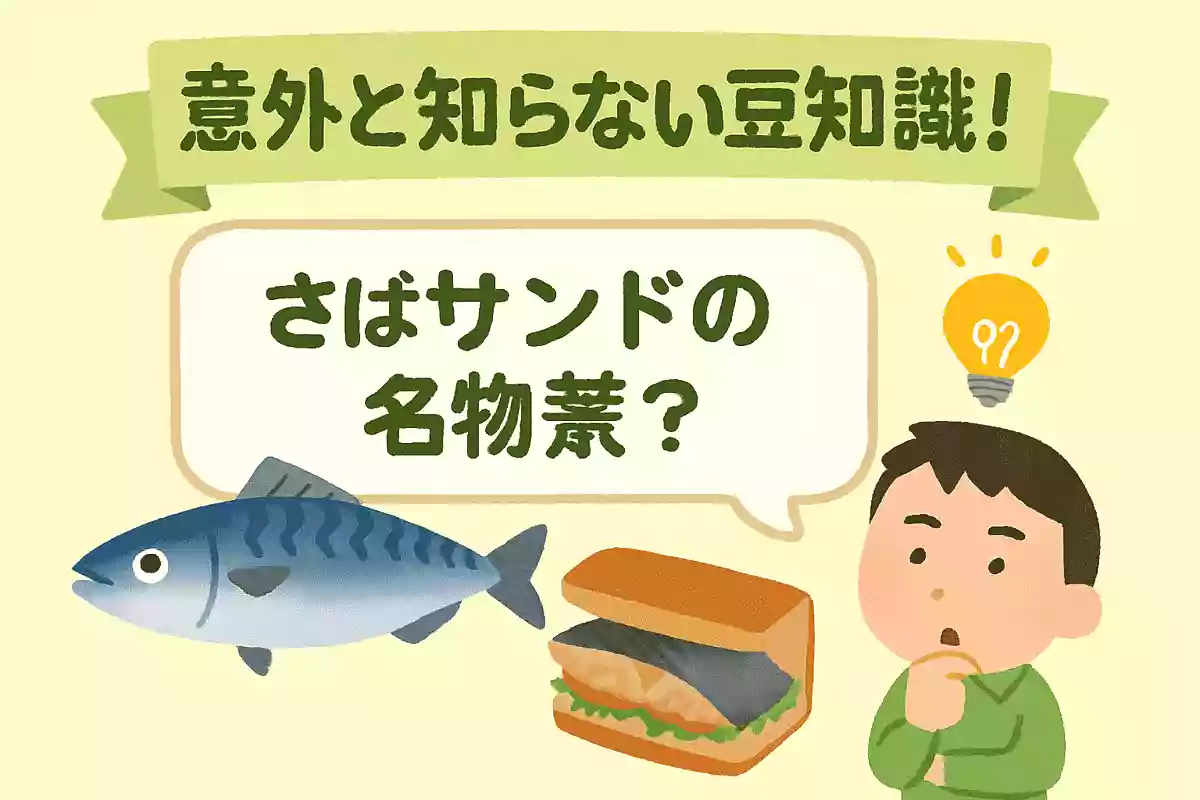
Which country is saba sandwiches a specialty of?
- Japan
- France
- Norway
See the answer
Turkey
Saba sandwiches are a specialty commonly eaten in places like Istanbul, Turkey. Fresh mackerel is grilled and placed in bread, then eaten with ingredients like lemon and onions.
Lesser-known trivia! Learn fun facts about mackerel through a quiz! (11–20)
Where do 90% of the mackerel imported into Japan come from?

- Product of Norway
- Product of the USA
- Made in China
See the answer
Product of Norway
About 90% of the mackerel imported into Japan comes from Norway. Norway is a country with a thriving fishing industry, and its rich, high-quality mackerel is popular in Japan.
Why is it said that mackerel from the Sea of Japan is less likely to cause food poisoning even when eaten raw?
- Because the water temperature is low and there are fewer parasites.
- Because it’s said that Anisakis is unlikely to transfer to the flesh
- Because the skin is thick, bacteria have difficulty entering.
See the answer
Because it’s said that Anisakis is unlikely to transfer to the flesh
It’s said that the Anisakis parasites found in mackerel from the Sea of Japan are less likely to migrate into the flesh than those in mackerel from the Pacific side, so eating them relatively raw carries a lower risk of food poisoning. Also, because the region has a long-standing culture of eating raw fish, it may be standard practice for chefs to carefully check that Anisakis hasn’t migrated into the flesh.
In 2018, canned mackerel became a boom—what were the factors behind it?

- Because a new seasoning has been developed.
- Because it showed how to use canned mackerel in home cooking.
- Because it was introduced as being effective for dieting.
See the answer
Because it was introduced as being effective for dieting.
In 2018, canned mackerel was featured on a TV program as a food that’s good for dieting and health, sparking a canned mackerel craze. In fact, this craze is known as the second canned mackerel boom; during the first boom around 2013, the term “kantashi,” meaning the use of canned foods in cooking, drew attention.
What type of mackerel is used for Goma Saba, a local dish from Fukuoka?
- mackerel (chub mackerel/true mackerel)
- Sesame mackerel sashimi (Goma Saba)
- Atlantic mackerel
See the answer
mackerel (chub mackerel/true mackerel)
Goma-saba is a local dish from Fukuoka, and it mainly uses fresh Pacific mackerel (ma-saba). One reason Pacific mackerel is used instead of chub mackerel (goma-saba) is that it has a lower moisture content, which tends to give it a stickier, more velvety texture.