


Deepen your knowledge of food! A three-choice trivia quiz

Food that is indispensable in life.
Perhaps we often don’t think about it very deeply in our daily lives.
Food is packed with all kinds of history.
Many people probably find themselves even more captivated by the charm of foods that stimulate the five senses and make us feel happy as they grow older.
In this article, we’ll introduce trivia about food in a quiz format!
It’s recommended not only for those who love food, but also for anyone who wants to deepen their knowledge.
By learning the meanings and origins, you’ll likely find food more familiar—and grow to love it even more.
Deepen Your Food Knowledge! 3-Choice Trivia Quiz (1–10)
What are the black specks in konnyaku?

- seaweed
- sesame
- vitamin
Traditional konnyaku, which had been made since long ago by grinding raw konnyaku bulbs, contained black specks from the skin. When the production method changed to using flour, the product became whiter than before, but that change was not well accepted. To preserve the old look, powdered seaweed such as hijiki is used to give it a black finish.

Why do anpan buns have sesame seeds on them?

- To tell the contents apart
- To improve the flavor
- To improve the shelf life of bread
It was started by Kimuraya, the creator of anpan, to make it easier for staff to tell the fillings apart out of consideration for them. They reportedly used different sesame seeds depending on the type of sweet bean paste—for example, white sesame for white bean paste, and no sesame for chunky red bean paste. This can also vary by shop. What a gentle world.
What is the origin of the name “éclair”?

- thunder
- Elegant
- Kanade
See the answer
thunder
The name “éclair” comes from the French word éclair, meaning “lightning.” There are several theories: one is that the surface of the baked pastry looks like lightning-like cracks. Another suggests it’s because you’re meant to eat it quickly so the cream doesn’t squeeze out, hence the comparison to lightning.
Which of the following is a pasta dish born in Japan?
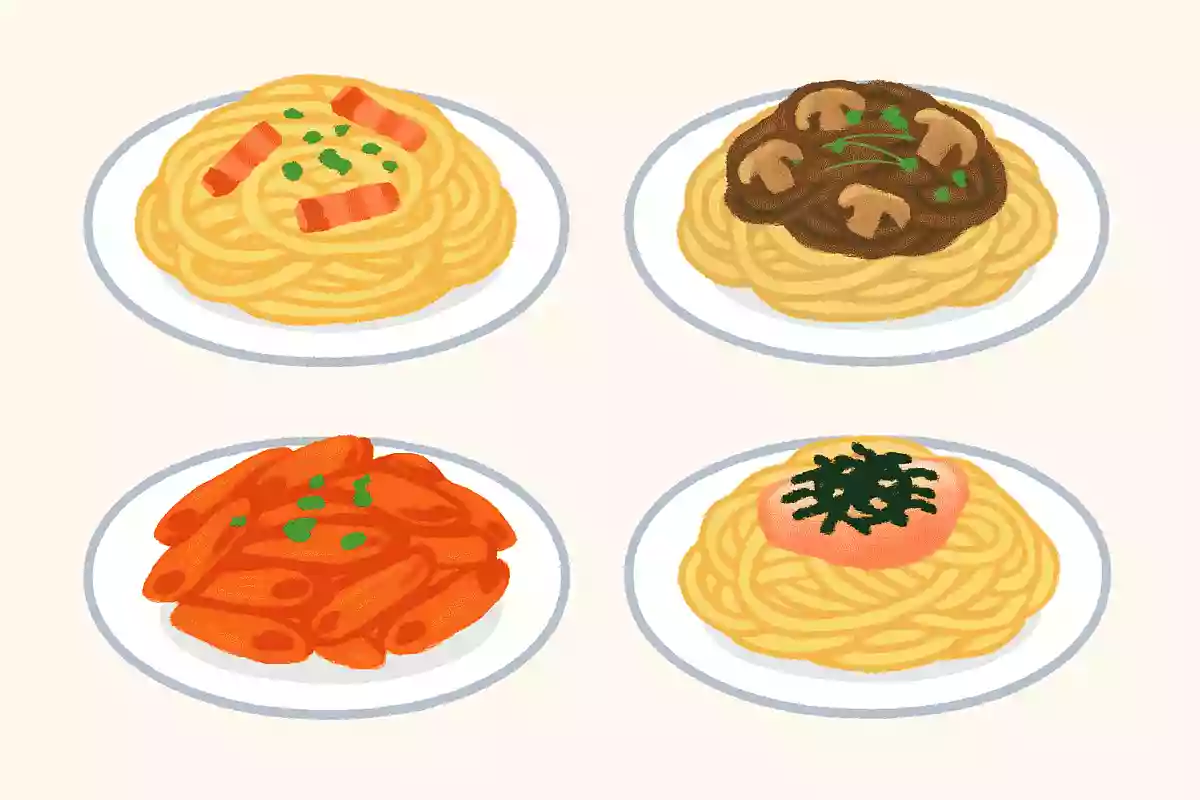
- carbonara
- Napolitan (Japanese-style ketchup pasta)
- Amatriciana
See the answer
Napolitan (Japanese-style ketchup pasta)
“Napolitan” is a pasta dish born in Japan. It is said to have originated in Yokohama after World War II, characterized by its distinctive ketchup-based seasoning, and it often includes ingredients like onions, green peppers, and sausages. In contrast, “carbonara” and “amatriciana” are pasta dishes that originated in Italy.
Which of the following sweets was created by a careless mistake?

- Kaki no Tane
- Kappa Ebisen (Calbee shrimp chips)
- Pie no Mi
See the answer
Kaki no Tane
It all started when the founding couple of Naniwaya Seika were working together and the wife accidentally stepped on an oval mold used to make arare rice crackers, bending it out of shape. That deformation gave rise to the “kaki no tane” shape. It’s been popular since it first went on sale and remains well-loved today—especially as a snack to go with drinks.
Which of the following terms describe the doneness of meat?

- Green
- Red
- Blue
See the answer
Blue
You’ve probably heard of “rare,” “medium,” and “well-done,” but color names…? Many people might think that. Doneness for meat is actually divided into very fine stages—ten levels in total! Among them, the state where only the surface is quickly seared and the inside is almost raw is called “blue.” Roughly speaking, the doneness increases in this order: raw → blue → rare → medium → well-done.
Which of the following ‘sweet potatoes’ was registered as a new variety in 2012?

- Silk Sweet
- Amahazuki
- Beniharuka (a Japanese sweet potato variety)
See the answer
Silk Sweet
Silk Sweet was created by crossing the varieties Harukogane and Benimasari. Seedling sales began in 2012. As its name suggests, it is characterized by a moist, silky-smooth taste. It becomes tastier after being stored for a certain period, and it’s said to be best enjoyed from around November to February.